

Saraswatham ghee of Panachikadu: The Kerala temple prasadam believed to boost learning
Mail This Article


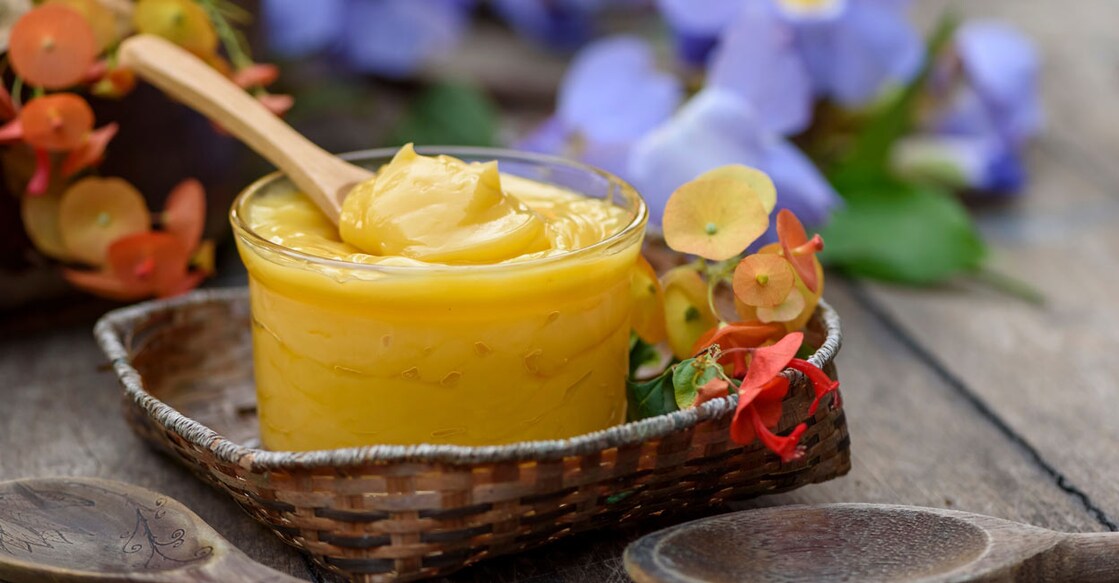
In Panachikadu, a small village tucked away in Kerala’s Kottayam district, devotion and tradition take a very tangible form during Navratri. After nine days of music, dance and prayer, devotees leave the temple of Dakshina Mookambika carrying with them not just blessings, but a small vial of golden ghee. Known locally as Saraswatham Neyy, this prasadam is believed to carry the grace of Goddess Saraswati herself. Families say it sharpens memory, strengthens intellect and brings clarity to learning. Students are often given a spoonful before exams, while elders regard it as a nourishing tonic that sustains both mind and body.
Prepared through ritual chanting of the Saraswata Suktam and distributed after the Saraswati Pooja on Vijayadashami, Saraswatham Ghee straddles two worlds: it is both an offering of faith and an Ayurvedic formulation with a long history in classical texts.
Navratri at the Panachikadu temple
The temple, also known as Dakshina Mookambika, is about 10 km from Kottayam town, and is famed across Kerala for its Navratri celebrations and Saraswati Pooja. Devotees believe that Goddess Saraswati, embodiment of wisdom, knowledge, art and skill, is especially benevolent here. On Vijayadashami, the final day of Navratri, children are formally initiated into learning through the vidyarambham ritual, drawing large numbers of families every year.
Alongside music, dance, and cultural performances that mark the nine days, another highlight is the offering of Saraswatham Ghee. The ghee is consecrated through the chanting of Saraswata Suktam during the Navratri poojas, and is distributed as prasadam after the Saraswati Pooja on Vijayadashami.

The Ayurvedic link
Saraswata Ghrita (Saraswatham Ghee) is also a well-known Ayurvedic preparation. Traditionally made with herbs like brahmi, patha, acorus calamus, and moringa, processed in ghee and goat’s milk, it is mentioned in classical texts for its role in supporting memory, concentration, and cognitive development. Ayurvedic physicians recommend it in certain therapies, including Panchakarma, and in the management of neurological and developmental disorders.
Research reviews have explored its potential benefits in conditions like Alzheimer’s disease and age-related cognitive decline. Brahmi, one of the key ingredients, is considered to balance vata dosha, support nerve function and improve concentration.
Beliefs around Saraswatham Neyy
Devotees at Panachikadu believe that regularly consuming this prasadam, especially when taken with ritual purity over 12 or 41 days, enhances intellect, memory, appetite, vitality and overall academic performance. Parents often seek it out for children during exam season, hoping for divine as well as therapeutic support.

A word of caution
While Saraswata Ghrita has been part of Ayurveda for centuries, and many claim benefits from Saraswatham Ghee distributed at Panachikadu, modern scientific validation is still evolving. Onmanorama has not independently verified these health claims. Those considering its use for medical or therapeutic purposes should do so under the guidance of a qualified Ayurvedic doctor.
 Add as a preferred source on Google