

Remember the ₹5 tea? Kerala’s chaya has come a long way
Mail This Article


Few things have remained as constant in Kerala life as a glass of tea. It fuels early mornings, punctuates workday breaks, accompanies political debates, and keeps conversations going long after sunset. Over the past 25 years, however, the simple cup of 'chaya' has quietly become more expensive. What cost just a few rupees at the turn of the century now costs three times as much in many parts of the state.
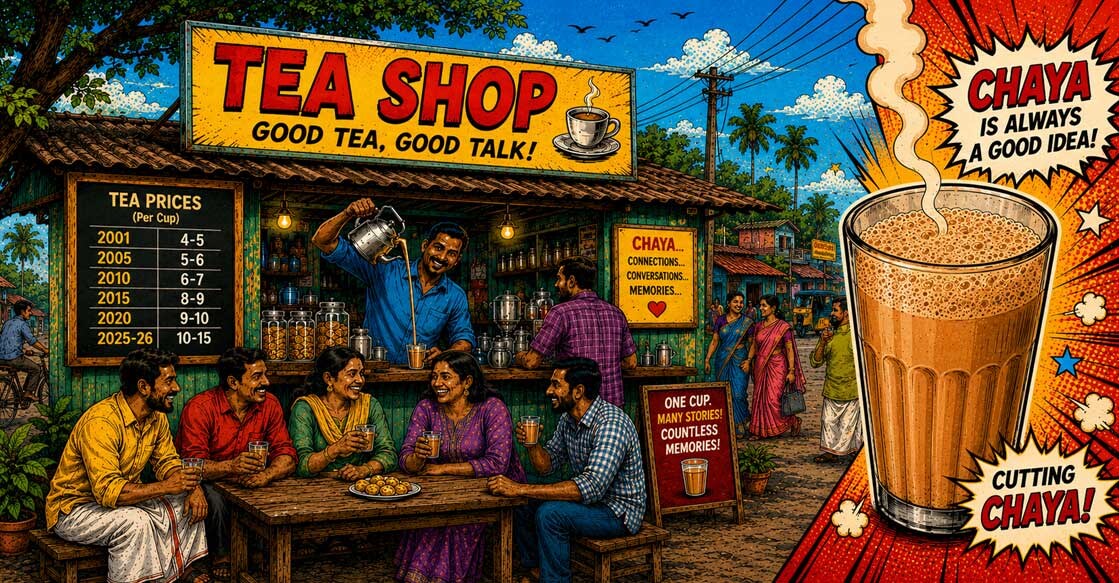
From ₹5 then to ₹15 now
In 2001, a glass of tea at a typical Kerala tea shop cost around ₹4-5. By 2005, the price had risen to ₹5-6, reaching ₹6-7 by 2010. Around 2015, tea was commonly priced at ₹8-9, while by 2020 it had crossed ₹10 in many places.
Today, in 2025-26, a glass of tea at a roadside stall or small eatery typically costs between ₹10 and ₹15. In premium restaurants, prices often start at ₹15 and can go much higher. In large air-conditioned hotels, a cup of tea may cost anywhere between ₹30 and ₹50.
Approximate price of a glass of tea in Kerala

A quarter century ago, a ₹20 note was enough for four friends to walk into a tea shop and order tea without a second thought. Today, that same amount may not cover two cups.
More than just inflation
The rise in tea prices reflects more than the increasing cost of food. It tells the story of changing living costs and shifting economic realities. The ingredients that go into a simple glass of tea, including milk, sugar, tea leaves, cooking gas and labour, have all become significantly more expensive over the years. Tea shops have had little choice but to pass some of those costs on to customers.
Tea shops have changed too
The tea shop itself has undergone a transformation. Traditional neighbourhood stalls with wooden benches and glass tumblers now share space with branded tea chains and modern cafés. Tea is no longer seen only as an everyday beverage. In many places, it has become part of a curated dining experience.
Smaller glasses, bigger menus
Some of the changes have been subtler. Older customers often remember the large glass tumblers that were once standard at tea shops. Over time, serving sizes became smaller and cutting chai gained popularity. During the pandemic years, disposable paper cups replaced glass tumblers in many establishments.
The way tea is prepared and served has also evolved. The dramatic "meter tea", poured from a height to create a frothy texture, became a crowd favourite in many tea stalls across the state.
From ginger tea to tandoori tea
As tastes evolved, so did tea menus. Black tea and Suleimani were once the affordable alternatives when milk tea prices rose. Today, special Suleimani infused with lemon and mint enjoys a loyal following.
Kerala's tea drinkers, who once considered ginger tea and cardamom tea as special options, can now choose from chocolate tea, masala tea, saffron tea, vanilla tea and even tandoori tea. Premium flavoured teas can cost ₹100 or more per serving.
Yet despite the steady rise in prices, one thing has remained unchanged. Tea continues to be one of Kerala's favourite beverages, bringing people together in tea shops, restaurants and roadside stalls across the state.
 Add as a preferred source on Google