

Can a plate of puttu be the perfect breakfast?
Mail This Article


What if your breakfast could do more than just fill your stomach? What if one plate could keep you energised through the morning, help you stay fuller for longer and provide most of the nutrients your body needs to kick-start the day?
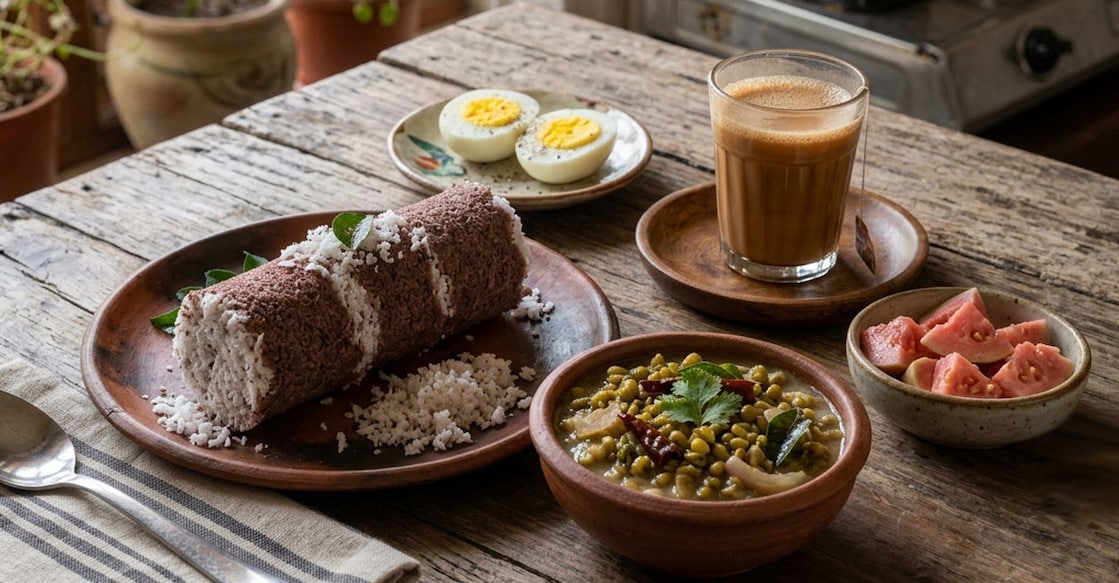
That's the idea behind this balanced Kerala breakfast platter. Instead of focusing on a single "superfood", it brings together familiar ingredients that complement one another nutritionally. Ragi puttu supplies slow-release carbohydrates and fibre, sprouted green gram curry adds plant protein, a boiled egg provides high-quality protein and healthy fats, pink guava contributes fibre and a generous dose of vitamin C, while a cup of tea, coffee or milk completes the meal according to your preference.
Who is this platter for?
Designed to deliver a healthy balance of carbohydrates, protein, healthy fats, vitamins and minerals, this breakfast is ideal for working professionals, students, older adults and anyone looking for a wholesome start to the day. It is best eaten within a couple of hours of waking up, after a glass of water, to replenish your body's energy stores after the overnight fast.
The platter has been designed with one purpose in mind: to show that a balanced meal doesn't require exotic ingredients or complicated recipes. With the right portions, everyday Kerala foods can meet your nutritional needs while celebrating local flavours.
What's on the plate?
- Ragi puttu: 1 cup
- Sprouted green gram curry: ¾ cup
- Boiled egg: 1 large
- Pink guava: 1 cup, chopped
- Tea, coffee or milk: 1 cup (200 ml)
Approximate nutrition
- Energy: 500-550 kcal
- Protein: 22-26 g
- Fibre: 11-14 g

Meet the breakfast dream team
Ragi puttu (1 cup)
Made from finger millet, ragi puttu is a wholesome alternative to rice puttu. Ragi is naturally rich in dietary fibre, calcium and magnesium, while providing complex carbohydrates that release energy gradually. This helps keep you full for longer and prevents sudden spikes and crashes in blood sugar.
Sprouted green gram curry (¾ cup)
Sprouted green gram contributes nearly 10 g of plant protein, along with fibre, folate and potassium. Sprouting also improves digestibility and enhances the availability of certain nutrients. Cooked into a lightly spiced Kerala-style curry, it pairs beautifully with ragi puttu.
Boiled egg (1 large)
A boiled egg supplies around 6 g of high-quality protein, along with vitamin B12, choline and healthy fats. It complements the plant protein from the sprouts, making the meal nutritionally complete.
Pink guava (1 cup)
One cup of pink guava adds natural sweetness, fibre and an impressive amount of vitamin C. It also contains antioxidants and supports digestive health, making it a refreshing way to end the meal.
Tea, coffee or milk (1 cup)
Finish your breakfast with the beverage of your choice.
- Tea is a comforting accompaniment. Keep added sugar to a minimum.
- Coffee, especially filter coffee with little or no sugar, can improve alertness and concentration.
- Milk adds another 6-7 g of protein, along with calcium and vitamin B12, making it an excellent choice for growing children, older adults and anyone looking to increase their protein intake.
Here is how to prepare the main dishes at home:
Ragi puttu
Ingredients (Serves 2)
- 2 cups ragi puttu flour
- ½ tsp salt
- ¾-1 cup water
- ½ cup freshly grated coconut
Preparation
- Mix the salt into the ragi puttu flour.
- Sprinkle water gradually over the flour while rubbing it between your palms. The flour should resemble moist breadcrumbs. When pressed, it should hold together lightly but crumble easily.
- Let the mixture rest for about 10 minutes.
- Layer grated coconut and the prepared flour alternately in a puttu maker, beginning and ending with coconut.
- Steam for 6-8 minutes until cooked.
Sprouted green gram curry (Cherupayar curry)
Ingredients (Serves 3-4)
- 1 cup whole green gram (cherupayar), soaked overnight (or sprouted)
- ½ tsp turmeric powder
- ½ tsp chilli powder
- ⅓ cup shallots, thinly sliced
- 1 tsp garlic, crushed
- 2 green chillies, slit lengthwise
- 2-3 dried red chillies
- A few curry leaves
- ½ tsp mustard seeds
- 1 tbsp coconut oil
- ¼ tsp salt, or to taste
- 1 cup water
Preparation
- Wash the green gram thoroughly and soak it in water overnight or for at least 6 hours. For a sprouted version, drain the soaked beans and allow them to sprout for 12-24 hours.
- Pressure cook the soaked or sprouted green gram with enough water and ¼ teaspoon salt for 2 whistles, or until just tender. Do not overcook.
- Heat the coconut oil in a pan. Add the mustard seeds and let them splutter.
- Add the dried red chillies, green chillies, shallots and crushed garlic. Sauté for about a minute, or until the shallots soften.
- Add the cooked green gram along with its cooking liquid. Stir in the curry leaves, turmeric powder and chilli powder.
- Pour in 1 cup water and bring the curry to a gentle boil.
- Simmer for 5-7 minutes, stirring occasionally, until the curry reaches your preferred consistency.
- Taste and adjust the salt or chilli powder, if needed.
- Serve hot with ragi puttu, traditional puttu or appam.
Tip: If you're serving this with ragi puttu as part of a balanced breakfast platter, keep the curry slightly loose so it soaks into the puttu and makes every bite more flavourful.
Make the most of your breakfast
- Eat breakfast within one to two hours of waking up.
- Drink a glass of water before your meal.
- Choose milk if you need extra protein, especially for children, older adults or after exercise.
- If you're watching your calorie intake, enjoy tea or coffee with little or no added sugar.
- Add seasonal fruits such as papaya, mango or orange when pink guava is unavailable.
Nutritious breakfasts don't have to be expensive or complicated. A plate of ragi puttu, sprouted green gram curry, a boiled egg, fresh fruit and a hot beverage is proof that Kerala's traditional foods can deliver everything your body needs for a healthy, satisfying start to the day. It is balanced, wholesome and made with ingredients that are already part of many Kerala kitchens.
