

Early detection is key in treating colon cancer: Doctor explains symptoms
Mail This Article


“I came only for the sake of my family. I think this is just piles,” said the 50-year-old man sitting in front of me. Blood has been spotted in faeces for the last three months. However, he didn’t complain of any other health issues. The man, who hailed from a middle-class family, was the main breadwinner. Although he initially ignored the symptoms, he consulted a physician when his family members insisted.
After the initial checkup, I recommended doing a colonoscopy. He agreed, although reluctantly. I suspected that it could be due to the expenses. Colonoscopy revealed that he was suffering from colon cancer. We quickly began treatment as the cancer was already in the final stage. A complex surgery was followed by radiation therapy. Even as the treatment was progressing effectively, I couldn’t help but wonder whether he would have already been cured had the cancer been detected at an early stage.
It is always better to perform tests in the early stages and begin treatment when modern medical science has advanced significantly. One should understand that cancer is a disease that could affect anyone. Moreover, cancer too has effective treatments just like any other disease. Recognising the symptoms is essential for diagnosing the disease and seeking treatment in the early stages.
What is colon cancer?
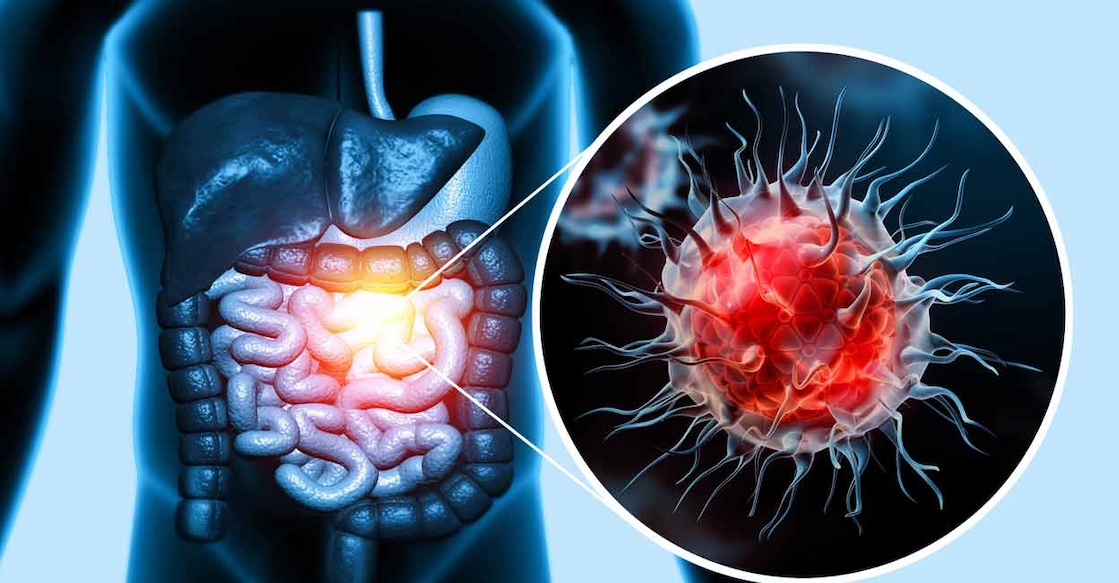
Colon cancer is a type of cancer that starts in the colon or the large intestine. It is mostly detected close to the anus in the large intestine, which is around two metres long. The number of colon cancer cases has been rising at an alarming rate in developing countries. This trend is seen in Kerala too, with more patients turning up at hospitals seeking treatment for colon cancer.
Symptoms
Like most cancers, colon cancer doesn’t show any visible symptoms in the initial stage. Therefore, it is unlikely that the patient presents to the hospital for a checkup in the first stage. In most cases, symptoms typically appear only when the disease becomes severe. These are the main symptoms of colon cancer
• Constipation
• Diarrhoea
• Constipation and diarrhoea at regular intervals
• Pain
• Internal bleeding (spotting blood in faeces)
• Blockage in the intestine
• Weight loss
• Excessive exhaustion and lack of energy
• Blood loss or anaemia
Is it possible to treat colon cancer?
Yes, colon cancer is treatable. Usually, cancer cells are seen as small polyps in the colon. Gradually, it grows into a cancerous tumour. In the initial stages, the polyps can be removed using colonoscopy polypectomy. Colon cancer can be prevented by removing these polyps.
What are polyps?
Intestinal polyps are small growths that form on the inner lining of the intestine, most commonly in the colon. These polyps grow into cancerous tumours. If these polyps are detected at an early stage, they can be removed by polypectomy.
How to detect polyps?
Polyps can be identified during a colonoscopy, which involves inserting a flexible tube with a tiny camera into the intestine. It is mainly used to find polyps, inflammation, bleeding or colon cancer and is often used to prevent cancer by removing polyps. The physician gently inserts the scope into the rectum, and the camera transmits images of the colonic lining. This procedure could detect polyps and tumours in the colon.
What is polypectomy?
A polypectomy is a medical procedure where a doctor removes a polyp, most often from the colon or rectum, to prevent it from causing cancer. The polyps thus removed are submitted for pathology testing. Polypectomy is a simple procedure which doesn’t require complex open surgeries. Additionally, the patient does not need to rest for extended periods after this procedure.
Are colonoscopy and polypectomy safe?
Endoscopy is a modern medical procedure that is generally considered safe. It rarely causes any side effects. Similarly, polypectomy is a safe procedure that is cost-effective as well. Major and complex surgeries could be avoided by choosing polypectomy. Rare cases of bleeding and perforation are some of the challenges in polypectomy.
Who benefits from a colonoscopy?
Colonoscopy is used to detect and remove polyps in individuals aged 50 years and older. People who have a family history of colon cancer, those who have had polyps, colon cancer survivors and those who have tested positive in blood or stool tests should undergo a colonoscopy. Colon cancer is a disease that could be treated using modern medicine and treatment procedures. Effective treatment is possible if polyps are detected at an early stage.
(The writer is a senior consultant at the medical gastroenterology department, Mar Sleeva Hospital)
