

A magical ayurvedic ingredient that offers a solution for multiple conditions
Mail This Article


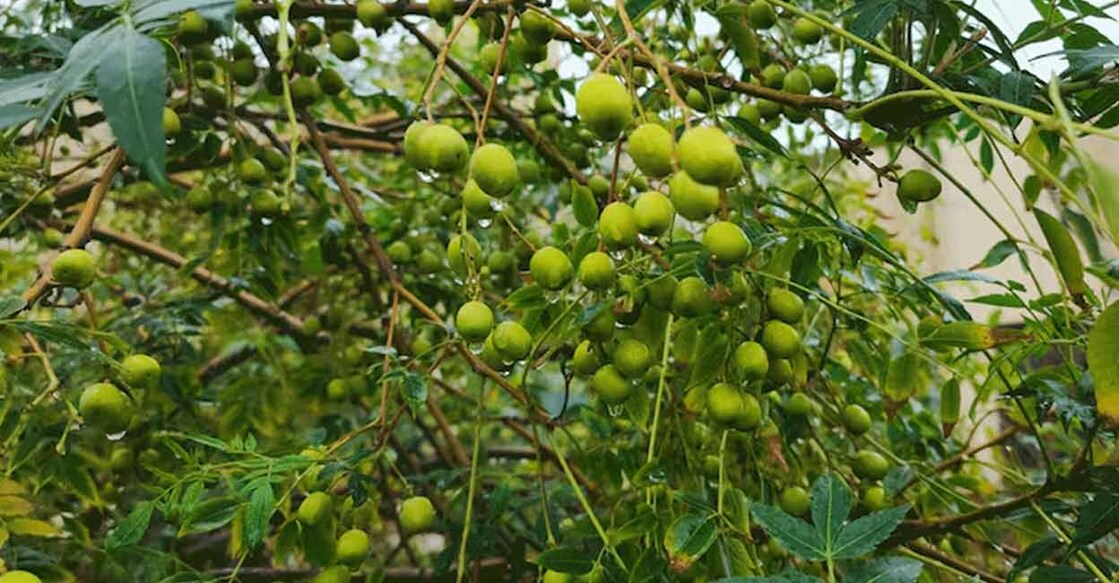
Neem is an evergreen tree that thrives in India's dry, arid climate. Ayurveda classifies neem or Azardirachta indica into three types – nimba (neem), mahanimba (Persian lilac or malaveppu) and Krishna nimba (curry veppu). Interestingly, the leaves, bark, roots, flowers, seeds, and seed oil of neem could be used for various medicinal and environmental purposes. Ayurveda describes neem as thikta Kashaya rasam (bitter and astringent) as well as laghu rooksha gunam (light and dry). Meanwhile, it has sheetha veeryam (cooling potency) and kadu vipakam (effective post–digestive effects) too. Besides, it can regulate the kapha–pitha doshas and ignite the agni deepti, or digestive fires. Dr Gopalakrishnan Valiyaveetil of the Kottakkal Arya Vaidya Sala explains.
A natural antiseptic
Neem, which is a storehouse of countless organic and chemical compounds, is known for its incredible antibacterial properties. Neem leaves, root, bark, seed and oil contain Azadirachtin, Nimbadiol, Nimbin, Nimbidin, Azadirachtol, Tocopherol, Nimocin, Linoleic Acid, Sitasterol and Arachidic Acid, which are extremely useful compounds. Meanwhile, Nimbidin acts as a natural painkiller and helps settle down fever and skin diseases like psoriasis. Neem is generally considered the best natural antiseptic.

Ayurvedic properties
Various skin diseases, rashes and pigmentation could be treated by taking bath in water boiled with neem leaves and turmeric. Washing wounds and rashes with kashayam, a medicinal decoction made from neem leaves and bark, cures skin diseases. Neem bark kashayam can be applied topically or consumed for its amazing medicinal properties. Rubbing neem leaf paste over burn marks is extremely soothing. Small branches of neem leaves have been traditionally used to gently rub the body when affected with chicken pox, and the patient is often made to lie over a bed of neem leaves. Taking baths in neem-infused water could also easily reduce itching and cure sores. Applying a body pack of neem leaves, turmeric, and coconut milk can fade pigmentation and marks caused by chickenpox. This pack should be applied for seven days and washed away in water infused with neem leaves. Kashayam made with 30 grams of neem bark and China roots is effective in curing STDs like syphilis and gonorrhoea.
A solution for dental issues
Oils extracted from neem seeds could be applied topically to treat wounds, rashes, ringworm infections, arthritis, and other persistent skin diseases. Gargling these oils, diluted with water, is effective for swollen gums and dental problems. Besides, it fights bad breath too. Neem oil can eliminate many bacteria and viruses that cause diseases and infections in the human body. Neem oil is also used in contraceptive herbs due to its spermicidal properties. Applying neem leaves and turmeric paste on bite marks will eliminate the toxins and cure the wound.
Mix one teaspoon of neem leaf paste or dried neem leaf powder in buttermilk and consume it on an empty stomach for a week to cure stomach ulcers. Consuming a mixture of 10 ml of neem oil and 10 ml of castor oil on an empty stomach is effective for deworming. A concoction of 10 ml neem oil and 10 ml malaveppila oil mixed in honey could be consumed every morning and evening for 3 days to deworm and cure jaundice. Having neem extract mixed in honey is often recommended for curing diabetes, deworming and jaundice.
How to consume it
Consuming one teaspoon of neem extract three times a day for a week will cure a condition called vishwachi or vata disorders affecting the upper limb. Applying a paste of neem leaves and fresh gooseberries mixed in ghee will soothe sheeta pitta, itching, rashes, and swelling triggered by exposure to cold. Veppinpatta kashayam, or an herbal decoction made with neem bark, is often prescribed as a medicine for a type of diabetes called suramoham. Neem bark can be consumed as a decoction or a paste in an appropriate quantity to help settle malaria, depression, and post-fever exhaustion. Besides, a decoction of neem bark and curry leaf bark is prescribed to cure white discharge in women. It must be noted that only two to four grams of dried neem bark powder, 10 – 20 ml of neem extract and 5 – 10 drops of neem oil could be consumed in a day, as an overdose of neem leaf extract may cause vomiting. Research conducted by many institutes has categorically proven the anti-fertility, anti-diabetic, anti-inflammatory, anti-arthritic, anti-microbial, and immune-stimulant properties of neem.
Note: The opinions expressed here are the doctor’s own; consult your physician before acting on any advice.
