

Transform life through hydroponics, horticulture centre in Wayanad provides support
Mail This Article
The modern age has seen drastic changes in the food habits of people, especially among the youngsters. Micro-greens and fresh leafy vegetables that have their origins in foreign soil have made their way to our dining tables. Cabbage and cauliflower were once the only foreign vegetables that could be found on the supermarket shelves until a few years ago. But, now, people are queuing up to buy kale, broccoli and lettuce. These leaves that didn’t suit our weather or soil were often imported and costed a bomb.
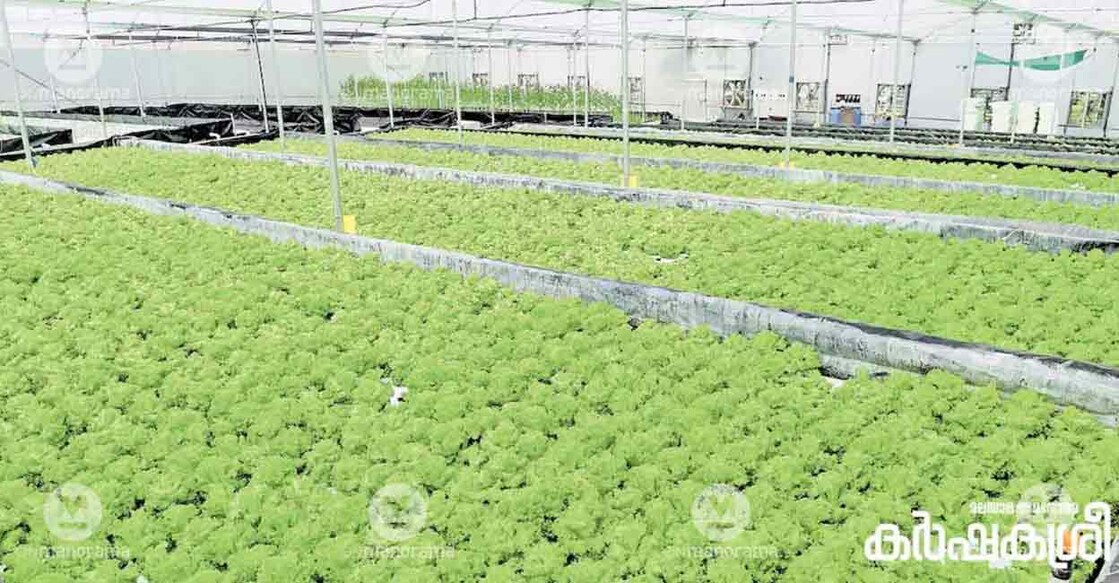
Besides, the quality of these imported vegetables was not always up to the mark. However, foreign leafy vegetables are now cultivated in Kerala using the hydroponics technology. Farmers, especially youngsters who have turned to hydroponics farming are earning hefty profits in a month, making it one of the most lucrative businesses.
Hydroponics which was started by many as a mere hobby has now become their main source of income. The Centre of Excellence in Horticulture based in Ambalavayal is ready to provide technical support to aspirant farmers.
This institute that enjoys a technical partnership with Holland has been trying various hydroponics models. The following are some of the modern hydroponic techniques that could be used to cultivate exotic indoor vegetables and micro greens. These methods are highly efficient and promise excellent yield and profits.
What is hydroponics?
Hydroponics is a modern method of growing plants without soil, using a nutrient – rich water solution. Compared to other states in India, Kerala has achieved greater milestones in hydroponics farming.

Shortage of agricultural land, climate change and growing demand for nutrient-dense food of foreign origin are some of the factors that lure Kerala to hydroponics. Hydroponic systems are generally divided into two types - passive hydroponics and active hydroponics.
Passive Hydroponics
In passive hydroponics, the plant roots are directly in contact with the nutrient solution, with no solid growing medium. It could be grown without the help of equipment that run on electricity and hence are low – maintenance. Two methods are generally followed in passive hydroponics – Kratky method and Wick system.
Kratky method
It was developed by Dr. Bernard Kratky as a low – cost, low – maintenance way to grow plants in nutrient rich water. Kratky method is a simple, passive type of hydroponics that doesn’t require electricity, pumps or continuous water circulation. Plants are placed in net pots and immersed in a nutrient solution. As the plants grow and use up water, the water level drops, creating an air gap that allows roots to get oxygen. This is a low - cost farming method that could be tried indoors.
Wick system
Wick system is a hydroponic set - up that uses absorbent materials like a cotton wick to draw nutrient solution from a reservoir up to the plant roots. It is method that uses capillary action to deliver nutrients without pumps or electricity. This is also a simple method that could be tried at homes or indoors.
Active hydroponics
Active hydroponics is a method of growing plants without soil where nutrient solution is actively circulated using equipment like pumps, timers, oxygen air stones and sensors. It promises high yield as nutrients are delivered quickly and efficiently.
Meanwhile, deep water culture is an active hydroponic method where plant roots are continuously suspended in an oxygenated nutrient solution. As there are no other growing mediums and the plants are directly in contact with the nutrient solution, this method is suitable to grow leafy vegetables like palak, lettuce, basil, rosemary, Chinese cabbage, kale and bok choy.
Nutrient Film Technique
The Nutrient Film Technique is a hydroponic method where a thin stream of nutrient-rich water flows continuously over plant roots housed in sloped channels (made using food-grade HDPE), providing constant access to nutrients, water and oxygen.
This method ensures amazing yield as the nutrient solution is flowed multiple times during a day. Moreover, it is an excellent method to save water and nutrients.
Ebb and Flow/ Flood and Drain
The ebb and flow method in hydroponics, also known as flood and drain system, uses cycles of flooding and draining to deliver nutrients and oxygen to plant roots. It’s a dynamic and efficient way to grow plants without soil. This method is excellent to grow leafy vegetables.
Drip System Using Substrate
This system delivers nutrients directly to the root through drip emitters, which release controlled amounts of solution onto a substrate like cocopeat or perlite. As precision and control of nutrient delivery is possible, this method mostly suits growing plants on industrial basis.
Aeroponics
Aeroponics is a soil – free growing technique where the plant roots are suspended in air and misted with a nutrient – rich solution, allowing for maximum oxygen exposure and efficient nutrient absorption. This is one of the most modern hydroponic techniques used for efficiently growing plants. Phone - 9497238632
 Add as a preferred source on Google