

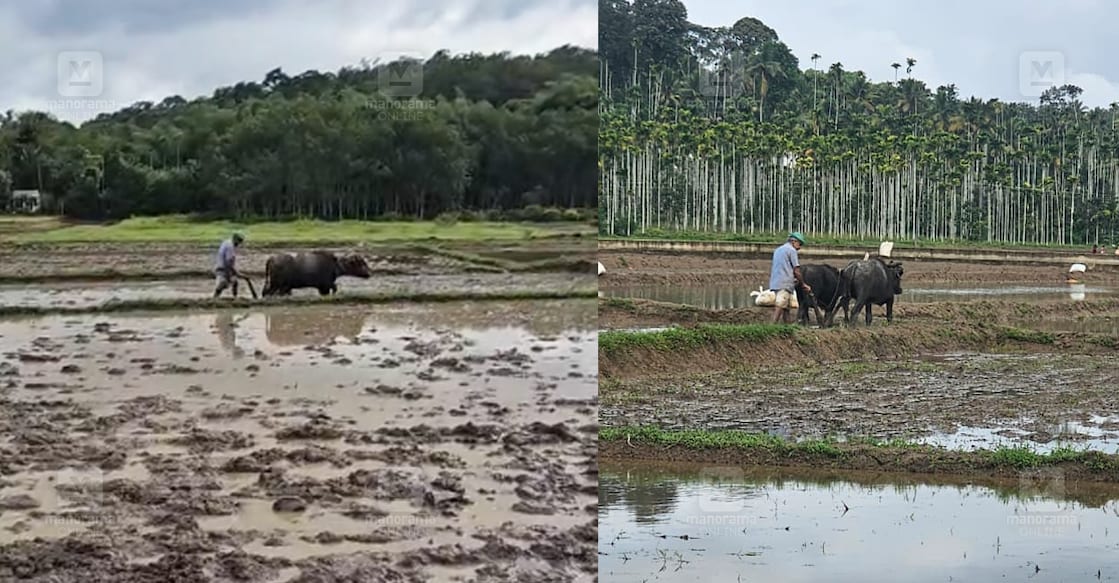
Watch animals ploughing, on fields of Shaju who still follows traditional farming methods
Mail This Article


In an era dominated by heavy agricultural machinery, tractors, and high-tech tillers, a quiet resistance to mechanisation persists in the green valleys of Wayanad. At Pukkode in Nadavayal, under the Poothadi panchayat, a passionate farmer named Shaju is keeping a centuries-old farming legacy alive by preparing his paddy fields using only buffaloes and a traditional wooden plough.
The philosophy of the wooden plough
For decades, Shaju has relied entirely on his own hands and the strength of his animals, bypassing modern tractors and external hired labour. Every year, as the cultivation season approaches, he buys two buffaloes and trains them specifically for the arduous task of preparing the wet soil. For Shaju, this is not merely a refusal to modernise but a deep-seated belief in the ecological benefits of traditional methods. He asserts that a wooden plough gently turns over the topsoil, effectively bringing vital nutrients to the surface while burying weeds and organic stubble from previous harvests deep into the earth—something heavy machinery cannot replicate with the same delicacy.
A dying craft kept alive by local hands
As modern machines have swept across the agricultural landscape of Kerala, traditional wooden ploughs have vanished from retail markets. To overcome this, rural artisans and farmers in Wayanad's remote pockets have taken to crafting their own tools. Using specifically chosen timber, they carve and shape the ploughs by hand, ensuring that the ancient craft of toolmaking does not fade away. This holistic dedication to heritage defines the lives of the handful of traditional farmers remaining in the district.
An enchanting sight for travellers
The rhythmic, centuries-old spectacle of a farmer navigating muddy fields, guiding his team of buffaloes with unique vocal commands, has now become a rare visual treat. This preservation of ancestral wisdom has also caught the attention of tourists and travel photographers visiting Wayanad. Eager to witness a slice of agricultural history before it disappears entirely, visitors flock to Shaju's fields to capture stunning photographs of a harmonious relationship between man, beast, and land.
