

Analysis | CPM’s course correction could face Muslim vote test with no sign of rethink on controversial positions

Mail This Article


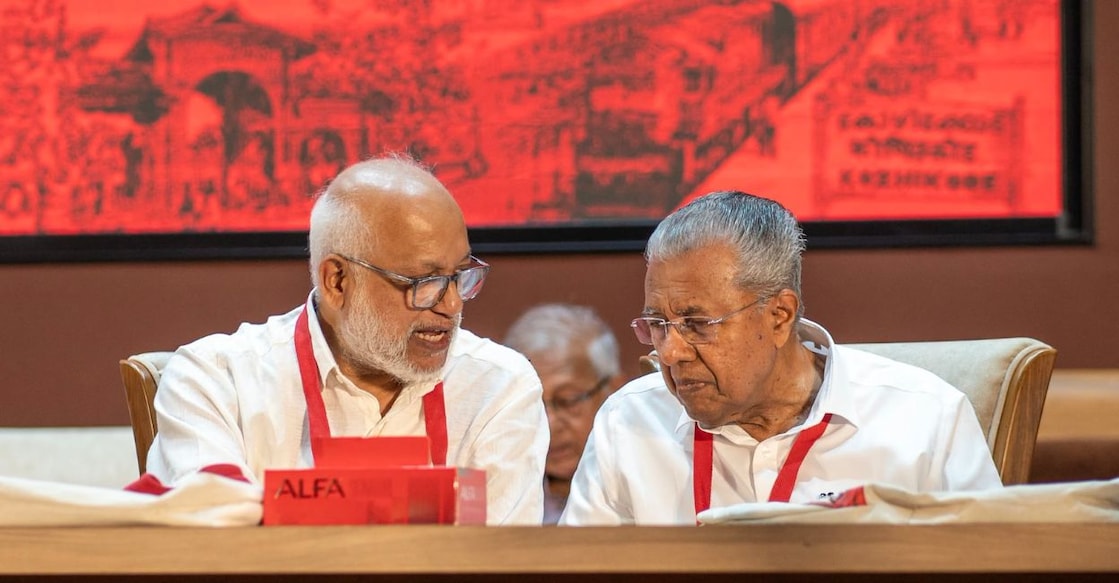
Kozhikode: The CPM’s three-day exercise to identify the reasons for its electoral setback has brought the party face to face with a politically sensitive question: whether its proposed course correction will include a rethink of positions that have contributed to the erosion of its traditional support among the Muslim community. Despite internal realisation of the party’s declining support among Muslim voters, the statements emerging from the extended state committee meeting so far indicate little willingness to alter its recent political approach.
The opening day speeches of CPM general secretary M A Baby and state secretary M V Govindan offered no clear indication of a review of the positions that alienated a section of the Muslim community. Both leaders, however, agreed that there were attempts to mislead voters through a campaign alleging a link between the CPM and the RSS, with Govindan attributing a role to the Indian Union Muslim League (IUML) in such a campaign. While the party leadership has identified this as one of the factors that influenced voters, there has been little indication so far of what precisely led to the campaign gaining traction among the electorate or what political strategy the party proposes to counter it.

In the backdrop of recent controversial speech by Sunni leader Kanthapuram AP Aboobacker Musaliyar, Baby also made it clear that the party would not dilute its ideological position on women’s participation in public life, arguing that Communist movements globally have stood for bringing women to the forefront since the period of the French Revolution. The statement suggests that the CPM is not yet prepared to soften its position on an issue involving a major section of the Sunni community.
This approach assumes greater significance against the backdrop of political developments outside the CPM meeting. Leaders of the IUML, the second-largest constituent of the United Democratic Front (UDF), made a cordial visit to the Markazu Saquafathi Sunniyya at Karanthur, headquarters of the AP faction of the Sunnis, an organisation that has traditionally maintained a close political relationship with the Left for decades.
The visit of IUML state president Panakkad Sadiq Ali Shihab Thangal to the Markaz, during Malaysian Prime Minister Anwar Ibrahim’s visit, was particularly significant. Thangal was accompanied by IUML leader and Industries Minister P K Kunhalikutty. The visit is being viewed as noteworthy as it marked, since the split in the Samastha Kerala Jamiyyathul Ulama, the presence of a prominent Panakkad leader at the headquarters of the AP faction.
The development has triggered speculation over whether the A P Sunni leadership is moving closer to the UDF. If that outreach develops into a broader political understanding, it could further complicate the CPM’s efforts to regain the support of Muslim voters in northern Kerala.
The electoral setback suffered by the CPM-led LDF was particularly severe in the Muslim-majority areas of Malabar. In Malappuram, the UDF won all 16 Assembly constituencies, while in Kozhikode, the UDF, with the support of the Revolutionary Marxist Party (RMP), secured 12 of the 13 seats. The UDF also made significant gains in Kannur, Wayanad and Kasaragod, wresting several constituencies that had traditionally been considered strongholds of the CPM and other LDF constituents. Apart from both EK and AP factions of Sunnis, Welfare Party of India (WPI) backed by Jamaate Islami had also openly campaigned for UDF in the assembly election.
At a time when Muslim organisations appear to be exploring greater political coordination, the CPM has so far given no indication of a corresponding political outreach. Instead, its senior leaders have continued to defend positions that sections of the Muslim community view with concern.
There has, however, been criticism from within the party over some of these positions. The general discussions at the extended state committee meeting are learnt to have included criticism of the leadership for supporting SNDP Yogam general secretary Vellappally Natesan’s controversial remarks perceived as targeting the Muslim community. Some delegates reportedly argued that the party’s position on the issue contributed to keeping a section of Muslim voters away from the Left.
There has also been an internal assessment that the reading out of a message from Uttar Pradesh Chief Minister Yogi Adityanath at the Global Ayyappa Sangamam, along with the party’s position on Natesan’s remarks, contributed to alienating Muslim voters. Yet the CPM has not publicly acknowledged these positions as mistakes or indicated that corrective measures are being considered.
Political analyst N P Chekkutty said the party documents proposing corrective measures had identified the reasons for the erosion of Muslim support, but the leadership was yet to come forward with concrete measures to convince Muslim voters to return to the Left in the next election.
“Major sections of Muslim voters are asking why they should vote for the Left Front when the party is not signalling that it is ready to acknowledge its appeasement of the Sangh Parivar. We can hope that the extended committee meeting will take strong steps to bring back Muslim voters by announcing serious measures in this regard,” he said.
Writer and political analyst M N Karassery, however, said the CPM was yet to identify and acknowledge the mistakes that had alienated a major section of the Muslim community.
“The CPM is yet to acknowledge its mistake in supporting Vellappally Natesan, who acted as a bridge between the BJP and the CPM. That itself raises questions about whether the party is genuinely interested in correcting its mistakes,” he said.
Karassery argued that the alienation was not confined to any particular Muslim organisation or ideological group. “Whether they are Sunnis, Mujahids or CPM supporters from the Muslim community, a large section voted for the Congress because of their feeling that CPM leaders were appeasing the Sangh Parivar,” he said.
He also criticised Govindan’s latest statement accusing the IUML of conducting a communal campaign against the LDF. “It was the CPM that gave the IUML the opportunity to campaign against the LDF. That position should be corrected if the party is sincere about the course-correction measures being discussed at the extended committee meeting,” he said.
A central contradiction exists in the CPM’s ongoing course-correction exercise - the party appears to recognise that it has lost substantial Muslim support, and its internal discussions have reportedly identified some of the factors behind the erosion. But recognition of the electoral problem has yet to translate into an explicit political acknowledgement of mistakes or a visible strategy to rebuild its relationship with Muslim organisations.
