

ED letter on CMRL scam: Kerala HC directs govt to register FIR against Pinarayi Vijayan, Veena & Riyas
Mail This Article


Kochi: The Kerala High Court on Friday directed the state government to register an FIR in the CMRL-Exalogic case based on information provided by the Enforcement Directorate (ED). Justice A Badharudeen passed the order while allowing a petition filed by K M Shahjahan.
It also quashed as illegal the decision to conduct a preliminary inquiry through a special team constituted by the State Police Chief and directed the Director of the Vigilance and Anti-Corruption Bureau (VACB) to immediately register an FIR under the Prevention of Corruption Act based on the information shared by the ED under Section 66(2) of the Prevention of Money Laundering Act (PMLA).
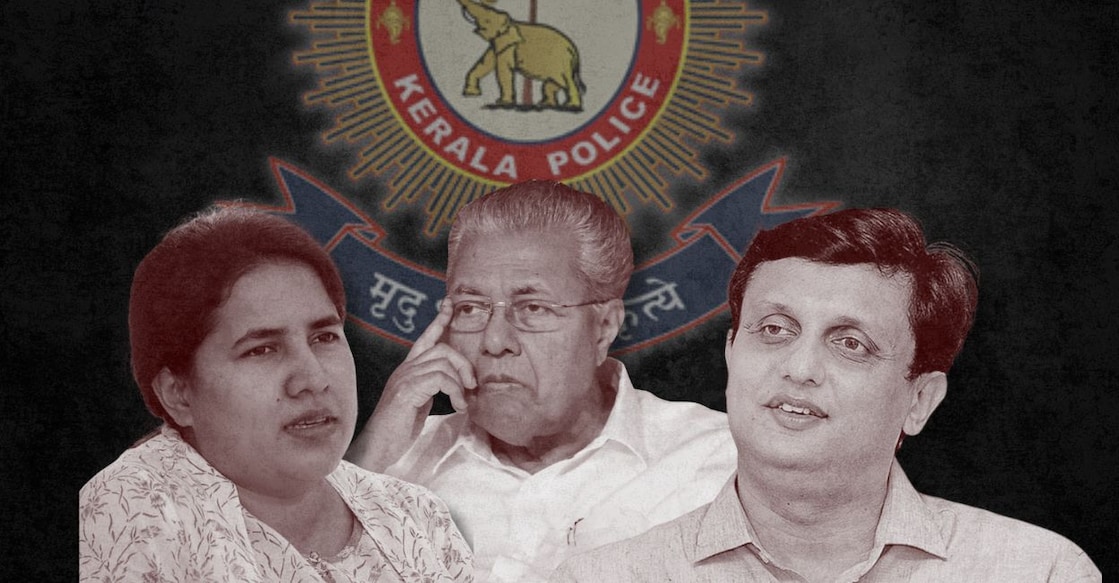
The plea had sought registration of an FIR against former Chief Minister Pinarayi Vijayan, his daughter Veena Vijayan and son-in-law P A Mohammed Riyas under the Prevention of Corruption Act, based on the findings shared by the ED.
The court observed that the 25-page communication forwarded by the ED contained extensive primary material, including witness statements, financial transaction records, entries from seized diaries and notebooks, and chat records. The material clearly disclosed the commission of cognisable offences under the Prevention of Corruption Act, the court held.
The materials cited by the court included bank statements showing payments totalling ₹45 lakh from Cochin Minerals and Rutile Ltd (CMRL) to Veena Vijayan between January and October 2017 without supporting invoices. Transaction records also documented credits totalling ₹2.78 crore from CMRL accounts to Veena and Exalogic Solutions Pvt Ltd between March 2017 and June 2020, along with ₹50 lakh from Empower India Capital Investments, a CMRL group company, taking the total to ₹3.28 crore. The ED report also contained an engagement letter dated December 30, 2016, referring to payments for “public relations avenues”, which were allegedly used to mask payments made because of Veena’s political connections as the daughter of the then Chief Minister Pinarayi Vijayan.
Statements recorded under Section 50 of the PMLA from CMRL vendors described an alleged arrangement in which electronic transfers totalling ₹33.85 crore to various vendors and ₹90.36 lakh to Engineering Designs were withdrawn in cash and returned to CMRL officials in exchange for commissions of 2% to 7%. The materials further included scanned pages of a red notebook seized from Veena’s residence on May 27, 2026, containing entries relating to foreign currency transactions totalling 282,600 AED, electronic transactions through UAE-based associate Faijaz V P using LIV ENBD and Mashreq Bank accounts, and an entry referring to the routing of ₹85 lakh in cash.
The court said a separate preliminary inquiry was therefore unnecessary and unwarranted. When information shared under Section 66(2) of the PMLA itself discloses a cognisable offence, it serves as an adequate substitute for a preliminary inquiry report. In such circumstances, the receiving agency has no discretion to conduct a preliminary inquiry instead of registering an FIR, the court observed. The court therefore, quashed as illegal the decision to conduct a preliminary inquiry through a special team constituted by the State Police Chief.
The Director of the VACB was directed to register an FIR against the named suspects based on the ED's communication and complete the investigation without delay. The Director General of Police and the Special Investigation Team were also directed to immediately hand over all records relating to the ED's communication.
The ruling is a setback for the state government's legal position on the need for a preliminary inquiry before registering an FIR. The government had relied on the Supreme Court's ruling in Lalita Kumari vs Government of Uttar Pradesh, which held that registration of an FIR is mandatory under Section 154 of the Code of Criminal Procedure when information discloses the commission of a cognisable offence. A preliminary inquiry is not permissible in such circumstances. However, where the information does not disclose a cognisable offence but indicates the need for further inquiry, a preliminary probe may be conducted.
The government had also cited the need for preliminary inquiries in certain categories of cases, including matrimonial disputes, commercial offences, medical negligence and corruption, as well as cases involving abnormal delays in initiating criminal prosecution.
The Kerala Police subsequently constituted a nine-member Crime Branch Special Investigation Team to conduct the preliminary inquiry. The team was given 30 days to examine the material provided by the ED. The decision to entrust the inquiry to the Crime Branch instead of the VACB had also raised questions.
The High Court examined whether the state police could conduct a preliminary inquiry rather than register an FIR after receiving information from the ED about alleged offences under the Prevention of Corruption Act. The court had directed the ED to submit, in a sealed cover, the communication it had sent to the Kerala Police Chief.
During the hearing, the court asked whether the state police had the discretion to initiate a preliminary inquiry after receiving information from the ED about alleged offences. The ED's counsel argued that the police had no such discretion and were required to register an FIR. The agency said its investigation into the CMRL case had uncovered material indicating possible offences under the Prevention of Corruption Act, which it subsequently shared with the state police under Section 66(2) of the PMLA. The provision allows the ED to share information with the appropriate agency when it believes that provisions of another law may have been violated.
The state government defended its decision to order a preliminary inquiry into the ED's findings, stating that it had acted after obtaining legal advice.
What is the CMRL-Exalogic case?
The ED had forwarded its findings to the State Police Chief under Section 66(2) of the PMLA, seeking registration of a case under the Prevention of Corruption Act and other provisions against Pinarayi Vijayan, Veena Vijayan and Mohammed Riyas. The communication followed the agency's investigation into alleged financial transactions involving Cochin Minerals and Rutile Ltd (CMRL) and Exalogic Solutions Pvt Ltd, a company associated with Veena Vijayan.
The ED has alleged that payments made by CMRL to Exalogic were not backed by corresponding services and formed part of a larger alleged bribery arrangement. These allegations have not been established by a court. The latest proceedings concern whether the state police can conduct a preliminary inquiry before registering an FIR after receiving the ED's communication about alleged offences under the Prevention of Corruption Act.
The case follows earlier proceedings relating to the ED's investigation into CMRL and its subsequent probe under the PMLA. In June, a Division Bench of the Kerala High Court considered challenges by CMRL officials to the ED proceedings and discussed the relationship between scheduled offences and investigations under the PMLA, including the operation of Section 66(2).
