

EMS or CH Muhammed Koya: As CPM, IUML spar over credit, EMS Masjid stands tall
Mail This Article


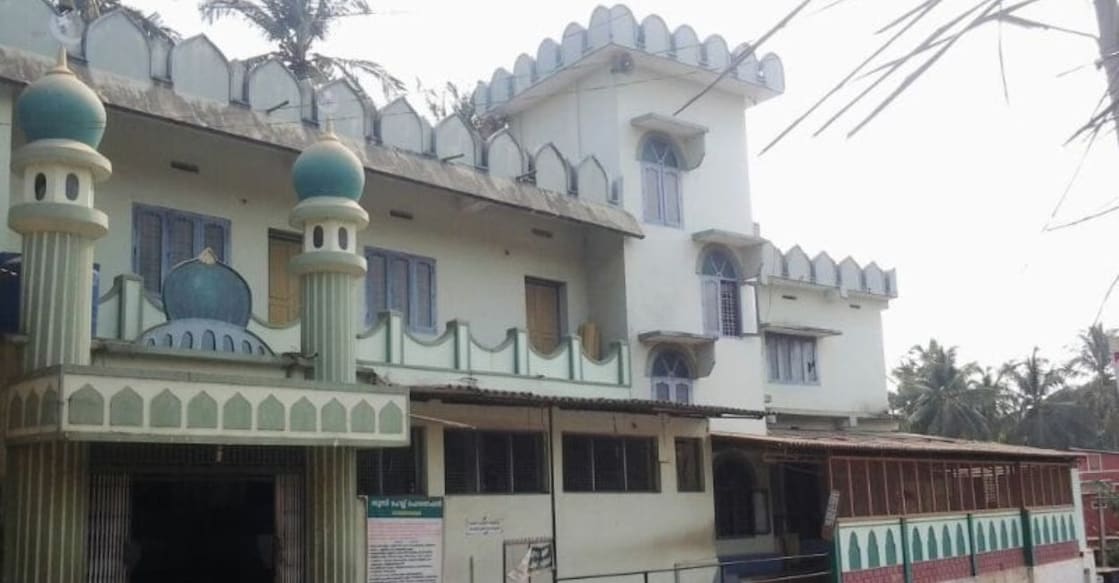
Malappuram: As the Indian Union Muslim League (IUML) and the Communist Party of India [Marxist] (CPM) spar over who was instrumental in lifting the restrictions on mosque construction in Malabar in the 1950s, there is perhaps no better place to witness the peculiarities of Kerala’s political history than the Pulamanthol Town Juma Masjid. This mosque in Malabar is known not by the name of a religious scholar or Muslim leader, but by that of a hardcore Communist, Kerala's first Chief Minister, E M S Namboodiripad.
Now, as a political debate over the 'mosque rule' resurfaces, the Pulamanthol Town Juma Masjid stands as an unlikely piece of living history. The IUML credits its veteran leader and another former Chief Minister, C H Muhammed Koya, with playing a crucial role in getting the restriction lifted.
League spokesperson Shafi Chaliyam recently claimed that Muhammed Koya had moved a resolution in the Assembly demanding the removal of restrictions on mosque construction in Malabar, and argued that the CPM claim about EMS’s role in the amendment was baseless. CPM workers, meanwhile, point to the decision taken by the EMS government to remove the restrictions.
At the same time, the mosque, popularly known as ‘EMS Masjid’, stands as a curious symbol of a time when a Communist government and Muslim leaders came together over the demand for a place to pray.
Following the 1921 Malabar rebellion, the British administration had made governmental permission mandatory for the construction of mosques in the region. The measure was part of efforts to keep a close watch on religious and political mobilisation in Malabar, particularly in the aftermath of the Khilafat movement and the rebellion. Even after India became independent in 1947, the restriction remained in force. It was against this backdrop that a group of Muslim leaders from Pulamanthol approached EMS soon after the first Communist government assumed office in Kerala in 1957.
Bapputty Master, Malavattath Muhammed Haji, U C Kalanthar and members of the Kanjiramutath family from Pulamanthol were among those who met the Chief Minister, according to the mosque’s present office-bearers. Their immediate demand was permission to construct a mosque in Pulamanthol. The leaders also submitted a memorandum seeking the removal of the requirement for Muslims to obtain direct government permission to construct mosques in Malabar.
EMS, a native of the neighbouring Elamkulam, was familiar with the region. About two months later, when he arrived in Pulamanthol to lay the foundation stone of Pulamanthol High School, he informed the religious leaders in the area that the government had decided to remove the restriction, according to those who continue to preserve the memory of the episode.
“The mosque in Pulamanthol was the first mosque constructed in Malabar after the government lifted the ‘unofficial ban’ by passing a law regarding it. The foundation stone for the mosque was laid by EMS himself. So people still call the Town Juma Masjid the EMS Masjid. Everyone in Pulamanthol knows the history behind that name,” says Kanjiarkadavathu Muhammedali Master, president of the mosque management committee.
Historian K P Ramanan Master, son of renowned writer Cherukad, places the issue in the wider history of Malabar. He says the restriction was part of a colonial policy aimed at keeping the region under control.
“The British government wanted to keep Malabar underdeveloped and, as part of that policy, introduced special restrictions requiring permission for the construction of mosques and educational institutions under Muslim management in Malabar. But the Congress government also continued the same policy even after India became independent in 1947,” Ramanan said, adding that the first Communist government decided to lift the restrictions.
Apart from the removal of restrictions on mosque construction, the government also lifted the ban on the appointment of Muslims to the Malabar Special Police and opened up key positions in government institutions, according to Ramanan.
The debate may continue over whether the credit belongs to EMS or C H Muhammed Koya. And there might be no plaque bearing EMS's name, but in Pulamanthol's collective memory, the name of a Communist stays etched.
