

Medical fraternity told to establish fact-check network to prevent proliferation of fake news
Mail This Article


To counter the increasing spread of unverified and false medical information, Malayala Manorama executive editor Jayant Mammen Mathew on Saturday called upon medical professionals to establish an official fact-check system and to use this system's imprimatur to authenticate all medical information put out on social media.
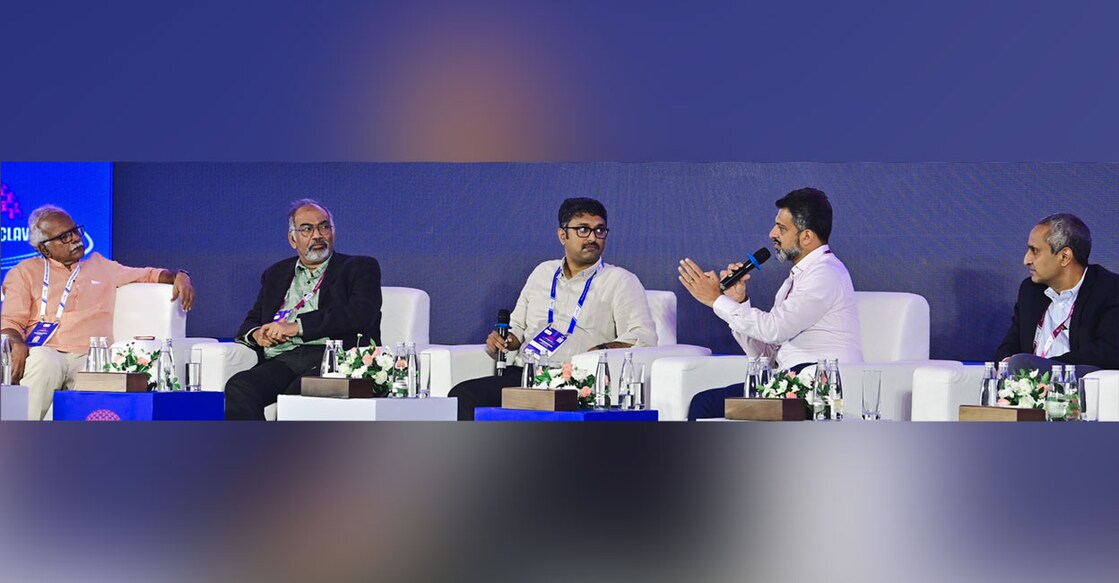
"Truth is completely blurred now. But in the medical field, I think some associations of standing like the IMA (Indian Medical Association) or the Medical Council should come up with a fact-check network," Jayant said during the discussion on 'Use and misuse of media in cancer control efforts' at the two-day Kerala Cancer Conclave that began in Thiruvananthapuram on Saturday. The conclave is organised by the Association of Medical and Paediatric Oncologists of Kerala (AMPOK).
Jayant was suggesting a network like the highly dependable IFCN (International Fact-Checking Network), which governs a community of fact-checkers in the world. Manorama Online, incidentally, is the only certified member of the IFCN in Kerala.
"Similarly, for medical information, you can always say that it has to be certified or authorised by this fact-checking network that you create. The stamp of this network should be there in all the social media posts of certified doctors," Jayant said.
He also advised the medical fraternity to run a campaign saying that no posts related to medical information should be believed unless there is the official stamp of the medical fact-check network. "In this age of social media, everyone is a doctor," he said.
Jayant exhorted the medical community to make a start. "The media is there to help and support because we also want to disseminate the truth," he said.
Association of Medical and Paediatric Oncologists of Kerala (AMPOK) latched on to the idea. Dr Sanju Cyriac of AMPOK, who was moderating the discussion, said that the Association, too, had been thinking of forming such a network.
"We should have such a network that will have a group of editors who will cross-check and verify the medical information that is given out on social media. We can use our social media handles, even our website, for the purpose," Dr Cyriac said. "We can also tell our patients to actively seek facts and to check with our fact-checking network and be enlightened," he said.
Toxin and elixir
The panel agreed that there was a proliferation of fake medical news on social media. "There is an overload of both information and misinformation. There is the elixir of life and also toxicity," said veteran journalist M G Radhakrishnan.
He said a solution was a close association between the medical professionals and the media. "However, this is not happening at the level where it should happen. There are in-built blocks that keep the two professions apart," Radhakrishnan said.
A primary block was the incentive to sensationalise. "You get paid for spreading lies," Radhakrishnan said. He said a certain code of conduct should be evolved under which factual information should be passed on to at least those organisations that genuinely seek it.
The complexity of medical information is another factor that makes it easy for misinformation to spread. "It is important to learn the art and science of communicating in lay language, in a way that doesn't confuse people and put facts into perspective," said Dr C S Pramesh, the Director of the Tata Memorial Hospital and the Professor and Head of Thoracic Surgery at the Tata Memorial Centre, Mumbai.
Why social media loves lies
Dr C S Pramesh said the need to condense information, as manifested in short video clips like reels, is a fact of life. "The approach that we should take is that rather than fight the system, accept the reality and use it to your advantage and make sure that the right facts get disseminated in the right manner," he said. Fake news is much easier to disseminate, he added.
According to disaster management expert and avid social media user Muralee Thummarukudy, there are three reasons for this fake news bias. Firstly, fake news is more acceptable in times of distress. "When you are in distress, you are desperate. You want instant and easy solutions. You do not want a scientific explanation," Thummarukudy said.
Secondly, there is no revenue from good news for social media platforms like YouTube, Instagram and Facebook. "So they don't proactively promote them. However, there is an incentive for these platforms to spread lies because it brings money. This is one area where we can institutionally and legally intervene and ask for their algorithms to be made public, especially in the case of healthcare," he said.
Three, the distrust factor. "Communities in general have a distrust of big pharma. They feel that legitimate information coming from doctors is somehow biased because there is a commercial interest behind it," he said.
Mullaperiyar and art of communication
Like Dr Pramesh,Thummarukudy's solution was also simple and effective communication. "Doctors are not trained to communicate in a language that is comfortable and accessible," he said.
Here is an anecdote he gave for simple and accessible communication. Being a disaster expert, Thummarukudy is invariably asked one question: Will the Mullaperiyar dam burst?
He knows it will not. But if he attempts a scientific answer, people would be bored. If he says it will not, it is seen as too common knowledge to get people interested. Eventually, he conjured up an interesting enough answer.
"Constructing a dam and damning yourself by getting married are the same. Anything damned is bound to burst. But when it will burst does not depend on when it all began but on how it is maintained." "People got the message," Thummarukudy said.
Doctored hype
Sensationalism, however, is not the monopoly of irresponsible social media users. Oncologists, too, occasionally indulge in the blood sport.
"The pressure of having to perform at a very high level especially in academic centres has meant that often it is the physicians and researchers who hype their findings beyond what the actual facts are, and I am reminded of several such incidents in the recent past that has misled the public," Dr Pramesh said.
Hospitals, too, can be prone to hype. Jayant said that many hospitals issue PRs (public relations press releases). "Our policy is that when a medical breakthrough or something of that sort comes from a hospital, we always try to find out from other credible sources what it is that we should convey, what the breakthrough is, what the achievement is. We don't try to hype a PR from a hospital. Once we start doing that, then every hospital will send out a press release," he said.
Though Manorama is in a position to collect credible advice on medical matters, Jayant said that tackling misinformation was still a challenge. "There are so many breakthroughs happening in medicine now, in terms of drugs, treatments and surgeries. On the other side is the alternative medicine, about which people are more gullible," he said.
 Add as a preferred source on Google