

World First Aid Day: How to administer first-aids in various emergencies?
Mail This Article


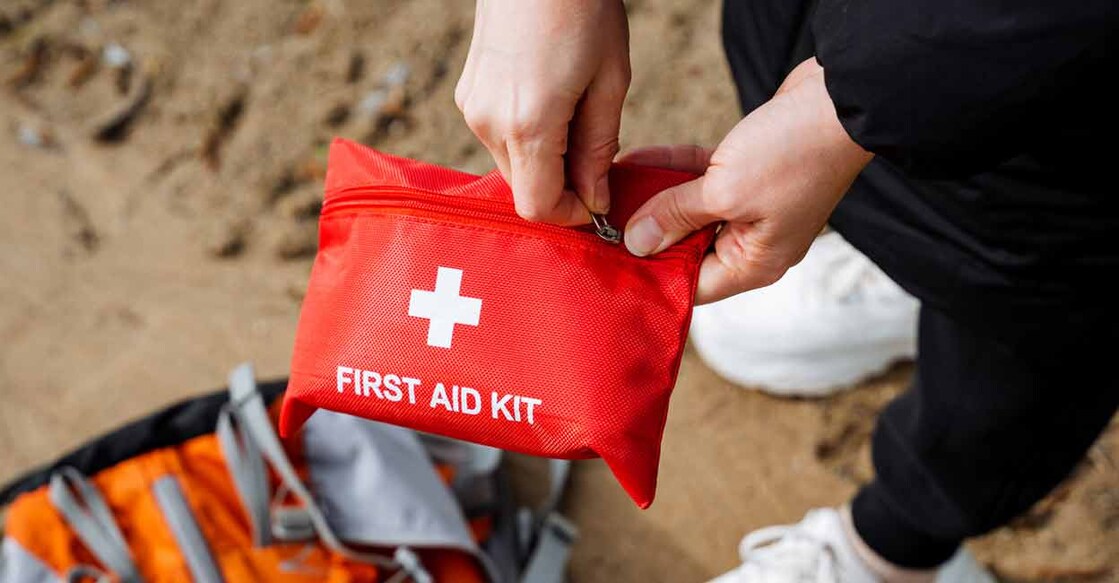
First aid is often the difference between life and death, especially in an emergency. It is the immediate assistance given to a person who has met with an accident before that person is taken to a hospital for medical treatment. Every person, regardless of age, should have the ability to administer first aid. World First Aid Day is observed on the second Saturday of September to create awareness about the importance of first aid. The day also raises awareness about the need for every household, school, office and vehicle to have a first-aid kit.
Purpose of first aid
Preserving life
Preventing the worsening of health conditions
Recovery of health

How to administer various types of first aid?
For various kinds of emergencies, the steps to be followed to save the patients are different. Here's how to go about each of them.
Cardiac arrest in children
1) CPR can be given to children who are 28 days old and older who suffer a cardiac arrest
2) Two fingers, the index finger and middle finger, can be used to put pressure on the chest of children who are less than one year old while performing CPR
3) A hand could be used for children between the ages of one and 10, and two hands for children above the age of 10
4) While giving artificial respiration to a child, don’t tilt the head back
First aid for electric shock
1) A person who has suffered electric shock could have arrhythmia (irregular heartbeat), burns, fractures or other bruises.
2) Touch the affected person only after turning off the power source.
3) Give first aid after taking into consideration the seriousness of the accident, for example, give CPR if there is a cardiac arrest.
4) Contact the authorities concerned if there are broken power lines in the vicinity.
5) Shift the affected person to a hospital as soon as possible.
First aid for injuries to bones
1) Stop bleeding from wounds.
2) Immobilise by tying the fracture point to a strong plank or stick.
3) If there is an injury to the spine, help the person to lie down on their back and shift to a hospital.
First aid for a snake bite
1) Don’t wash the wound with soap.
2) The chances of venom spreading to other parts of the body are high, as you will be putting pressure on the wound while washing it.
3) If a dog or cat bites you, the wound is washed with soap to kill the virus on the injured part, but there is no virus for a snake bite.
4) And don’t tie off the snake bite area as lack of blood circulation can create health issues.
5) Don’t wash or cut the wound to induce bleeding. And do not allow the affected person to walk.
6) There is no need to take the snake, dead or alive, to the hospital. You will lose precious time taking the person to the hospital if you continue searching for the snake.
7) Importantly, make sure that the hospital you are visiting has anti-venom stock.
8) Anti-venom for cobra, common krait, Russell’s viper and Malabar pit viper bites are same.
How should CPR be performed?
Put the patient on their back on a firm surface. Ensure the patient’s elbows are not locked and kept straight. Place your hand on the middle of the chest and push straight down, at least two inches deep, and give 30 chest compressions. To give chest compressions, place one hand on the middle of the chest and keep the other hand over it, interlacing the fingers, and keep the shoulders 90 degrees apart from your body. Allow the chest to rise between compressions fully. After 30 chest compressions, give two breaths after pinching the patient’s nostrils closed. Take each breath for one second through the mouth and ensure that the patient’s chest rises with each breath. Place a thin cloth over the mouth of the patient while giving artificial respiration, as it acts as a protective barrier.
First aid for choking
Choking on food or some other substance can result in death in four to six minutes. Though food choking can happen at any age, it’s common among children and the elderly. If the food gets stuck in the food pipe, there won’t be any problem in breathing. But if the food blocks the airway, the person will be unable to breathe. Food choking mainly happens due to carelessness and eating in a hurry.
1) The Heimlich Manoeuvre is a first aid for choking. Make the person aware of the problem at hand, and stand behind the choking person, wrapping your hands around their belly.
2) Make a fist with your hand and put the thumb of your fist below the ribcage and about two inches above the belly button. Tighten the grip with the other hand above the first.
3) Thrust your hand inward and upward quickly with a certain degree of pressure, but without putting too much pressure on the rib cage. Repeat the process if needed.
4) Continue the process till the object comes free, and later take medical assistance. If the affected person is unconscious, put the person on their back. Kneel and press on the body area mentioned earlier.
5) If a baby has choked, place the baby face down on your forearm and give five forceful taps between the shoulder blades.
6) If the food doesn’t dislodge, turn the baby and give five chest thrusts using index and middle finger.
7) Again, turn the baby face down and give five taps on the back.
8) Refrain from doing a finger sweep in the baby’s mouth.
First aid for bleeding
Apply firm pressure on the wound with your hands. If the bleeding doesn’t stop, bandage the injury with a clean cloth.
First aid for a nosebleed
1) The person should be in a sitting position and lean slightly forward.
2) Pinch the soft part of the nose for 10 minutes with your thumb and index finger.
3) Relax for a few seconds and repeat the process.
4) Don’t close the mouth while doing this, as the patient will be breathing through the mouth.
5) Don’t put foreign objects into the nose, sneeze or blow your nose. Take the patient to the hospital immediately.
 Add as a preferred source on Google