

How to help a snakebite victim? Doctors explain
Mail This Article


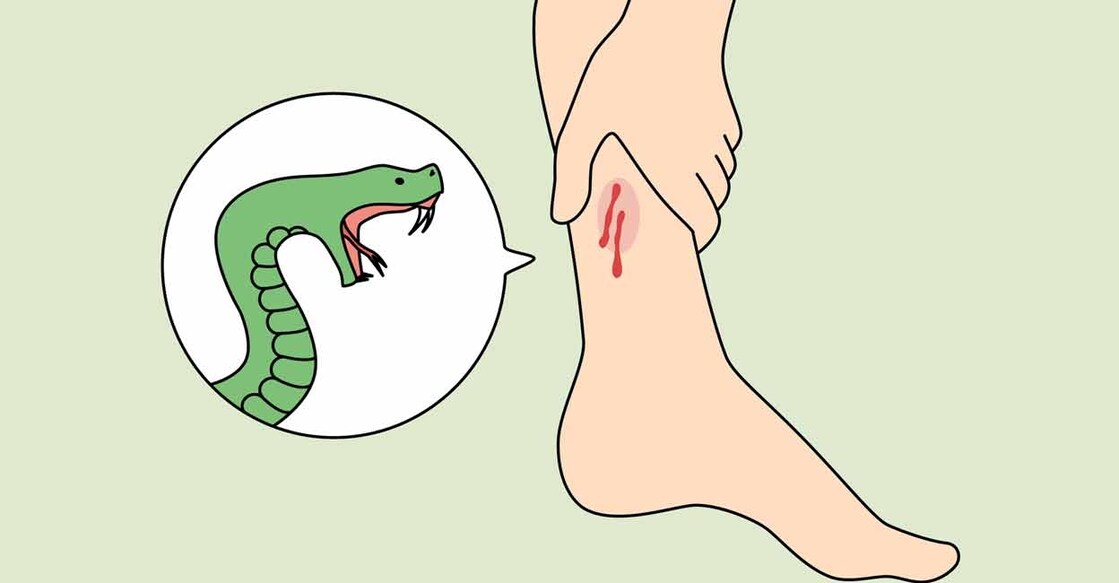
Snakebite is an emergency situation that requires immediate medical attention as well as the presence of mind to save the life of the victim. Try to be calm and call someone for help during such dire situations. Having a mobile phone would be extremely helpful in situations like this.
If victims have someone by their side, then that person should do the following things:
1. Move the snakebite victim to a safer spot.
2. Use a stick or a rod to remove the snake if it is still attached to the victim’s body.
3. Make sure that the victim is not bitten again, and be careful not to get yourself bitten or hurt.
4. Do not waste time trying to recognise or catch the snake. The golden hour shouldn’t be wasted, and the victim should be rushed to the hospital as soon as possible.
5. The person could click the photo of the snake from a safe distance. But, be careful not to get bitten or waste time trying to click the snake’s picture.
6. Make the victim confident and hopeful with soothing and encouraging words. Stress and anxiety increase the blood circulation, transporting the venom swiftly to the kidneys, heart and brain.
7. If the wound bleeds, you could secure it using a clean piece of cloth.
8. Make sure to seek treatment at a hospital that has proper facilities. Antivenom (ASV) should be administered if it is the venom from a snake that is included in the ‘big four’(Cobra or moorkhan, Russel's Viper or anali, Common Krait or sankhuvarayan and Saw Scaled Viper or mandhali). It would be helpful if the hospitals were alerted in advance.
9. Loosen the outfits that are tight at the bite spot.
10. Ring, bangle or anklets on the hands and legs on which the victim has suffered a snake bite should be removed. The bite spot is likely to get inflamed, making it difficult to remove the ornaments later.

11. Do not move the body part where the snake has bitten while transporting to the hospital. The patient shouldn’t be allowed to walk. He/she should be laid on the stretcher and carried to the vehicle.
12. Do not let the victim lie on their backside while transporting him/her to the hospital in a vehicle. It is better to keep the head tilted, as the victim might vomit as a side effect of the venom. If the victim is lying on their back, the food particles might get trapped in the lungs via the windpipe while vomiting. Besides, in case the venom weakens the nervous system, it might also affect the movement of the tongue and throat. Moreover, the victim may also choke on their own tongue.
13. If a two-wheeler is the only means of transport available to move the snake bite victim to the hospital, make him/her sit between two persons.
14. Notice the victim carefully and report the symptoms that he/she exhibits correctly to the doctor. The treatment is often decided based on the symptoms and physical examination.
These are the things that shouldn’t be done:
1. Do not try to decide whether the snake is venomous or not just by looking at the bite wound. Wounds may not be visible if snakes like the cobra or the common krait bite. More than two bite marks may be found if venomous snakes bite multiple times. Not all fangs may penetrate deeply enough to cause visible bite marks. Besides, the shape of the bite marks may change or may appear as cracks as the snake moves its body while biting. Moreover, snakes may rarely lose their fangs due to injuries. So, it is wise to rush the victim to the hospital rather than analysing the wound.
2. Placing vishakallu or medicated stones or waiting for recovery after consuming natural herbs has no scientific backing, and such practices may put the victim’s life at risk. Only antivenom (ASV) should be used to treat snake bites. However, these medicines may not be effective if the venom has already reached the organs and started working. So, every second is crucial in saving the victim’s life.
3. Do not drink alcohol, smoke, or eat food after getting bitten by a snake. Alcohol and nicotine expand the blood vessels, quickly spreading the venom in the body. The caffeine in tea and coffee also has the same effect.
4. Do not try to create another wound close to the bite mark to drain the blood. One of the dangerous effects of a Russell’s viper bite is that blood fails to clot. There will be vast and uncontrollable blood loss if wounds are created on the body.
5. Do not try to suck out blood from the bite marks, as the venom may be transported into the person who does that.
6. Herbs, leaves or other natural ingredients increase the risk of infection
7. Do not burn the bite spot.
8. Do not press ice cubes on the bite marks
9. There is no need to tie a cloth tightly above the bite mark to prevent blood circulation. This may completely block the blood flow to that part, causing paralysis. Make sure to transport the patient to the hospital without moving the body too much. In case a cloth is tied above the wound, make sure to leave some gap. Besides, this cloth should be loosened in case the body part starts to swell.
10. There is no need to bring the snake (live or otherwise) along with the bite victim to the hospital, as it would be a mere waste of time. The treatment is decided based on the symptoms and physical examinations. The doctors won’t administer the antivenom just by looking at the dead snake, as some bites could be dry bites without injecting venom. Besides, it is not necessary that the right snake has been caught and brought to the hospital. Snakes typically inhabit specific habitats, and there may be more than one snake in the vicinity.
A non-venomous snake may have bitten the patient, and the person searching for it may then be bitten by a venomous snake. Expertise and proper training, and not bravado, are what are required to handle a venomous creature. So, behaving wisely is key in emergency situations like a snake bite. The anti-snake venom, which is available in India, is effective against the venom of the four most venomous snakes.
So, the treatment protocol has been set to effectively function against these venoms even if you recognise the snake or not. More than identifying the type of snake, you should focus on the symptoms exhibited by the victim and report them to the doctor. He/ she would then analyse these symptoms to determine the dosage of the ASV and further treatment. The dosage wouldn’t change according to the victim’s age or the size of the bite wound.
Stay away from these myths and superstitions
1. There is no scientific backing for the claim that the snake bite victim shouldn’t sleep. Not allowing a child who a snake has bitten to sleep by chiding or distracting them would only do more harm.
2. Making the same snake bite again will not remove the venom from the body. The snake would inject more venom into the victim’s body, lowering his/her chance of survival. Such myths and superstitions would delay the treatment, causing the death of the victim.
Reference: Snakepedia App
Writers: Dr KK Purushothaman, Dr Manoj Vellanad and Dr PS Jinesh
 Add as a preferred source on Google