Vizhinjam: Facts, fear and foreign capital

Mail This Article


In most parts of the world, a proposed investment of nearly US$1.5 billion by one of the world's largest container shipping companies into a major infrastructure project would be welcomed as a vote of confidence in the local economy.
In Kerala, it has triggered a fierce political controversy. That says as much about the State's enduring ideological unease with private capital as it does about the investment itself. More than three decades after economic liberalisation, Kerala tends to view large corporate investments through a political lense than a commercial one.
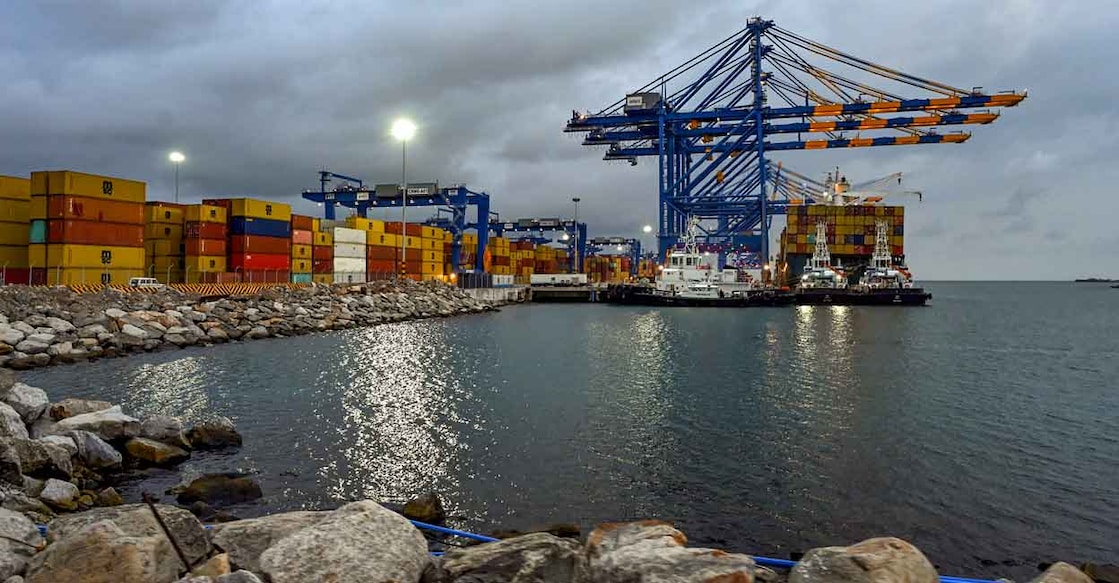
The phrase kuthaka muthalaali (monopoly capitalist) survives in Kerala's political vocabulary. Loosely framed, it may be used to describe your neighbourhood small entrepeneur. It is therefore unsurprising that when the Geneva-based Mediterranean Shipping Company (MSC) proposed investing Rs 13,700 crore for aa 49 per cent stake in Adani Vizhinjam Port Private Limited (AVPPL), the company operating the Vizhinjam International Seaport, it triggered a political storm.
Ironically, the CPM, which until recently enthusiastically owned up the Vizhinjam project, suddenly discovered grave risks in the proposal. The Congress has not been far behind. The debate has become so steeped in political posturing and ideological reflexes that the central question risks being overlooked: what exactly changes if MSC comes in as a strategic investor?
Let us separate rhetoric from reality.
Is Kerala surrendering sovereignty and selling the family silver?
The facts suggest otherwise. Under the concession agreement, the State has already granted the concessionaire the right to develop and operate the port until 2060, while retaining ownership of the land and receiving revenue under the agreed sharing arrangement. These factors are not altered with the MSC investment.
MSC's proposed acquisition of a 49 per cent stake does not change the concessionaire itself. More importantly, any transfer exceeding 25 per cent of the concessionaire's shareholding requires the prior approval of the State Government. The Government therefore retains the unquestioned authority to approve or reject the proposal.
Foreign investment is hardly queuing up outside Kerala. Since 2003, successive governments have travelled the world courting investors with only modest success. Even the previous CPM-led Government went to Davos twice seeking global capital. The response from multinational companies was limited. The fear of losing control over Vizhinjam is therefore more ideological than factual, as of now.
Was the State govt bypassed?
Major corporate transactions are negotiated under strict confidentiality. Premature disclosure can easily derail a deal.The Adani Group complied with its disclosure obligations before SEBI and subsequently informed the State Government. Not even a dollar of investment has yet entered India. What exists today is more of an in-principle commercial understanding. Before the transaction can be completed, AVPPL must necessarily obtain the State's consent under the concession agreement. Depending on financing arrangements, approvals from lenders may also be required for the Adani group.
The criticism that State approval was not sought before announcing the proposal reflects a limited appreciation of how modern corporate transactions are structured. Kerala's own industrial history, unfortunately, bears testimony to several missed opportunities. It would be regrettable if Vizhinjam were added to that list.
Will Kerala ultimately lose?
Nothing in the proposal alters the concession terms. No additional concessions are being sought. The rights and obligations of both parties remain exactly as before. The induction of a strategic investor into the concessionaire does not diminish the State's position. The apprehension appears to arise less from commercial realities than from an inherited but indefensible visceral distrust of private capital.

Aren’t the Adanis benefiting?
The proposed MSC investment reportedly values the project at around Rs 28,000 crore, compared to an estimated Phase-I project cost of about Rs 8,700 crore. That merely reflects the enhanced commercial value of an operational transshipment port.
The land continues to belong to the Government of Kerala. The State has itself invested substantially in supporting infrastructure, while VISL, its project-monitoring company, is also a valuable stakeholder. If the project's valuation has risen, the value of the State's own interests has risen as well. An independent valuation of VISL could itself unlock substantial value for the State exchequer. In fact, VISL could even go for a public issue to sell 25% of its shares, in the wake of the MSC investment.
If the Adani Group has reason to smile, the Government has equal reason to smile too.

Doesn’t MSC already enjoy a monopoly of usage?
This is perhaps the one concern that deserves closer examination. But it has little to do with MSC's proposed equity investment.
Oversight of commercial arrangements, cargo allocation, pricing, transfer pricing and competitive neutrality is precisely the responsibility of VISL, whose Board includes representatives of both the Government and the Opposition. Structured reporting and periodic review of these issues should become institutional practice. India has witnessed too many instances where “profits were privatised while losses were nationalised”. Vigilance, therefore, must remain continuous.
On the Adanis and MSC
Incidentally, the Kerala connect for the Adani group goes a long way back. I have dealt with the credit limits for AEL ( Adani Enterprises) early on, as SBT was also a "home bank" in a sense for the flagship company. The Adani Group or the MSC is neither an angel nor a villain. In commerce and business, there is no untouchability except on the issue of National Security. India has a dynamic architecture for national security testing of such investments. That approval is actually implicit. But the fact remains that there are large private enterprises pursuing shareholder value, as every corporate does. In a sense, the coming in of MSC increases the project profile, “valuation” of even project-associated companies, and the comfort level of other investors and lenders.
Governments need not distrust private capital. Equally, they should never stop scrutinising it. Trust but verify, should be the motto of any Government vis-à-vis private capital.
Therefore, Kerala does not have to choose between welcoming investment and protecting the public interest. It can—and must—do both. Governments should neither romanticise nor demonise private capital. Their duty is to regulate it professionally, monitor it relentlessly and ensure that public assets always remain protected. That, far more than ideological suspicion, is the true test of good governance.