

Onmanorama Explains | The Adani-MSC Vizhinjam port deal, and why it has sparked a political row in Kerala
Mail This Article


The proposed sale of a 49% stake in Adani Vizhinjam Port Private Limited (AVPPL) to Terminal Investment Limited (TiL), the terminal operating arm of global shipping major Mediterranean Shipping Company (MSC), has triggered intense political and legal debate in Kerala.
While Adani Ports describes the transaction as a strategic investment to accelerate the port's expansion into a global transshipment hub, the Opposition has raised questions over transparency, monopoly concerns, regulatory approvals and even national security. The Kerala government, meanwhile, has said it was not informed before the announcement and has made it clear that the proposal cannot proceed without its approval.
Here's what the controversy is all about.
What is the Adani-MSC deal?
Adani Ports and Special Economic Zone Ltd (APSEZ) has signed a binding agreement to sell a 49% equity stake in AVPPL to TiL, the container terminal operator of the MSC Group, the world's largest container shipping company.
The deal is valued at about ₹13,228 crore. Rather than funding Vizhinjam's next phase of expansion entirely through debt, Adani plans to raise capital through this equity investment.
The company says the partnership will strengthen Vizhinjam's position as a major global transshipment hub by leveraging MSC's vast international shipping network.
Why is Vizhinjam strategically important?
Vizhinjam is India's first deep-draft international transshipment port and is located close to one of the world's busiest east-west shipping routes.
The port is designed to reduce India's dependence on foreign ports such as Colombo, Singapore and Dubai for container transshipment. Once fully developed, it is expected to handle 5.7 million TEUs annually, up from its current planned capacity of 1.6 million TEUs.
A supplementary agreement signed in late 2024 requires Adani to complete this expansion by December 2028. Meeting this target would make the company eligible to seek a 20-year extension of its concession, allowing it to operate the port until 2080 instead of 2060.
Why is the Kerala government unhappy?
The Kerala government has expressed displeasure over the manner in which the deal was announced.
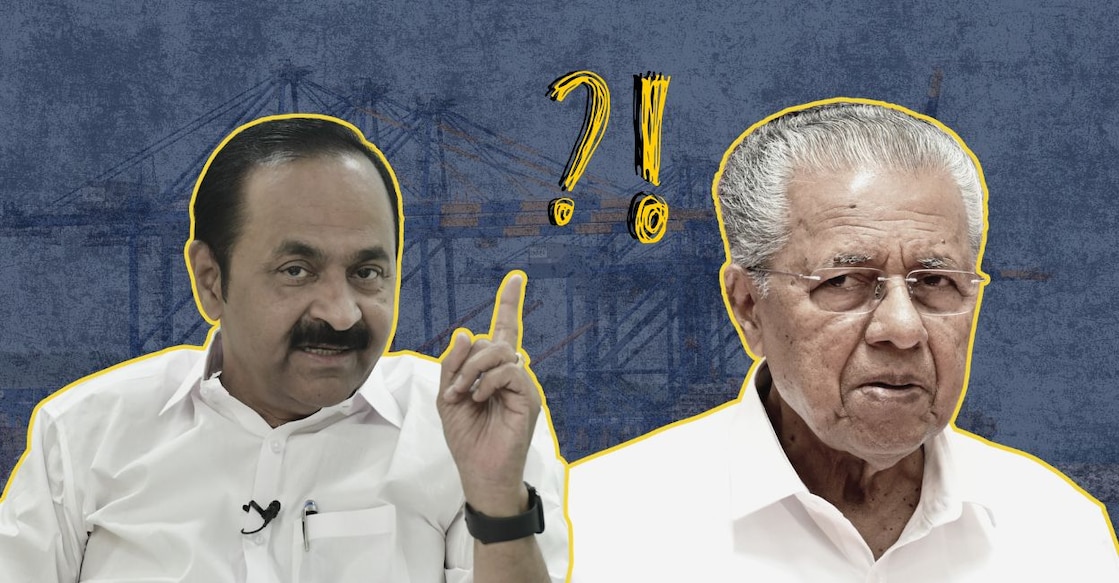
Chief Minister V D Satheesan told the Assembly that the government came to know about the transaction only through media reports. Since the state is a partner in the project and approval is required for such a transaction, the government has said it expects a formal proposal before taking any decision.
The government has maintained that while it supports Vizhinjam's growth as an international port, Kerala's financial and legal interests must be fully protected before granting approval.
What are the Opposition's objections?
The Opposition, led by former Chief Minister Pinarayi Vijayan and the CPM, has questioned both the process and the implications of the proposed transaction.
Its primary concern is that allowing the world's largest shipping company to acquire a significant ownership stake could give MSC preferential access to the port, discouraging rival global shipping lines from using Vizhinjam. According to the Opposition, this could undermine the port's status as a common-user facility and affect competition.
The CPM has also alleged that the UDF government has shown undue favour to the Adani Group. It has questioned why the Chief Minister, who also holds the Ports, Finance and Law portfolios, was not informed before the announcement and has pointed to recent bureaucratic changes, including the transfer of senior IAS officer Divya S Iyer, as raising further questions.
Why has the matter reached SEBI and the NSE?
Pinarayi Vijayan has written to the Securities and Exchange Board of India (SEBI) and the National Stock Exchange (NSE), seeking action against Adani Ports.
He argues that Adani's disclosure to stock exchanges announcing the transaction was incomplete because it did not mention that the Kerala government's prior approval was still pending. According to him, this approval is not a routine procedural requirement but an essential legal condition for the deal.
The Opposition has also argued that any transfer of ownership involving critical port infrastructure and a foreign company should undergo proper government scrutiny before being announced.
Is the deal legally permissible?
Yes, but only after obtaining the necessary approvals.
Under the 2015 concession agreement governing the Vizhinjam Port project, any transfer involving 25% or more equity constitutes a "change in ownership". Since MSC proposes to acquire a 49% stake, Adani must obtain prior written approval from the Kerala government before the transaction can be completed.
The concession agreement also contains safeguards designed to prevent monopolistic practices.
One clause prevents more than 50% of the port's monthly cargo traffic from being allocated to associate companies. If this threshold is exceeded, financial penalties apply.
Another clause requires the port to provide non-discriminatory access, ensuring that any shipping line willing to pay the prescribed tariff can use the facility.
What has Adani Ports said?
Adani Ports has clarified that the agreement with MSC is only the first step in the transaction.
CEO Ashwani Gupta has said the deal will be completed only after receiving all mandatory regulatory approvals, including clearance from the Competition Commission of India (CCI), compliance with SEBI regulations and formal approval from the Kerala government.
The company has also denied that MSC will receive exclusive rights at Vizhinjam, maintaining that the port will continue to operate as an open, common-user facility.
What happens next?
The proposed investment now enters a regulatory approval process that could take several months.
The Kerala government's decision will be crucial because its approval is mandatory under the concession agreement. At the same time, the transaction will also be examined by national regulatory authorities.
While Adani sees the partnership as essential for transforming Vizhinjam into one of the world's leading transshipment hubs, the political opposition insists that the state's financial interests, competition safeguards and regulatory processes must take precedence before the deal moves forward.
 Add as a preferred source on Google