

India denies payment issues with Iran, says crude supplies fully secured
Mail This Article


India on Saturday clarified that there are no payment-related issues with Iran for crude oil imports, adding that domestic refiners continue to procure oil both from Iran and a diverse set of global suppliers.
In a post on X, the Ministry of Petroleum and Natural Gas rejected reports claiming that an oil tanker carrying Iranian crude had changed course mid-journey from India to China—an event that would have marked the first such shipment to India in nearly seven years. The ministry said such claims ignore standard industry practices, where cargo destinations can shift during transit due to operational flexibility and trade optimisation.
Calling the reports “factually incorrect,” particularly those suggesting the cargo was diverted from Vadinar in Gujarat to China due to payment problems, the ministry stated, "there are no payment hurdles for Iranian crude imports".
"India imports crude oil from 40+ countries, with companies having full flexibility to source oil from different sources and geographies based on commercial considerations," it said.
"Amid Middle East supply disruptions, Indian refiners have secured their crude oil requirements, including from Iran, and there is no payment hurdle for Iranian crude imports, contrary to the rumours being circulated."
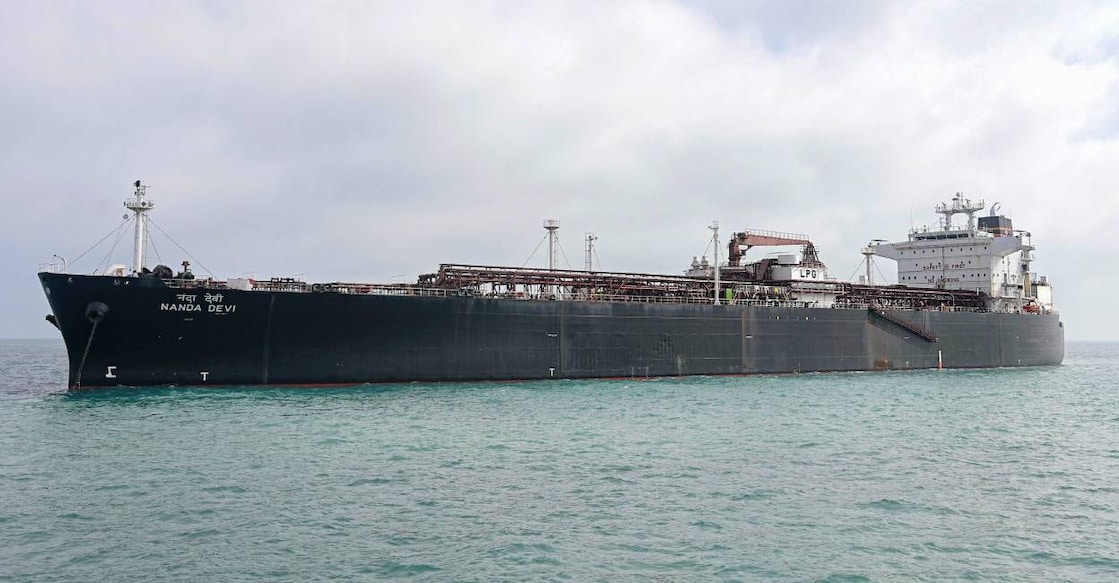
According to ship-tracking firm Kpler, the Aframax tanker Ping Shun, built in 2002 and sanctioned by the US in 2025, is currently indicating Dongying in China as its destination instead of Vadinar, which had been listed earlier this week.
The shipment on board Ping Shun would have been the first Iranian crude cargo headed to India since 2019, reported PTI. Indian refiners have been exploring opportunities to buy limited quantities of Iranian oil currently at sea, following a recent sanctions waiver by Washington.
The ministry reiterated that changes in a vessel’s destination during transit are common in global oil trade. It explained that bills of lading often mention tentative discharge ports and that shipments may be rerouted mid-voyage based on logistical or commercial considerations.
"Claims on vessel diversion ignore how the oil trade works. Bills of Lading often carry indicative discharge ports, destinations and on-sea cargoes can change destinations mid-voyage based on trade optimisation and operational flexibility," the ministry said.
"It is reiterated that India's crude oil requirements remain fully secured for the coming months."
The ministry also noted that an LPG vessel, Sea Bird, carrying around 44,000 tonnes of Iranian LPG, docked at Mangalore on April 2 and is currently unloading its cargo.
Historically, India was among the largest importers of Iranian crude, sourcing significant volumes due to refinery compatibility and favourable pricing. However, imports came to a halt in May 2019 following tighter US sanctions, with supplies being replaced by oil from the Middle East, the United States and other regions.
At its peak, Iranian crude accounted for about 11.5 per cent of India’s total imports. India had imported around 5,18,000 barrels per day in 2018, which dropped to 2,68,000 barrels per day between January and May 2019 under US waiver provisions, before ceasing entirely.
The key grades earlier sourced by India included Iran Light and Iran Heavy.
Last month, the United States granted a 30-day waiver allowing the purchase of Iranian oil at sea, aimed at easing global oil prices amid the US-Israeli conflict with Iran. This waiver is set to expire on April 19.
Currently, around 95 million barrels of Iranian oil are estimated to be on vessels at sea, of which nearly 51 million barrels could be suitable for India, while the rest is more aligned with demand from China and Southeast Asia.
The Ping Shun is believed to be carrying approximately 6,00,000 barrels of oil loaded from Kharg Island around March 4, with an earlier estimated arrival at Vadinar on April 4, as per Kpler.
 Add as a preferred source on Google