

Chase, detentions and roadblocks: How Delhi Police kept CJP protesters out of Jantar Mantar
Mail This Article


Delhi: Cat-and-mouse chases, detentions and a series of other measures marked the Delhi Police's efforts to keep young Gen Z protesters away from Jantar Mantar.
The Delhi Police, which comes under the Union Home Ministry, began its operation soon after the Cockroach Janta Party (CJP) announced plans to protest at Jantar Mantar, demanding the resignation of Chief Election Commissioner Gyanesh Kumar over the Special Intensive Revision (SIR) drive, which allegedly led to the deletion of 13 crore voters from the electoral rolls.
In an unsurprising move, the Delhi Police denied permission for the protest at Jantar Mantar, giving it the authority to prevent protesters from entering the site. The government, meanwhile, deployed central forces, including the CRPF, along with Delhi Police personnel to block every possible route to the protest venue.

Major roads and access routes leading to Jantar Mantar were blocked. Metro stations were ordered to close, while trains to Delhi from different parts of the country were cancelled.
Moreover, mobile internet services were suspended from 10 pm on Friday until 10 pm on Saturday, a significant move that restricted the young protesters' ability to share updates about the demonstration through social media. The police also issued strict instructions to the mainstream media.
On the day of the protest, the police moved swiftly to stop the key leaders. Abhijit Dipke, Saurav Das and Ashutosh Ranka, the leaders of the Cockroach Janta Party (CJP), were detained at Delhi airport upon arrival.
When CPM leaders began marching from Kerala House towards Jantar Mantar, they were met with stiff resistance. Several of them, including former Kerala Chief Minister Pinarayi Vijayan and CPM general secretary M A Baby, were detained.
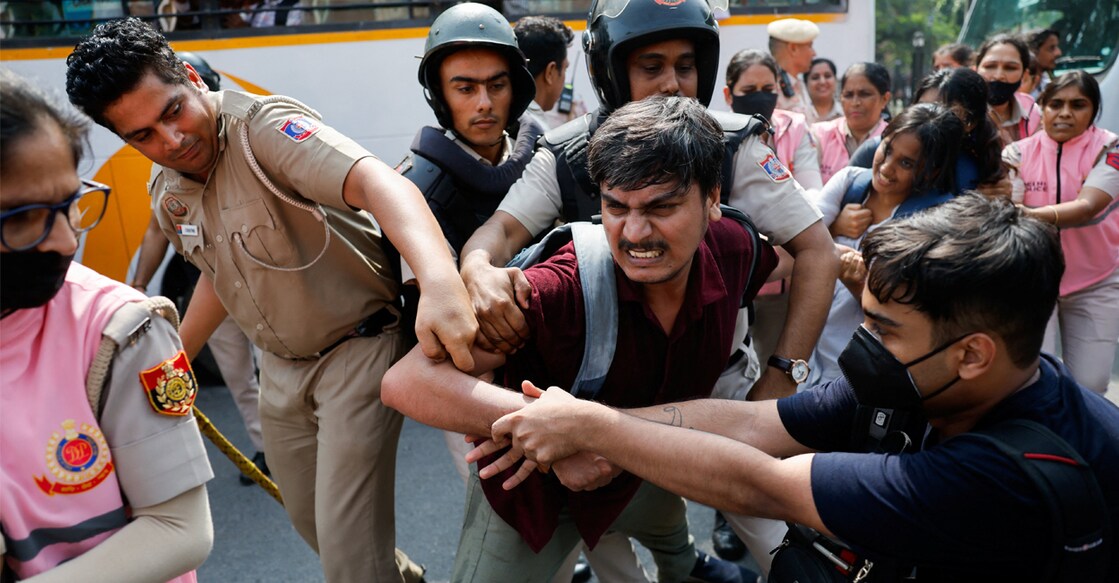
Ordinary youngsters who gathered for the protest were also chased down by the police. Although they tried to evade the personnel, they were caught and taken away, with some allegedly being manhandled each time they attempted to regroup.
The protest was scheduled to begin at 10.30 am, but the police and paramilitary forces prevented participants from reaching Jantar Mantar, which had been turned into a fortress, detaining several protesters and sending many others back.
Senior police officers monitored the situation and supervised the deployment across the New Delhi area, which had been divided into 20 sectors.
As protesters, many of them women, attempted to regroup at different locations, the police chased them down and detained them in buses.
A few protesters entered a nearby gurdwara amid the police action.
The police maintained a strict vigil across the district, deploying personnel at key intersections and approach roads to prevent any gathering near Jantar Mantar. It appeared that the Delhi Police had learned lessons from the June CJP protest, which drew massive attention across the country and was followed by the resignation of then Union Education Minister Dharmendra Pradhan.
Security forces also carried out a flag march in the area and appealed to people to abide by the orders in force.
