

Financial hurdles await if Kerala opts for semi high-speed rail project
Mail This Article


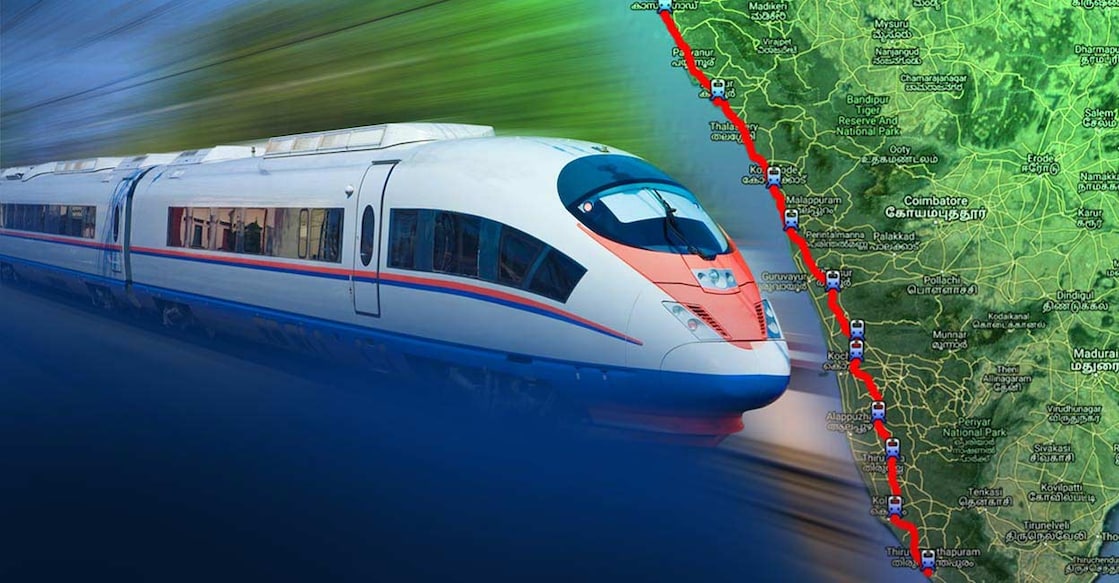
Thiruvananthapuram: If Kerala decides to pursue the alternative semi-high-speed rail project proposed by E Sreedharan instead of the SilverLine project, it could pose significant financial challenges not just for the state but for the central government too.
Earlier, when the state had requested Rs 2,150 crore for the SilverLine project, the Union Ministry of Railways declined, citing concerns about the impact on other ongoing projects. NITI Aayog, which later reviewed the project, too asserted the Railway Ministry’s stance. Against this backdrop, questions now arise about the likelihood of the Railway Ministry approving Rs 30,000 crore for the newly proposed project even if demanded by the state.
The estimated cost for the SilverLine project was Rs 63,940 crore, with the central government expected to contribute Rs 6,313 crore. This amount included Rs 975 crore for acquiring railway land and Rs 3,188 crore as a tax exemption. The remaining Rs 2,150 crore was to be invested as direct funding in the project.
However, when the project came up for consideration, NITI Aayog clarified: “Other than offering technical assistance, the Railways have not agreed to provide financial support for the project. Given the Railway’s limited financial resources and its ongoing expenditure for its own network expansion, it is not feasible to allocate funds for standalone projects like this.”
Financial implications of the new proposal
The alternative project suggested by E Sreedharan is estimated to cost Rs 1 lakh crore, with the Centre expected to contribute Rs 30,000 crore. Since this proposal minimises acquisition of railway land, most of this amount would need to be provided as direct financial aid.
Kerala, on its part, too faces its own set of challenges. For the SilverLine project, the state planned to take loans amounting to 52.7% of the total project cost. The proposed funding structure for SilverLine included Rs 33,670 crore as loans, Rs 18,150 crore as the state’s share and Rs 6,313 crore as the central share, besides Rs 4,251 crore as private investment. Additionally, the state was also required to raise another Rs 1,556 crore for land pooling.
In the newly suggested project, the proportion of loans is expected to decrease. But since the total project cost is higher than SilverLine, the absolute loan amount would actually increase. The situation could improve if the central government agrees to share the loan burden. Under the current circumstances, Kerala will have no choice but to take a loan to meet its Rs 30,000 crore share for the project.
In fact, the state’s struggle with project funding isn't new. For the Sabari Rail project, the state is yet to approve the proposal of sharing Rs 19,000.46 crore, which is half of the total project cost of Rs 38,000.93 crore. The state maintains that it can only contribute if the central government relaxes the total borrowing limits. Kerala is likely to present the same argument for the semi-high-speed rail project, where it is required to spend Rs 30,000 crore.
 Add as a preferred source on Google