

Munambam Waqf row: Residents urge BJP, Centre to keep their ‘promise’ as SC order brings hope

Mail This Article


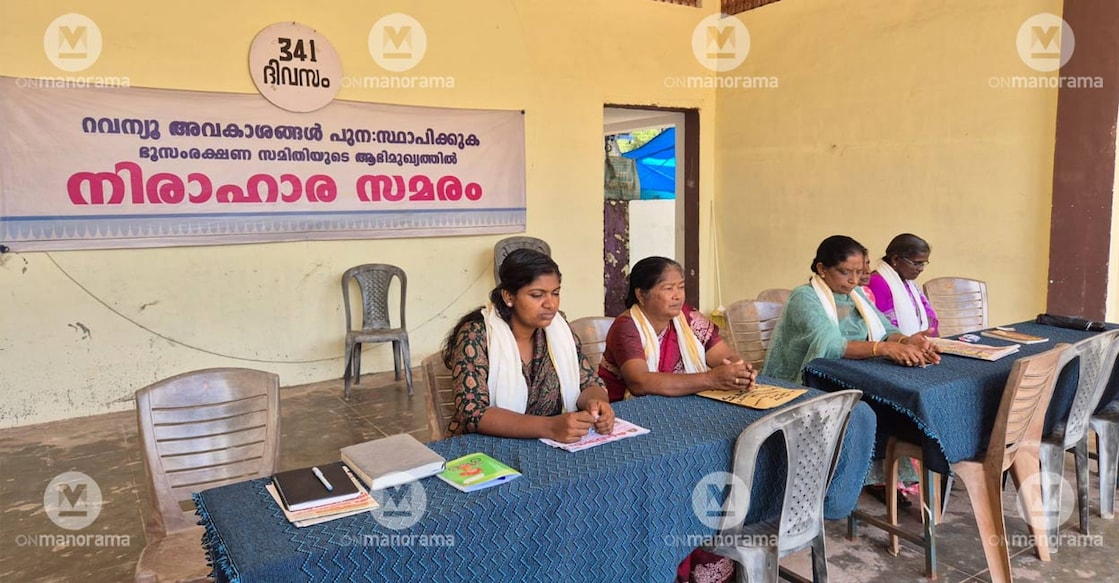
Kochi: The future of 610 families in Munambam, caught in a legal limbo over the Waqf land issue, is at a tipping point. With their homes and generations-old legacy on the line, the residents are preparing to intensify their fight, fuelled by a glimmer of hope from the Supreme Court’s recent interim order that did not stay a crucial provision of the Waqf Amendment Act, 2025. Residents claim it has cleared a major hurdle, and they demand that the central government and BJP leadership fulfil their promise to protect their land and ensure the recently enacted Waqf (Amendment) Act helps them regain their revenue rights.
The apex court, while hearing petitions challenging the constitutionality of the Waqf Amendment Act, 2025, did not stay Section 2(a), Clause 2(A) — a key provision that excludes trusts established by Muslims for similar purposes from the ambit of the Waqf Act. For Munambam residents, this clause could be a lifeline, as they claim Kozhikode Farooq College management, from whom they bought the lands, is a trust. Hence, Section 2(a), Clause 2(A) opens the door for the centre to frame rules that finally put an end to their land battle.
According to Joseph Benny, vice-chairman of Munambam Land Protection Council, when Union Minister for Minority Affairs Kiren Rijiju visited Munambam and addressed the media and public in April, he said the Centre was in the process of framing rules under the new law. “He said once the legislation is done, directions will be issued to the state government. When the minister and the BJP state leadership met the leaders of the protest, he promised he would resolve the issue within 15 days. Now, with the SC order not staying the key section, they don’t have any more excuses. So we urge the state BJP leadership and the Central government to keep their promise. They should frame the rules at the earliest and direct the state to protect our homes,” Benny said.
Now, buoyed by the Supreme Court's interim order, the residents are gearing up to intensify their fight for their lands. The council announced that residents will hold a large protest at Vanchi Square, Ernakulam, on September 27, demanding immediate action. The date is symbolic as on the same day last year, the residents launched their relay hunger strike to save the land where their families have lived for generations.

“For these 610 families in Munambam, their homes have become a place of uncertainty. They live in houses built by their parents and grandparents, but on land they cannot legally call their own. Even the church where they pray and the cemetery where their ancestors are laid to rest come in the disputed land,” said Fr Antony Xavier Tharayil, vicar of Velankanni Matha Church, Kadappuram, Munambam.
Fight for land, fight for dignity
The dispute dates back to 1950, when a person named Muhammad Siddique Sait endowed 404 acres of land to Farook College management through a deed. While the land was given for educational and charitable purposes, a crucial point of contention is whether it was a “Waqf” (an inalienable religious endowment under Islamic law) or simply a “gift deed” to the management.
Over the decades, many families settled on the land. Between the 1980s and 1990s, the Farook College management sold portions of the land to these occupants. The residents, who have been living there for generations, claim to have legally purchased the land, paid for it, and have been paying taxes.
The Kerala State Waqf Board entered the picture and, in 2019, formally registered the entire 404 acres as Waqf property. This move effectively rendered the land sales by Farook College invalid from the Board's perspective, as Waqf properties cannot be alienated or sold. This is what triggered the current crisis, as the residents now face the threat of eviction.
But with the legal ambiguity dragging on, the residents cannot register or mortgage their lands, their futures suspended in limbo. “Our children cannot claim the land we live on, even though our families have been here for decades. How long should we live as if we are tenants in our own homes?” asked Emerson Themaliparambil, a resident, echoing the frustration of hundreds.
 Add as a preferred source on Google