
Ambayathode waste plant protests take a toll on children, they lose sleep, still want to be in class

Mail This Article


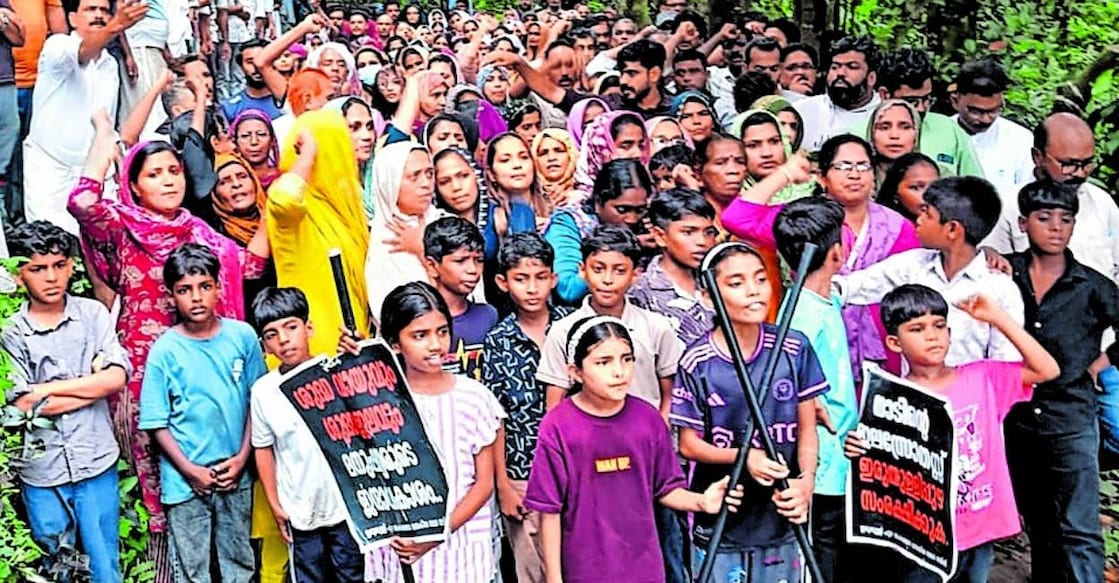
Weeks after a village erupted in protests over the animal waste rendering plant at Ambayathode in Kozhikode, the residents are worried over their children. The riotous turn of events followed by police patrol have taken an emotional toll on the children. They skip school, stay at home and wake up at night screaming for help, parents said.
At the St Joseph's LP School, where several students from the region study, only 15 of its 63 students attend classes. Earlier, the numbers were as low as 7, according to the Headmistress, Daisy Mathew. Although the school authorities assign tasks online, parents worry that missing classes may affect their children's future.
Since the violence broke out on October 21, police have walked in and out of homes looking for suspects. Residents alleged that the cops had knocked down doors and pointed photographs at little children, hoping to find leads.
They say the police refrained from revealing the accused, making everyone a suspect. As a result, all the men in the locality have fled in fear of arrest. The streets that were once filled with playful school children and homes that housed whole families are now mostly empty.
Following the violence, the constant patrolling has stirred fear among young kids, forcing them into their houses.
"It's only been two days since my daughter started sleeping well," says a resident of the region, who did not want to be named for the article. "She used to wake up at night crying and screaming that the police were here," she says.
Every house echoes the same story. "My daughter cries out at night, fearing that my husband and I would be arrested," says another woman.
The tense air outside has kept the children locked up inside, even at the cost of their education. Many students are unable to attend school because they fled their homes dreading arrest and went into hiding with their parents, while others avoid it out of fear. "The auto drivers that take our kids to school itself have gone into hiding," says a parent. The women, Onmanorama spoke to, requested that they be not named in the article.
Daisly points out that while the school is doing everything it can at the moment, attendance shortages may leave students ineligible to attempt their examinations under the education department's policy. "Minor shortages can be resolved by obtaining condonation certificates, but the school is helpless in cases of serious attendance deficits," she says.
A parent points out that even before the issue broke out, students in the locality could barely attend school due to constant illnesses caused by exposure to the operations of the rendering plant. "They would have to take medicine that leave them groggy and unable to focus in classes," she says. "Every house over here has a nebuliser. Can you imagine?" she asks.
She says a police officer told them they should have tolerated the smell instead of protesting, since the resulting actions have left them worse off.
But despite the tense atmosphere that has wrapped the neighbourhood, the residents refuse to back down. "We worked hard to earn enough to build our dream home. But we can't even enjoy a meal in our homes due to the constant stench and accompanying nausea," a resident says.
"Some others want to communalise the issue and blame certain communities. But here we don't have any religion, caste or party-based divisions. We all lived in harmony before this issue. All we ask for is clean water and fresh air. Is that too much? she asks.
Kozhikode Rural SP K E Baiju waved off the allegation, stating that the police were only present near the factory and that all houses in the region had been vacated. "If the children are not going to, it's because the parents are not sending them to school," he adds. He also said that the police had evidence that the protestors had requested that women and children be brought to the protests.
 Add as a preferred source on Google