

How Palarivattom flyover cracked open & buried Ebrahim Kunju's political legacy
Mail This Article


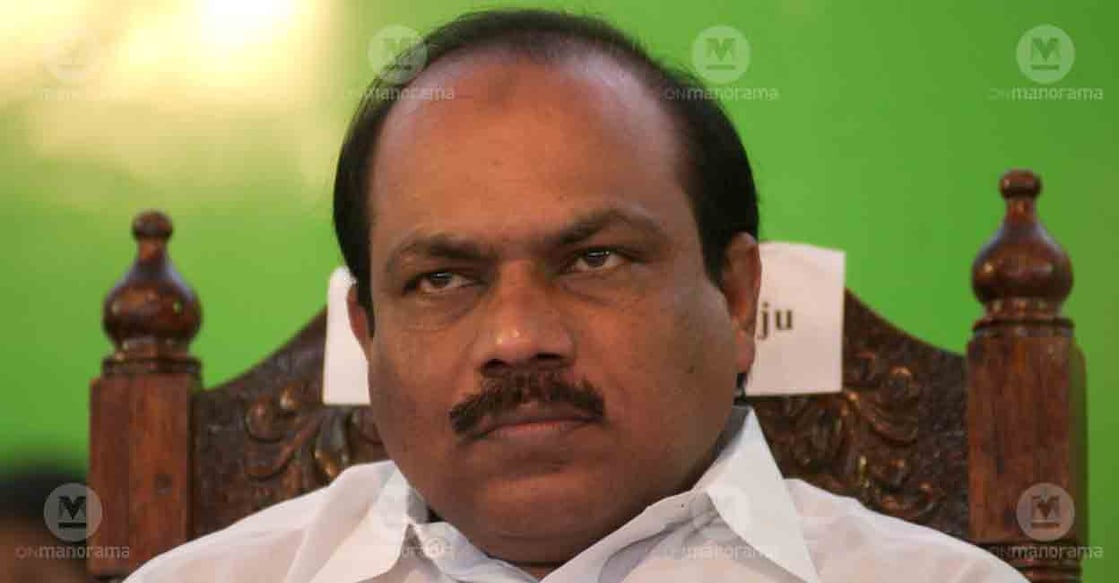
Kochi: When V K Ebrahim Kunju passed away earlier today at the age of 73, Kerala lost a seasoned politician, a former Minister, and a stalwart of the Indian Union Muslim League (IUML). For decades, he was a political heavyweight in the Ernakulam district, a four-time MLA known for his wit and organisational grip. Yet, as the state bids him farewell, his legacy remains complex, shadowed by one of Kerala’s most-discussed infrastructure scams, which defined his final years - The Palarivattom Flyover Scam.
The Palarivattom Flyover controversy shifted the narrative from his political acumen to a battle for reputation, transforming a project meant to be a milestone into a millstone. This scandal did not just challenge his administrative record; it altered the course of his life, leading to a turbulent conclusion for a man who had once been one of the state's most influential politicians. In fact, the scam ended Kunju’s political career before his health did.
The controversy dates back to Kunju’s tenure as the Minister for Public Works (PWD) in the UDF government led by Oommen Chandy during 2011-2016. The Palarivattom flyover was envisioned as a quick solution to the chaotic traffic snarls at one of the state's busiest bypass junctions. Commissioned at a cost of roughly ₹48 crore, the project was fast-tracked and inaugurated in October 2016. The 750-metre flyover was supposed to last over “100 years”.

However, the celebration was short-lived. Within months of its opening, the flyover began to disintegrate. Potholes marred the surface, followed by the appearance of alarming cracks in the pier caps and girders. By May 2019, less than three years after vehicles first rolled over it, the structure was declared unsafe and shut down.
Subsequent studies by experts from IIT Madras and “Metro Man” E Sreedharan revealed a damning reality. The concrete used was of dangerously low quality, and the structural integrity was compromised beyond repair. The flyover, intended to last for decades, had to be demolished and rebuilt, standing as a humiliating monument to administrative failure.
While the physical structure failed due to poor engineering, the political tremors were caused by the financial irregularities behind the scenes. As the investigation by the Vigilance and Anti-Corruption Bureau (VACB) gathered pace, Ebrahim Kunju found himself in the eye of the storm.
The crux of the allegations against him centered on an interest-free “mobilisation advance” of ₹8.25 crore released to the contractor, RDS Projects Ltd. Investigators discovered that this payment had no provision in the original contract. The Vigilance department alleged that Kunju had abused his official position to personally intervene and sanction these funds, effectively allowing a private contractor to use public money for personal gain at a loss to the state exchequer.
The case tightened around the former minister when T O Sooraj, the IAS officer who served as PWD Secretary at the time, turned against him. In a startling revelation, Sooraj stated that he had released the funds only after receiving direct written orders from Minister Kunju, placing the responsibility squarely at the minister's door.
Arrest, illness, and the legal battle
The legal noose tightened in February 2020 when then Kerala Governor Arif Mohammed Khan granted prosecution sanction against Kunju, a rare and serious development for a former minister. The situation reached a dramatic climax on November 18, 2020. Vigilance officials recorded Kunju’s arrest, not at his home or office, but at a private hospital in Kochi where he was undergoing treatment.
His subsequent judicial custody was marked by deteriorating health. Kunju was battling multiple myeloma, a serious form of cancer, which eventually became the grounds for his release. Recognising the severity of his condition and the need for specialised care, the Kerala High Court granted him bail in January 2021, ending his physical incarceration but leaving the legal charges hanging over his head.
The Enforcement Directorate also launched a probe against Kunju in connection with the Palarivattom flyover case based on the allegations that he laundered around ₹10cr through the account of Chandrika daily, IUML’s mouthpiece, when he was the PWD minister.
The 2021 assembly election and the fall of a stronghold
The scam had consequences that reached far beyond the courtroom; it deflated Kunju's electoral career. As the 2021 Assembly Elections approached, the Palarivattom scam became a potent weapon for the LDF, who cited it as the ultimate example of UDF corruption.
Facing immense public scrutiny and battling cancer, Kunju was forced to make a difficult political retreat. He backed out of the contest for the Kalamassery constituency, a seat he had nurtured into a fortress. In a bid to retain the family's hold on the region, the IUML fielded his son, V E Abdul Gafoor. However, the electorate was unforgiving. The shadow of the demolished bridge loomed too large over the campaign, and the voters of Kalamassery rejected the heir apparent. Gafoor lost the election to CPM’s P Rajeev, marking a historic defeat for the Kunju family in their own backyard.
With Ebrahim Kunju’s passing, the legal proceedings against him will now abate and the charges will be formally dropped. The flyover itself has since been rebuilt under the supervision of the DMRC and is currently operational.
While many will remember Kunju for his witty parliamentary interventions and his organisational skills within the Muslim League, the Palarivattom Flyover scam remains the defining chapter of his final decade; a stain on a lifetime of public service.
 Add as a preferred source on Google