

Kannur man came from Qatar for daughter's wedding & cops gave him life-long trauma, HC orders ₹14 L compensation
Mail This Article


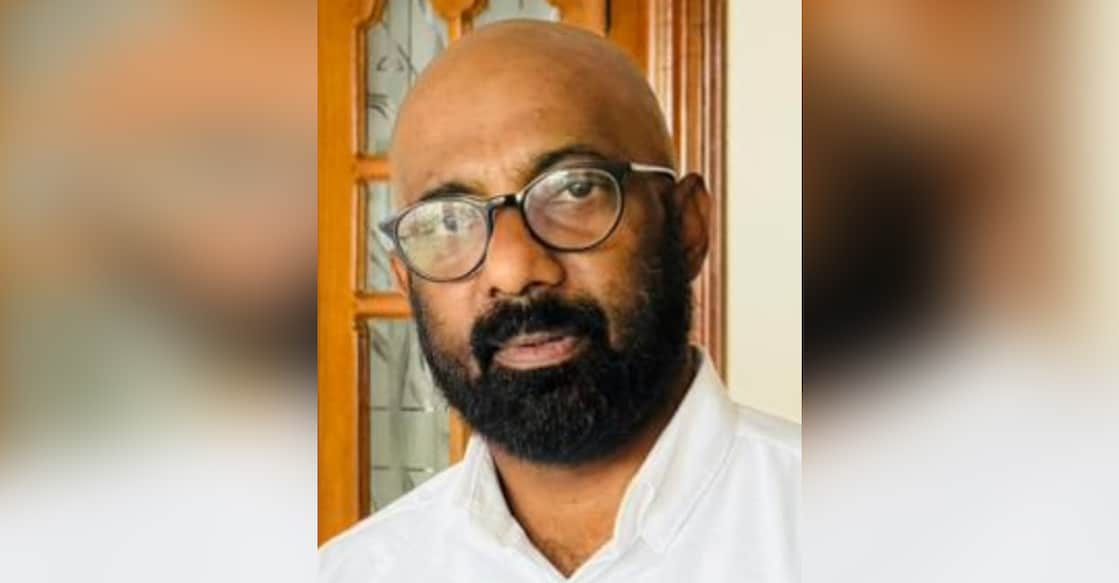
Kochi: Seven years after a midnight police action tore apart his family, career and health, the Kerala High Court has acknowledged, almost line by line, the “untold misery” inflicted on VK Thajudheen, an expatriate who returned home on a short leave only to conduct his daughter’s wedding and instead found himself branded a criminal.
While the ₹14-lakh compensation ordered by the High Court offers official vindication, the judgment itself reads like a stark chronicle of how unchecked police power can devastate an ordinary family.
In a detailed verdict, Justice PM Manoj held the State liable for violating Thajudheen’s fundamental right to life and personal liberty, calling the case a textbook instance of wrongful arrest, public humiliation and institutional apathy.
The judgement opens with a line that frames the tragedy that followed: “This case is about an untold misery of a father who returned to his motherland on a short leave of 15 days to conduct his daughter’s marriage.”
VK Thajudheen (43), an NRI from Kadirur in Kannur, ran a rent-a-car business in Qatar. He landed in Thalassery on June 25, 2018, after securing a 15-day leave to conduct his daughter Thezleena’s wedding and return to work. What followed was a downward spiral of police fabrication, incarceration and irreversible loss.
The midnight ambush
The turning point came in the early hours of July 11, 2018. At around 1.13 am, Thajudheen, his wife Nasreena and their children were returning from his sister’s house to their home at Kadirur when a police party led by Sub-Inspector P Biju of Chakkarakkal Police Station intercepted their car near their residence.
The police used a ruse by asking the family to help pull a jeep that was supposedly “stuck in the mud.” While the children and others got down to help, Thajudheen remained seated, citing severe back pain. Despite repeated explanations, the officers “dragged him out of the car and forcefully took photographs of him on their mobile phones.”
When the family questioned the conduct at such an odd hour, the response was chilling. The officers openly declared that “he is a thief” and warned that if he did not confess, he would face “dire consequences.”
The family was taken to Chakkarakkal Police Station in the dead of night. There, police showed them CCTV footage of a bearded man who had allegedly snatched a gold chain weighing 5½ sovereigns from a woman, Raghi CK, on July 5, 2018.
Thajudheen pleaded his innocence, pointing out that he had never been involved in any crime, came from a respectable family and had returned solely for his daughter’s marriage. The court recorded that these pleas were met not with investigation, but abuse. Officers shouted at him: “You are a thief… a notorious thief.”
The police threatened to implicate his wife and children in other criminal cases if they resisted. His passport, phones and ₹56,000 in cash were seized. The family alleged that Thajudheen was “stripped and subjected to physical and mental torture” in their presence, plunging them into shock, trauma and fear.
Evidence that was wilfully ignored
At the time of the alleged crime -between 11.15 am and 12.15 pm on July 5- Thajudheen was at Kadirur, making arrangements for his daughter’s wedding. Call Data Records showed he was speaking to a beautician, Sajitha KP, at 11.47 am and 11.49 am, placing him 11 kilometres away from the crime scene. The court noted that the police refused to examine these records.
There were glaring identity mismatches as well. The person in the CCTV footage wore a steel bangle; Thajudheen pointed out that as a devout Muslim, he does not wear such ornaments. The culprit also had a distinct forehead mark that Thajudheen did not have.
When a superior officer flagged these discrepancies, SI Biju brushed them aside, dismissing them as merely “a problem with the camera.” A DySP report would describe this approach as a “lack of capability to assess things minutely.”
Public parading, public shame
The arrest did not end with custody. The court recorded that Thajudheen was paraded through public roads at Choorakkalam, taken to his parental home, his sister’s house in Azhiyur, another sister’s house, and even to a jewellery shop, each time presented as a chain snatcher.
Hundreds watched as he was displayed before the public, with people shouting “thief” at him. The police claimed they were attempting recoveries of a white scooter and stolen gold, but seized nothing anywhere. Justice Manoj noted that this amounted to “defaming the petitioner in society for a crime which was not committed by him,” coupled with both public and media trials.

From Kerala jail to a Qatari prison
The consequences were catastrophic. Thajudheen spent 54 days in judicial custody in Kerala. He was supposed to return to Qatar by July 11, 2018. Because he was in jail, he missed his reporting deadline.
When he finally returned to Qatar on January 25, 2019, he was arrested at the airport for failure to report for duty. He spent another 23 days in a Qatari prison and was then deported to India, losing the job, business and livelihood he had built over years of work. The court rejected the police claim that this imprisonment was linked to financial fraud, noting the absence of any material evidence.
While Thajudheen remained behind bars, his wife approached the Chief Minister, prompting a fresh investigation by the DySP. The truth eventually emerged: the real culprit was Sarath Valsaraj, who was wanted in other cases.
The DySP’s internal report was scathing. It recorded that SI Biju arrested Thajudheen in undue haste, despite being advised to wait, and ignored serious doubts about identity. It underscored a basic principle the court later echoed: “Basic sense of justice dictates that if there is a doubtful circumstance regarding whether the accused committed the crime, the benefit of that doubt should go to the accused.”
Citing multiple Supreme Court precedents, including the Nambi Narayanan case, the court held that wrongful arrest and detention constitute not merely a private wrong but a public wrong arising from abuse of State power. “Allowing police to violate fundamental rights of such persons would amount to anarchy and lawlessness, which cannot be permitted in a civilised society,” the court warned.
Rejecting the police claim of “good faith,” the court noted that the impossibility of Thajudheen’s involvement was ignored at every stage and held the State strictly liable for the “catastrophic ordeal” suffered by him and his family.
The High Court directed the State government to pay ₹14 lakh in compensation -₹10 lakh to Thajudheen and ₹1 lakh each to his wife and three children- clarifying that the award was under public law as a measure of constitutional accountability, and not the final word on damages. It added that the State is at liberty to recover the amount from the police officers involved.
“Relief, but not closure”
Reacting to the verdict, Advocate T Asafali, who appeared for Thajudheen, described it as a significant victory. “When the writ was filed as a public law remedy, many doubted whether it would bring any benefit. Though the compensation is only ₹14 lakh, the petitioners can still approach civil courts seeking further compensation for the mental agony, trauma and financial losses they suffered,” he said.
Thajudheen agreed, calling the verdict a long-awaited validation but not the end of his fight. “After seven years, my struggle has finally succeeded. But I won’t stop here. I lost everything: my business, reputation, health, my family’s prestige and mental peace. I was branded a thief in front of everyone. My children faced taunts in schools and colleges. I was jailed in Qatar and deported. I fell into debt and lost more than ₹2.5 crore,” he said.
He said the trauma of that night still haunts him. “I came home on emergency leave for my daughter’s wedding. My business in Qatar was prospering and about to expand. I begged my sponsor for just 15 days. The wedding was on July 8, and I was to return on July 11. On the night of July 10, after a family gathering at my sister Shemeema’s house, the police stopped us and arrested me. From that moment, my life turned into hell.”
His elder son Thezin, who was 18 at the time, said the arrest cost him his education. “I was supposed to get admission in a college in Bengaluru the next day. My father had ₹56,000 with him for my admission. The police seized the cash, phones and passport. I missed the admission. Later, when my father’s business collapsed, I had to drop out and start working to support the family. We are happy with the verdict, but we will continue the fight,” he said.
The impact on the younger child was equally severe. “My younger son Thazeem was in Class 2. He was bright and active, but after the case, he became withdrawn and was bullied in school, called ‘thief’s son’,” Thajudheen said. “It was also shameful for my newly married daughter at her husband’s house, where people believed her father was a chain snatcher,” he added.
Because Thajudheen could not return to Doha on time, everything related to his business collapsed. His accountant died of jaundice, pending cheques expired, and lakhs were lost. “My three phones were seized. I missed crucial business calls and meetings. I couldn’t honour cheques because I was in jail. My sponsor thought I cheated him and fled. I was jailed and deported. I lost everything I built through hard work,” he said.
The prolonged legal battle also took a toll on his health. He suffered a stroke in 2024, surviving without paralysis only because of timely treatment. A diabetic, he later developed a severe infection in his right foot, leading to the surgical removal of his big toe.
“I spent over ₹5.5 lakh in the hospital and stayed there for six months. I endured everything, hoping justice would finally come. This verdict is only an initial relief. My health is not what it was in 2018, but I will start from scratch, rebuild my life and continue my legal fight for fair compensation,” he said.
 Add as a preferred source on Google