

Analysis | Use of ‘Marad,’ ‘Jamaat’ in campaign may backfire on Left
Mail This Article


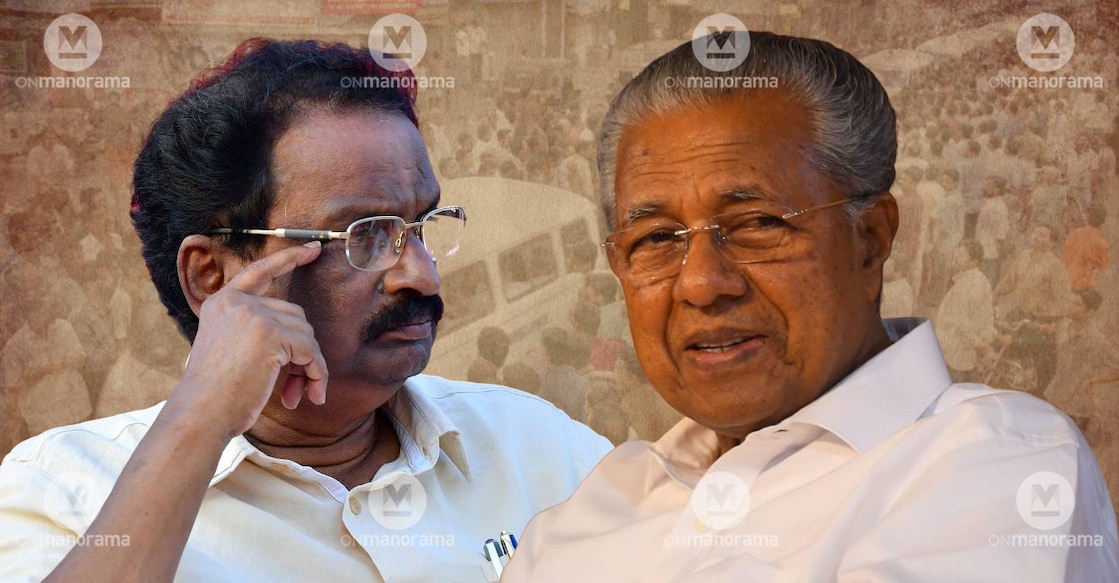
Kozhikode: Nearly two decades after the Marad riots shook a coastal village near Kozhikode, the episode has resurfaced in Kerala’s political discourse following controversial remarks by senior CPM leader A K Balan against the Jamaat-e-Islami. With Chief Minister Pinarayi Vijayan declining to disown the statement, political analysts warn that while the move may be aimed at countering the BJP’s growing influence ahead of the forthcoming Assembly elections, it risks damaging the Left’s secular image and accelerating voter erosion.
Balan, a former minister, had earlier this week claimed that if the UDF were to return to power, Jamaat-e-Islami would “rule the Home Department” and that one or more “Marad riots” could be repeated in the state. Jamaat-e-Islami strongly objected to the remarks and served a legal notice on him. However, the Chief Minister and the CPM’s state leadership refrained from distancing themselves from the statement. Instead, Pinarayi Vijayan defended Balan on Thursday, saying he was merely reminding the public of the Marad incident, which occurred during the UDF regime. CPM central committee member Elamaram Kareem also backed Balan, describing Jamaat-e-Islami as an “extremist” organisation.
Political observers argue that the CPM’s attempt to regain votes lost to the BJP in the last Lok Sabha elections and recent local body polls (by invoking sensitive incidents such as Marad) could prove counterproductive and further weaken its electoral prospects.

Vijayan said “extremist” organisations active during the Marad incidents continue to operate in the state. He also criticised the Jamaat-e-Islami for portraying criticism of the organisation as an attack on the Muslim community. He also alleged that a former Ameer of Jamaat-e-Islami had advocated a religion-based nation and claimed that the organisation supports democracy only in name.
Jamaat-e-Islami leaders, however, rejected any linkage between the organisation and the Marad violence. Jamaat ideologue O Abdurahman, writing in the organisation’s mouthpiece Madhyamam, said it was the intervention of the then Kerala Ameer, K A Siddique Hasan, that helped defuse tensions between communities in Marad after the violence in 2003. He claimed that Siddique Hasan played a key role in facilitating dialogue and reconciliation efforts that contributed to restoring peace in the region.
Writer and political observer M N Karasserry said the CPM leadership’s refusal to disown Balan’s remarks and its decision to revive the Marad issue point to an attempt to deepen social polarisation. “No Jamaat-e-Islami worker was convicted in cases related to the Marad riots, nor was the organisation named by the judicial commission constituted by the A K Antony government. Members of several political organisations were accused. Raising an issue that people want to move past appears aimed at provoking Hindutva sentiments,” he said.
Political analyst J Prabhash warned that the CPM’s strategy could alienate secular voters who traditionally supported the party. “A significant section of Muslim voters backed the CPM in the previous Assembly election because of its progressive and secular positioning. If the party adopts a line resembling the Sangh Parivar’s, those voters may stay away,” he said.
Prabhash said the CPM appeared to be attempting a consolidation of Hindu votes amid concerns over declining minority support. “The BJP has made inroads into both the Congress and the CPM strongholds across Kerala. The Left seems to be responding by appealing to the majority community. If voters conclude that it is better to support the BJP than a Left that is perceived as echoing Hindutva rhetoric, the party cannot fault them,” he said.
Political observer A Jayashankar said Balan’s remarks were part of a calculated political strategy. “In several constituencies, the BJP cut into the Left’s vote share, contributing to defeats. The CPM is now experimenting with a soft-Hindutva approach to stem this trend in the upcoming Assembly elections,” he said.
 Add as a preferred source on Google