

Onmanorama Explains | Road accidents in Kerala: What the law says and what you must do
Mail This Article


Road accidents are not just traffic violations but criminal cases when they involve injury, death, alcohol or negligence. The recent hit-and-run case involving Malayalam actor Maniyanpilla Raju has renewed attention on the legal responsibilities of drivers. Here’s a breakdown of the relevant provisions under the Bharatiya Nyaya Sanhita (BNS) and the Motor Vehicles Act.
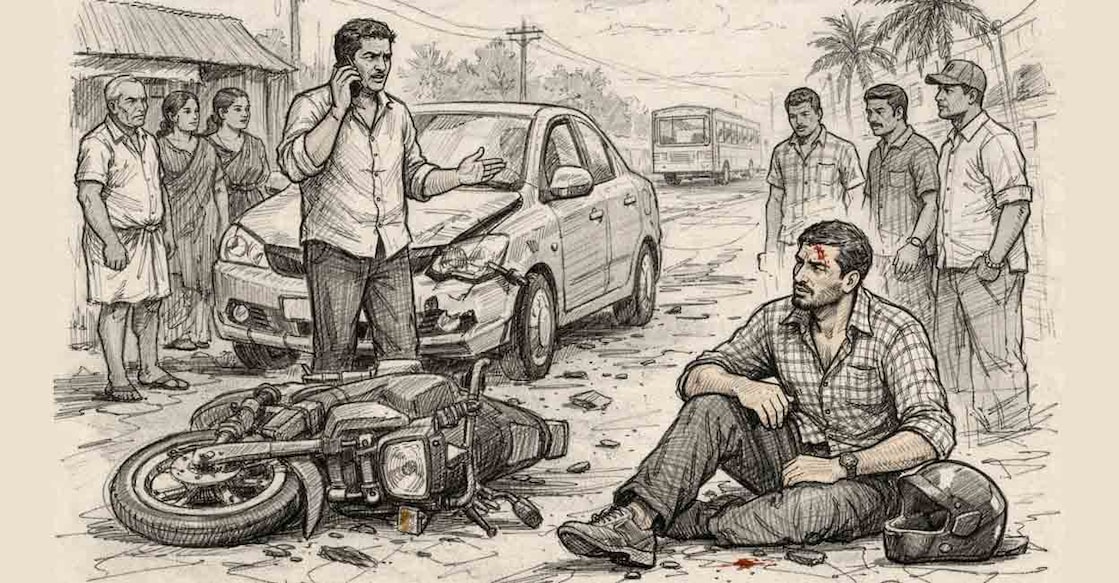
If your vehicle meets with an accident and a person is injured
Police usually register a case for rash or negligent driving along with injury-related offences.
Key charges
- BNS Section 281: Rash or negligent driving on a public way.
Punishment: Imprisonment up to 6 months, or fine, or both. - BNS Section 125: Penalises rash or negligent acts that endanger human life or personal safety.
Punishment: Up to 3 years imprisonment, or fine up to ₹10,000, or both. - Sections 134(a) of Motor Vehicles Act: Requires securing immediate medical attention for the victim
- Section 134(b) of Motor Vehicles Act: Mandates reporting the incident to the nearest police station within 24 hours.
Once an accident case is registered, the police file an FIR and may seize the vehicle for inspection as part of the investigation. The driver’s licence can be suspended temporarily under Section 19 of the Motor Vehicles Act, and the person concerned may be required to appear before the court as the case proceeds.

If you do not stop after hitting a person or vehicle (hit-and-run)
Even if the accident was not intentional, failing to stop after an accident, not providing medical assistance to the injured, or not informing the police constitutes an offence under Section 134 of the Motor Vehicles Act, read with Section 187, which prescribes punishment for such violations. These provisions make it mandatory for the driver to remain at the scene, ensure medical aid to victims and promptly report the accident to the authorities.
If the accident results in death and the driver flees the scene, BNS Section 106(2) on hit-and-run causing death applies, carrying much harsher punishment, including long-term imprisonment of up to 10 years.
If alcohol is involved
Drunken driving is treated as an aggravating factor.
Charges
- Motor Vehicles Act Section 185 (drunk driving)
- First offence: Fine up to ₹10,000 and/or imprisonment up to 6 months
- Repeat offence: Fine up to ₹15,000 and/or imprisonment up to 2 years
If an accident happens while intoxicated
- BNS Section 24 slapped along with BNS 281
- Licence suspension or cancellation is likely
- Courts take a stricter view of negligence

If the accident results in death
- BNS Section 106(1): Causing death by negligence amounts to culpable homicide.
- Punishment: Imprisonment up to 5 years, or fine, or both.
- If the driver flees the scene: BNS Section 106(2) applies, with much stiffer punishment of up to 10 years imprisonment and fine.

What you must do if you meet with an accident
This can make or break your legal position.
- Immediately stop the vehicle
- Help the injured: Call 108 or take them to the nearest hospital
- Inform the police: Call 112 or the local station
- Stay at the spot: Cooperate fully with authorities
Very important legal protections
- Good Samaritan Law protects anyone who helps an injured person
- You cannot be forced to pay hospital bills or detained just for helping
- Do not consume alcohol after the accident
- Inform your insurance company promptly
Most accident cases involving injuries are bailable in nature. However, cases that involve death, intoxication or fleeing the scene can become non-bailable, depending on the facts and circumstances. Courts also consider whether the driver stopped at the scene, assisted the injured, and promptly informed the police when deciding on bail.
Compensation is separate from the criminal case
- Even if a criminal case is registered victims can seek compensation through the Motor Accidents Claims Tribunal (MACT)
- Insurance usually covers compensation, unless policy terms are violated (like drunken driving)
In Kerala, stopping, helping and informing police can significantly reduce legal trouble. Fleeing the scene, hiding or being intoxicated almost always leads to tougher charges.
If there are no injuries, only vehicle damage
In Kerala, if a road accident involves only damage to vehicles or property and no one is injured, it is usually treated as a minor traffic matter rather than a criminal case. Police generally do not register an FIR under the Bharatiya Nyaya Sanhita and instead make a General Diary entry, help the parties reach a spot settlement, or issue a traffic challan if a rule was violated.
Drivers are expected to stop, check that no one is hurt, exchange details such as vehicle number and insurance information, take photographs of the damage and move the vehicles aside to avoid blocking traffic.
Informing the police is not mandatory if both parties agree, but it is advisable when the damage is significant, an insurance claim is required, or the other party is uncooperative.
If one vehicle flees the scene, or if alcohol is suspected, police intervention becomes necessary and penalties under the Motor Vehicles Act may apply, and insurance claims can also be affected.
 Add as a preferred source on Google