

Islamic scholars mocked as outdated, though gender segregation exists across religions: Samastha leader
Mail This Article


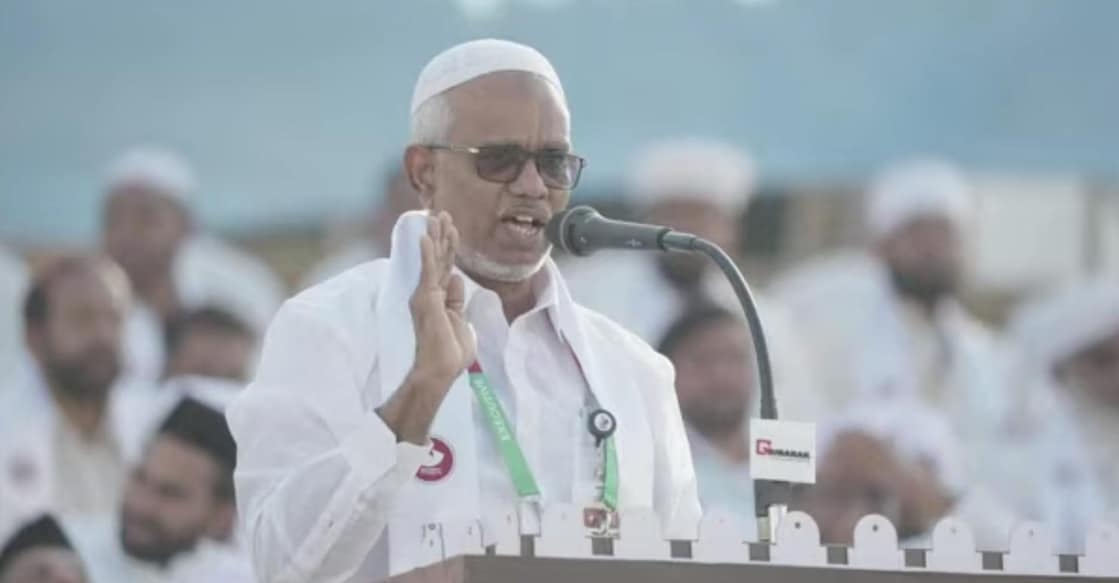
Kasaragod: Islam is repeatedly “put in the dock” and Muslim religious leaders are routinely mocked in the name of women’s freedom, while similar conservative practices in other communities attract far less scrutiny, said senior Islamic scholar and Samastha leader Abdul Samad Pookkottur.
Speaking at the valedictory function of the centenary celebrations of Samastha Kerala Jam‘iyyathul Ulama (EK faction) in Kasaragod on Sunday, Pookkottur said that at a time when intoxicants, gender neutrality, liberalism and what he described as the denial of faith are spreading rapidly in Kerala, Samastha must strengthen and expand its activities.
To underline what he called the selective criticism of Muslim scholars, Pookkottur referred to a May 2022 incident in which senior Sunni scholar M T Abdulla Musliyar was criticised for scolding organisers for inviting a Class 10 girl on stage to receive an academic excellence award at Darul Uloom Madrasa at Pathiramanna in Malappuram’s Ramapuram. Samastha had then stood by the scholar.
Pookkottur said the remarks were not intended for public consumption but were circulated on social media, triggering widespread backlash. The scholar was portrayed as outdated and regressive, he said, adding that a mono act mocking Muslim scholars was later staged at the State School Kalolsavam. Why, he asked, are Muslim scholars singled out for such criticism when similar views expressed by others provoke little or no outrage?
To make his point, Pookkottur cited an incident from September 2015 at the Sahitya Academy Hall in Thrissur, during the release of the Malayalam translation of 'Transcendence - My Spiritual Experience with Pramukh Swamiji', co-authored by A P J Abdul Kalam and Arun Tiwari.
The book was translated by University College professor Sreedevi S Kartha and published by Current Books. Writer M T Vasudevan Nair was scheduled to release the book by handing over a copy to Swami Brahmavihari Das, a representative of Pramukh Swami.
According to Pookkottur, Brahmavihari Das declined to share the stage with the woman translator. Also, he insisted that women should not be seated in the first three rows, citing “ashram dharma”. The organisers were placed in a bind, and Kartha was eventually asked not to attend the event.
Pookkottur argued that the episode did not attract the kind of criticism seen in the case of Muslim scholars. That claim does not entirely hold. The incident triggered protests after Kartha flagged the issue on Facebook.
Several women’s and progressive organisations, including Mahila Sangam, Vanitha Kala Sahiti, Samatha, Purogamana Kala Sahitya Sangam, AISF, SFI and DYFI, protested at the venue. The event was eventually cancelled, and the publisher issued an apology to Kartha.
The Samastha leader, however, said the madrasa incident drew sustained criticism, with Abdulla Musliyar also being criticised by then Governor Arif Mohammed Khan and Kerala Women’s Commission chairperson P Sathidevi.
-
8 HOURS 15 MINUTES AGO
Man arrested for snatching gold chain from elderly woman after asking for water

“There are people who follow extreme gender segregation and others who follow milder forms,” Pookkottur said. “My question is about discrimination in criticism, not anything else.” He alleged a concerted effort to portray the Muslim community as communal, regressive and irrational.
Speaking ahead of the arrival of Chief Minister Pinarayi Vijayan, Pookkottur said the community had suffered several setbacks, citing the High Court decision quashing the 80:20 minority scholarship scheme and the acquittal of three RSS-BJP workers in the murder case of Riyas Moulavi by a Kasaragod sessions court.
He also alleged that Waqf appointments were being brought under the Public Service Commission. Muslims were disproportionately removed from voters’ lists during the Special Intensive Revision (SIR) of electoral rolls. He said he was not viewing these developments through a communal lens but described them as democratic concerns. Even the West Bengal Chief Minister had personally appeared before the Supreme Court to highlight the issues in SIR, he said.
Referring to an alleged hate speech by a swami at the Malappuram Kumbla Mela, in which he stoked fears that Shariat law would one day become the law of the country, Pookkottur said such language should neither provoke anger nor be answered in the same tone. “We do not want India to become such a country,” he said, calling for unity among people of all faiths.
He cited a late December incident from Assam’s Sribhumi district, where Maulana Abdul Basit, a young imam, used his mosque’s public address system to raise an alarm after a car skidded into a pond near the mosque in the dead of the night, helping save seven lives.
This, he noted, happened at a time when the use of loudspeakers for the call to prayer was itself under scrutiny. Muslims, he said, live like all other communities and do not enjoy special privileges. Samastha, he added, teaches camaraderie and patriotism, values that are reflected even in its textbooks.
 Add as a preferred source on Google