

Veteran Congress leader KP Unnikrishnan, who broke with Indira Gandhi and sparked the ‘Co-Li-Bi’ discourse, dies at 90
Mail This Article


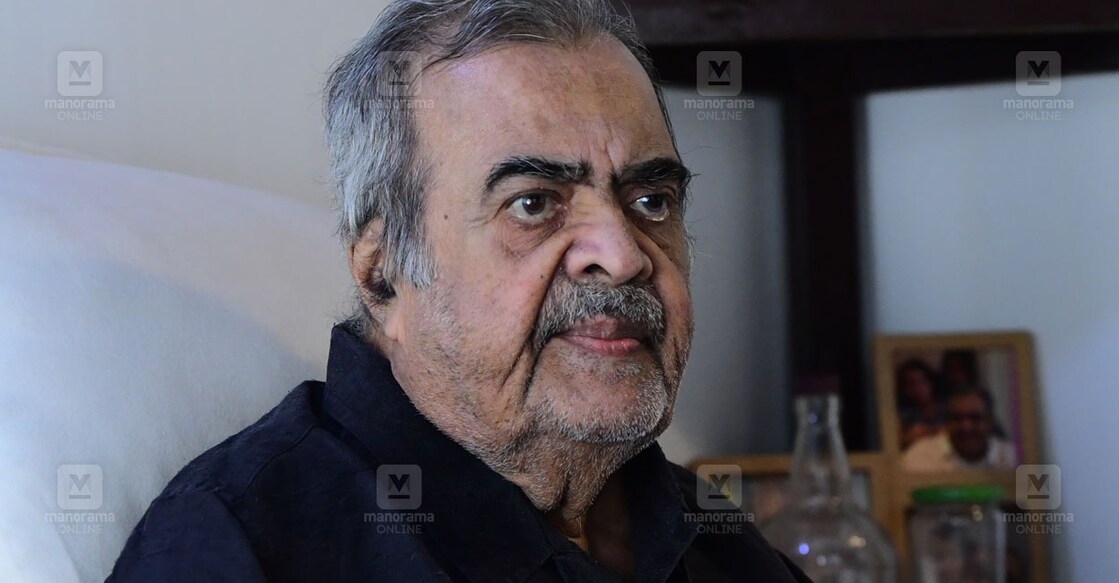
Kozhikode: K P Unnikrishnan, former Union Minister and veteran Congress leader, passed away in Kozhikode on Tuesday morning at the age of 90.
Unnikrishnan had been undergoing treatment for age-related ailments at a private hospital in the city.
With the passing of K P Unnikrishnan, Kerala loses one of the last representatives of a generation that treated Parliament not merely as a forum of numbers, but as a theatre of ideas.
In the layered and often paradoxical world of Kerala politics, K P Unnikrishnan occupied a space that defied easy labels. A socialist by conviction, a Congressman by long association, a Union Cabinet Minister in the National Front era, and a fierce critic of authoritarianism during the Emergency, Unnikrishnan’s political journey mirrored the ideological churn of post-Independence India.
Unnikrishnan began his political life in the Socialist Party before joining the Congress in 1960. By 1962, he had become a member of the All India Congress Committee, marking the beginning of a long engagement with national politics.
Elected to the Lok Sabha from Vadakara in 1971, he went on to represent the constituency multiple times — in 1977, 1980, 1984, 1989 and 1991 — building a formidable personal base that often transcended party labels.
Despite aligning with the Congress, Unnikrishnan remained deeply influenced by the socialist ideals of Jawaharlal Nehru. His politics was shaped less by factional loyalty and more by ideological commitment.
Although once considered close to Indira Gandhi, Unnikrishnan emerged as a strong critic when the Emergency was declared in 1975. At a time when dissent within the Congress was rare, his opposition marked a decisive ideological stand.
Ironically, leaders who had earlier opposed him , including A K Antony , gravitated towards his camp during this turbulent period. But, differences with the leadership eventually pushed him into Congress (U), later Congress (S), and by 1980 he found himself aligned with the Left front led by CPM in Kerala.
Even as Antony and others returned to the Congress fold, Unnikrishnan chose to remain outside.
From 1980 onward, Unnikrishnan contested from Vadakara with Left support, winning repeatedly against formidable opponents. His 1984 victory was particularly striking. Amid the massive sympathy wave following Indira Gandhi’s assassination, when the Congress swept much of the country under Rajiv Gandhi, Unnikrishnan won the election as Left-backed MP. In Parliament, he developed a reputation for sharp interventions.
As part of the National Front movement led by V P Singh, Unnikrishnan was inducted into the Union Cabinet, handling Telecommunications, Shipping and Transport between 1989 and 1990.
The 1991 Lok Sabha election from Vadakara remains one of the most discussed episodes of his career. There were efforts to defeat him from Congress. Advocate M Ratna Singh contested as an Independent, and Congress, Indian Union Muslim League (IUML), as well as the BJP extended support to her against the Left-backed Unnikrishnan.
It was during this contest that allegations of a Congress–Muslim League–BJP understanding surfaced in Kerala’s political discourse — giving rise to the now-familiar phrase ‘Co-Li-Bi alliance.’
Despite the unusual alignment against him, Unnikrishnan managed to win the election by a margin of 17,489 votes.
In 1995, he returned to the Congress fold, perhaps closing a circle that had remained ideologically open. However, his 1996 Lok Sabha bid from Vadakara ended in defeat to O Bharathan of the CPM.
Thereafter, he gradually withdrew from active politics, spending his later years in relative quiet at his residence in Kozhikode city.
