

Endogamy: Knanaya Church to move SC; Kasaragod man seeks bishop's nod for May 18 wedding

Mail This Article


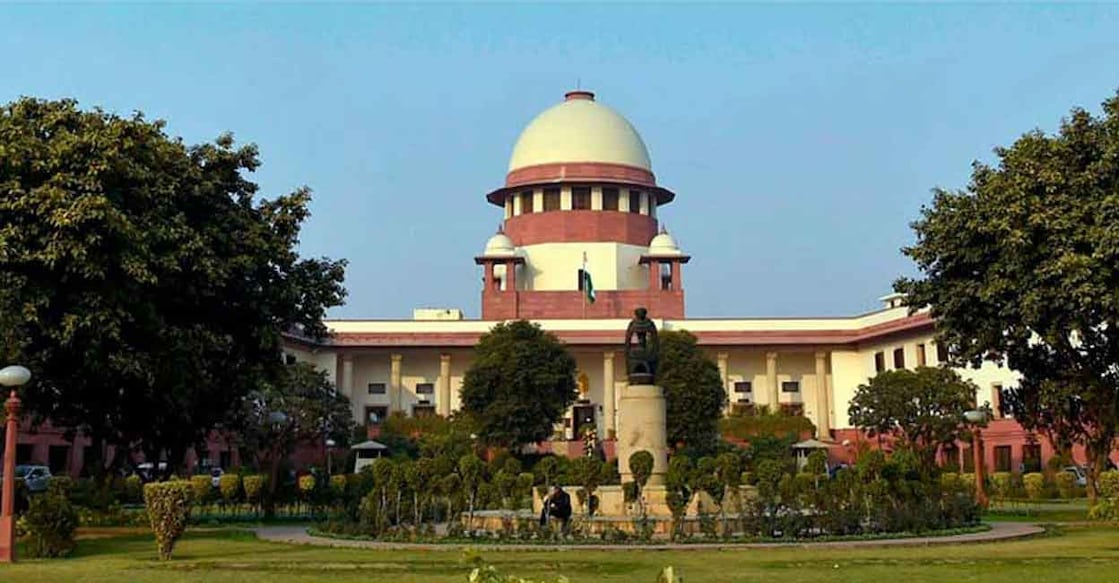
Kasaragod: The Knanaya Catholic Archeparchy of Kottayam said it will move the Supreme Court against the Kerala High Court’s order striking down institutional enforcement of endogamy, even as a Kasaragod autorickshaw driver at the centre of the dispute has written to the head of the diocese to abide by the ruling and conduct his marriage to his non-Knanaya partner at his parish on May 18.
Justin John, who has been fighting the legal battle since 2023 to marry a Roman Catholic woman from outside the Knanaya fold, has written to Archbishop Mar Mathew Moolakkatt seeking that his marriage be solemnised at St Anne’s Church, Kottody. The letter, sent on March 26, three days after the HC verdict, seeks a response within 15 days.
The Knanaya Catholic Archeparchy of Kottayam functions within the larger Catholic Church headed by the Pope, but a section of its faithful traces its lineage to Jewish origins and adheres to endogamy (marry only Knanites) to preserve what it describes as the “purity” of its bloodline. Lower courts have relied on the Supreme Court’s 1969 ruling that there is no caste system among Christians, and the Knanite Christians cannot consider themselves as a separate caste.
However, the March 23 HC judgment ruled that the Knanaya Church cannot enforce endogamy, regulate the personal lives of its members, or deny sacraments to those marrying outside the community.
The ruling came on a second appeal filed by the Church against a Kottayam Munsiff's court order, which had held that denying sacraments to members marrying outside the community was impermissible and unconstitutional.
On March 29, the first Sunday after the High Court order, a pastoral letter from Archbishop Mar Mathew Moolakkatt was read out in all parishes of the Knanaya Church, announcing plans to approach the Supreme Court. The letter said the Archeparchy’s lawyers had presented the case as required, but the judgment went against them, and that steps were now being taken to move the apex court.
Legal battle spanning decades
The legal battle over endogamy within the Knanaya Catholic Archeparchy of Kottayam formally took shape as a constitutional challenge in 2015, when the Knanaya Catholic Naveekarana Samithi (KCNS), a reformist group, approached a trial court in Kottayam.
But the seeds of that challenge were sown much earlier, and, in a sense, by the community itself.
In 1988, a representative suit was filed before a Munsiff’s Court in Kottayam seeking the excommunication of Biju Uthup, then a 31-year-old project manager with the Defence Research and Development Organisation (DRDO), on the grounds that his maternal grandmother, Lilly, was a Latin Catholic. A year later, in 1989, his parish, Holy Family Parish Church in Kottayam's Nattassery, denied him ‘vivaha kuri’ to marry, citing the pending dispute.
The family’s past, however, told a different story. Biju’s maternal grandfather, Chacko, a Knanaya Jacobite, had married Lilly, a Latin Catholic, at a Knanaya church in Othera near Thiruvalla in 1956. For decades thereafter, the family enjoyed full recognition within the Knanaya fold. It was only in 1988 -- much after Biju’s siblings had married within the Church and their children had been baptised into it -- that their status was questioned.
-

-
1 HOUR 33 MINUTES AGO
Ranni relives 2018 moments, shops flooded, roads cut-off as Pampa swells
-
2 HOURS 34 MINUTES AGO
Elderly woman killed in Idukki landslide; husband, son escape with injuries
In 1989, Uthup moved the Munsiff’s Court seeking a direction to issue the ‘vivaha kuri’. What began as a personal grievance evolved into a sustained legal challenge, particularly after his daughter was later denied membership in the Church. But the community did not pursue the representative suit filed in 1988.
That challenge culminated, decades later, in a decisive trial court verdict. On April 30, 2021, the Munsiff’s Court in Kottayam ruled against the Church, declaring that members who marry Catholics from other dioceses would not lose membership. It restrained the Church from terminating such membership, directed it to provide equal sacramental rights, including marriage, through parish priests, and ordered the readmission of those expelled for marrying outside the community.
The Church appealed. In June 2021, a district court granted a stay on the trial court’s order. But reformist members, including Uthup, moved the HC. In September 2021, Justice V G Arun lifted the stay.
Earlier, in an interim order on November 4, 2020 -- later continued in March 2023 by Justice M R Anitha -- the HC granted partial relief to the Church by staying the trial court’s direction to readmit those expelled for marrying outside the community. But it directed the Church to issue ‘vivaha kuri’ or no-objection certificates to members seeking to marry outside the community, without insisting on relinquishment of membership.
It was this interim order that Justin John relied on in 2023 to marry Vijimol Shaji, a Roman Catholic from a neighbouring parish.
The Church initially issued an NOC for the engagement but stopped short of permitting the wedding. When John moved for contempt, the matter stalled, with seven judges recusing themselves from hearing the case. Eventually, following court intervention, the Church issued the NOC, but refused to solemnise the marriage in his parish, arguing that the order only required the issuance of the certificate.
John’s contempt appeal plea was dismissed. A subsequent writ petition was rejected on the ground that he had already obtained the relief sought, the NOC.
“Then I realised I had to join the larger litigation,” John said. He impleaded himself in the KCNS case, which was then pending as a second appeal before the HC.
His counsel, Adv Kalam Pasha, sought a specific direction to the Church to conduct the marriage at his parish, St Anne’s Church, Kottody in Kasaragod. However, the Church urged the court to hear the entire matter before issuing any direction, a move that led to the nine-day hearing and the March 23 verdict, which went against it.
With the Archeparchy now set to file a Special Leave Petition before the Supreme Court, the legal battle is poised to enter another round.
 Add as a preferred source on Google