Urban Heat Island fuels heat surge in Kerala
Mail This Article


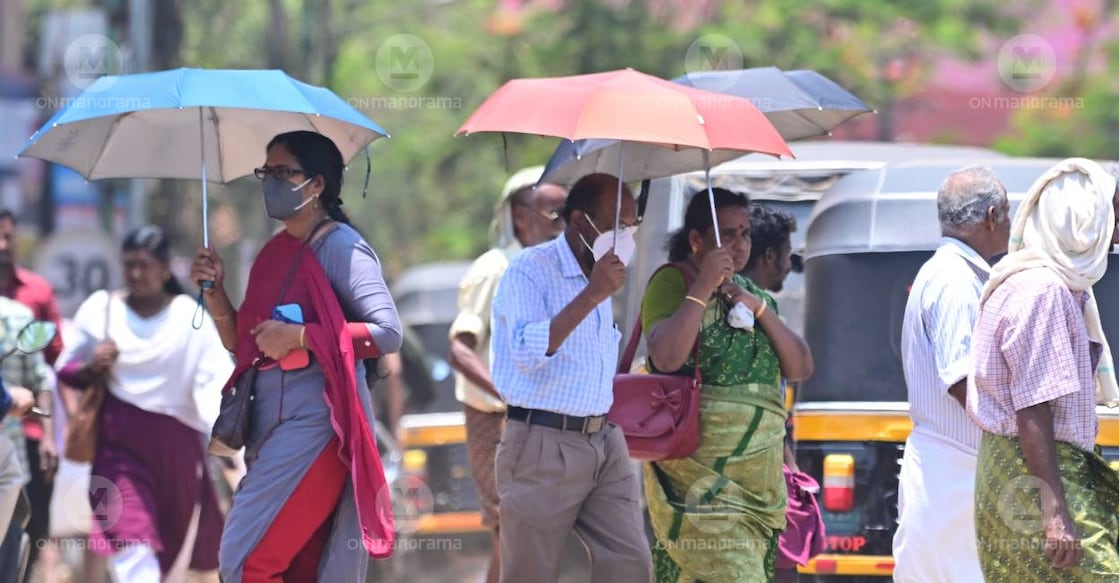
Thiruvananthapuram: The intense heat sweeping across the state has a hidden urban story behind it. Climate scientists point to the Urban Heat Island (UHI) phenomenon as a major driver, in which cities become significantly hotter than their surrounding rural areas. Night-time temperatures are also rising across major cities such as Kochi, Thiruvananthapuram, Kozhikode, Kannur, Kottayam, Thrissur, Kollam and Palakkad.
Experts attribute this surge in heat to Kerala’s rapid urbanisation and high population density. The steady decline in green cover and wetlands has further worsened the situation, while large glass-clad buildings and the widespread use of air conditioning have amplified the warming effect.
Satellite images reveal a sharp decline in greenery over the past decade in cities such as Kochi, Thiruvananthapuram, and Kozhikode. In Kochi, the density of high-rise concrete structures and the expansion of industrial zones have led to a sharp increase in ‘heat pockets’, with their extent growing from 14 square kilometres to 41 square kilometres.
Over the past two decades, Kerala’s construction sector has expanded by a staggering 300 per cent. As paddy fields and ponds disappeared, the land's natural cooling systems vanished along with them. The conversion of land into plots also led to widespread tree felling.
Thiruvananthapuram, once known for its lush greenery and shaded streets, has seen concrete structures rise from 13% to 41% over the past 30 years. In Kozhikode, studies have found that dense clusters of buildings are obstructing the natural flow of wind, further intensifying the heat.
What is the Urban Heat Island (UHI)?
It is a phenomenon in which urban areas record higher temperatures than surrounding rural regions. Buildings, tarred roads and concrete surfaces in cities absorb large amounts of heat from sunlight during the day and gradually release it at night, keeping temperatures elevated.
Ahmedabad launches `Urban Cooling Plan’
Ahmedabad has emerged as a frontrunner in tackling the Urban Heat Island effect with a Heat Action Plan. Among its most impactful measures is the ‘cool roof’ initiative, where rooftops are coated with reflective white paint, helping reduce temperatures by 2 to 3 degrees Celsius.
The city has also stepped up efforts to restore its green cover, promoting rooftop gardens and greenery along building walls. At street level, specially designed paving stones allow rainwater to seep into the ground, helping cool the surroundings through natural evaporation. Complementing these efforts, Miyawaki forests have also been developed within the city.