

Nemom backs BJP, Rajeev Chandrasekhar wins in tight contest
Mail This Article


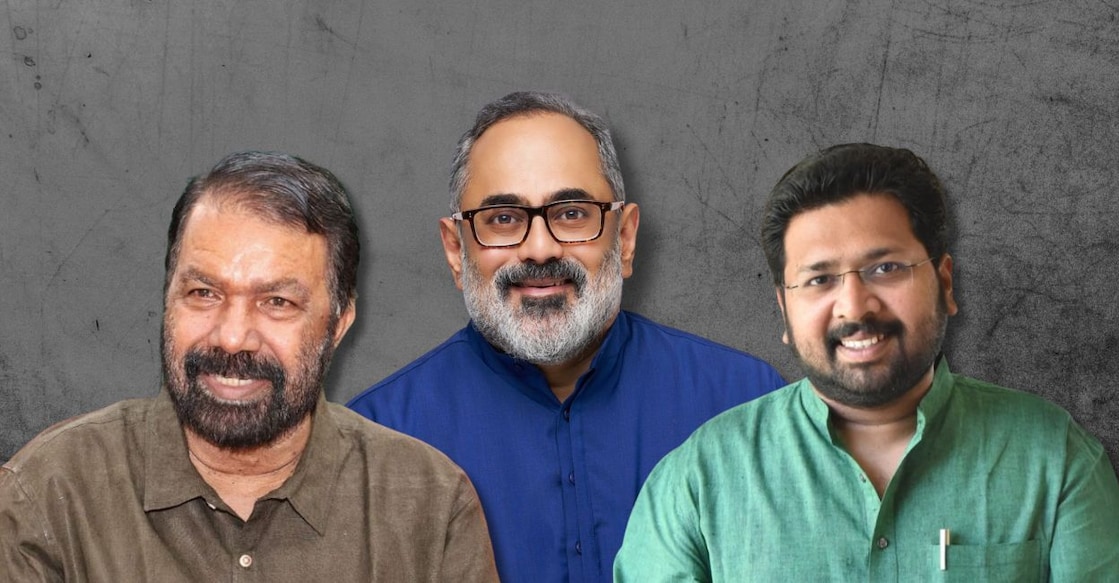
Rajeev Chandrasekhar has won Nemom, one of Kerala’s most closely watched constituencies, with a margin of 4,978 votes. The result marks a significant gain for the BJP in a seat long seen as its most viable pathway to a breakthrough in the state. The party had fielded its state president in a constituency that delivered its first-ever Assembly win through O Rajagopal in 2016.
The CPM had fielded General Education Minister and sitting MLA V Sivankutty, while the Congress nominated former MLA and Thiruvananthapuram councillor K Sabarinadhan, setting up a triangular contest in a constituency with around 1.7 lakh voters. Sivankutty finished second, with Sabarinadhan trailing in third place.
Both the Manorama News–C Voter exit poll and the Onmanorama poll meter, which tracked 12 high-intensity constituencies through the campaign, had indicated a BJP edge here — a trend that has now played out in the final result.
Nemom’s electoral trajectory over the past decade reflects the consolidation of the BJP as a third pole strong enough to disrupt Kerala’s traditional bipolar pattern. The party’s rise has been gradual but steady. In the 2025 local body polls, it won 15 of the 23 wards in the segment, up from 13 in 2020, pointing to deepening grassroots penetration. In Kerala, local body performance often mirrors booth-level organisational strength.
Even in Lok Sabha elections, where the Congress has dominated the Thiruvananthapuram seat through Shashi Tharoor, Nemom has stood out as an exception. In both 2014 and 2024, despite Tharoor securing overall leads of nearly one lakh votes, the BJP stayed ahead in this segment. This indicates a durable BJP vote base that operates somewhat independently of broader parliamentary trends.
The turning point came in 2011, when O Rajagopal expanded the BJP’s vote share from a marginal 5% to nearly 38%, losing to V Sivankutty by just 6,415 votes. This marked the beginning of a structural shift. By 2016, the BJP converted that momentum into a win, with Rajagopal securing 47.46% of the vote and defeating Sivankutty by 8,671 votes. The UDF vote collapsed to below 10%, signalling a transfer of anti-LDF votes to the BJP.
The 2021 election, however, showed the limits of this consolidation. The Congress fielded K Muraleedharan, reviving the UDF’s vote share to around 25% by reclaiming a section of votes that had shifted to the BJP. This split in the anti-LDF vote enabled Sivankutty to return with a comfortable win, despite his vote share dipping to 38.24%.
The 2026 verdict confirms that Nemom has evolved into a competitive space where the BJP can convert its steady organisational growth into electoral gains. The party’s ability to retain its expanded vote base while preventing a consolidation of anti-LDF votes behind the Congress proved decisive.
For the CPM, the result underscores the limits of relying on a divided opposition. Despite holding on to a substantial vote base, it was not enough in a tightly contested triangular fight.
For the Congress, the outcome highlights the continuing challenge of reclaiming lost ground in Nemom. While it has shown signs of recovery in recent elections, it remains short of the consolidation required to emerge as the principal challenger.
