

Kunhikrishnan wins Payyannur, allegations dent Madhusoodanan's campaign
Mail This Article


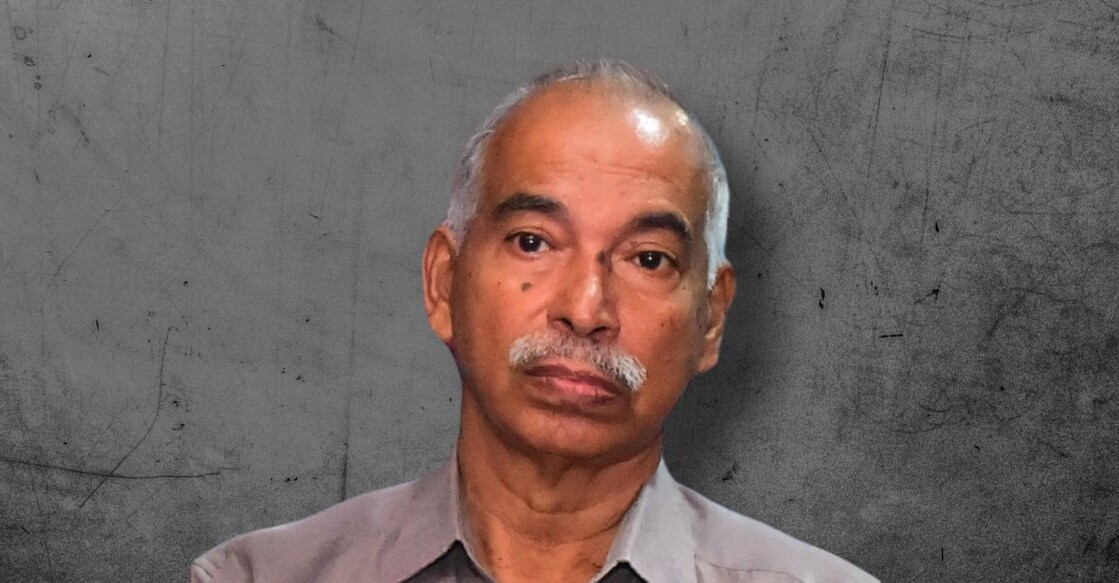
Kannur: With all 14 rounds of counting complete, CPM whistleblower-turned-UDF candidate V Kunhikrishnan defeated sitting MLA T I Madhusoodanan in Payyannur, securing a lead of 7,487 votes. Kunhikrishnan, who contested as a UDF-backed independent candidate after a fallout with the CPM, garnered 76,640 votes, while Madhusoodanan won only 69,153.
Interestingly, Madhusoodanan fell behind even when counting in traditional CPM strongholds -- Karivellur-Peralam, Kankole-Alapadamba, Peringome-Vayakkara, and Payyannur Municipality -- were completed, suggesting noticeable vote leakage in the party’s core pockets.
From the days of Pinarayi Vijayan contesting here in 1996 to the mammoth victories of recent years, Payyannur evolved into a political ecosystem where the Left’s organisational machinery often appeared invincible. In 2021, Madhusoodanan, the sitting MLA, polled 93,695 votes with a staggering 62.49% vote share, the highest secured by any candidate in Kerala that year. He won by 49,780 votes, a margin larger than the total votes cast for the Congress-led UDF candidate, who came second.
That is what makes what happened this year so politically bruising for Payyannur.
The constituency first saw Kunhikrishnan, a senior CPM leader, publicly questioning the financial integrity of the local leadership; then by his decision to directly challenge the sitting MLA Madhusoodanan; and finally by a string of violent attacks on him and his supporters during and after the campaign.
The rebel from within
Kunhikrishnan, a former district committee member and an auditor, broke ranks after accusing Madhusoodanan of financial irregularities involving funds collected for slain party worker C V Dhanraj’s family, money raised for the Payyannur area committee office, and funds mobilised for the 2021 Assembly election.
The party denied the charges. Kunhikrishnan refused to retreat.
Instead, he released internal documents, published records, wrote a book, and entered the election as an independent with a one-point agenda: defeat Madhusoodanan. The United Democratic Front, led by the Congress and the Indian Union Muslim League, sensed an opening and backed him.
What followed turned a routine election in a Left fortress into a cloak-and-dagger war in Payyannur.
Kunhikrishnan’s campaign never had the money, muscle, or visibility of the CPM. But it found traction through something more dangerous — credibility among sections of the cadre.
He ran a lean campaign built on document drops, social media videos, quiet conversations, and whispered assurances from traditional party villages.
He alleged that landowners were pressured not to rent him space for an election office. Posters put up by supporters vanished. Graffiti bearing his name was vandalised.
Then came the violence.
During the campaign and in the days after polling, supporters linked to Kunhikrishnan reported attacks. Vehicles were torched. Compound walls carrying pro-rebel graffiti were demolished. A greenhouse on his farmland was set on fire. The house and car of T Purushothaman, widely seen as one of his backroom strategists, were attacked after polling.
For Kunhikrishnan’s camp, it became proof that the rebellion had cut deeper than the party was willing to admit.
From roughly 70,000 votes when Pinarayi Vijayan contested here in 1996, to over 83,000 in 2016, and nearly 94,000 in 2021, Payyannur had consistently rewarded the Left with mammoth numbers. The party’s cooperative network, branch committees, local bodies, and social institutions remain deeply embedded across the constituency.
But this election introduced something Payyannur rarely sees: internal doubt.
Even within the CPM, there was a quiet acknowledgement that a section of traditional Left voters may have drifted.
Kunhikrishnan, for his part, remains defiant. In the final stretch of the campaign, he had predicted victory by 5,000 votes, but won by 7,487.
On this counting day, the party did not just count the votes. It also counted the dissent.
