

Nava Kerala Sadas assault case: 5 members of Pinarayi's security team get anticipatory bail
Mail This Article


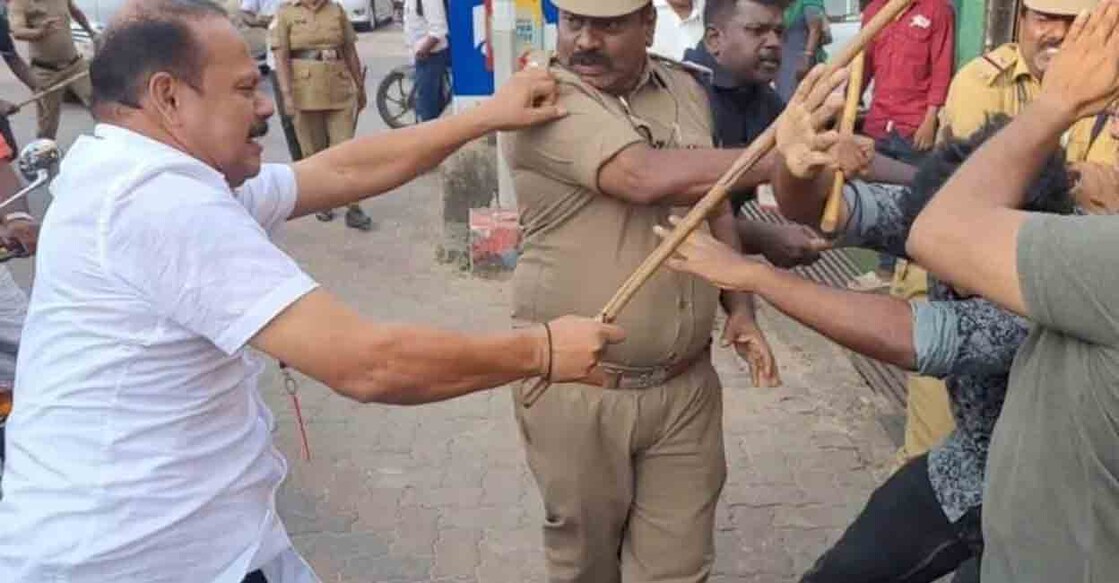
Alappuzha: The Alappuzha District and Sessions Court on Tuesday granted anticipatory bail to five police personnel accused in the Nava Kerala Sadas assault case, which pertains to the alleged attack on KSU and Youth Congress activists who protested against an outreach programme led by then Chief Minister Pinarayi Vijayan.
District Sessions Judge Honey M Varghese granted pre-arrest bail to S Anilkumar, who served as Pinarayi Vijayan's gunman, and members of the Chief Minister's security team, S Sandeep, V K Shaiju, R Arun and V V Vipin.
The case relates to an incident on December 15, 2023, during the Nava Kerala Sadas programme in Alappuzha. KSU and Youth Congress activists had staged a protest against the Chief Minister's convoy, following which they were allegedly assaulted by members of the security team.
In their anticipatory bail plea, Anilkumar and Sandeep argued that the protesters had moved dangerously close to the convoy, which was operating under Z-plus security cover. They contended that their actions were aimed at preventing a perceived threat to the Chief Minister, accompanying ministers and security personnel.
The accused also claimed that the case against them was politically motivated and maintained that they had no prior criminal record.
The officers approached the Sessions Court after the Special Investigation Team (SIT) probing the case added non-bailable charges, including Section 308 of the Indian Penal Code, which deals with attempt to commit culpable homicide.
They had initially sought anticipatory bail before a Magistrate Court but later withdrew their petitions and moved the Sessions Court after the additional charges were incorporated.
In a report submitted before the court, the SIT stated that the inclusion of Section 308 IPC was based on a detailed assessment of evidence gathered during the investigation. According to the probe team, the decision followed discussions within the SIT, consultations with forensic medicine experts and evaluation of oral, documentary, electronic, medical and scientific evidence.
The SIT maintained that the addition of the charge was neither sudden nor mechanical but was supported by the material collected during the course of the investigation.
