

Is Kerala more impoverished than Satheesan's 'white paper' suggests? CAG thinks so
Mail This Article


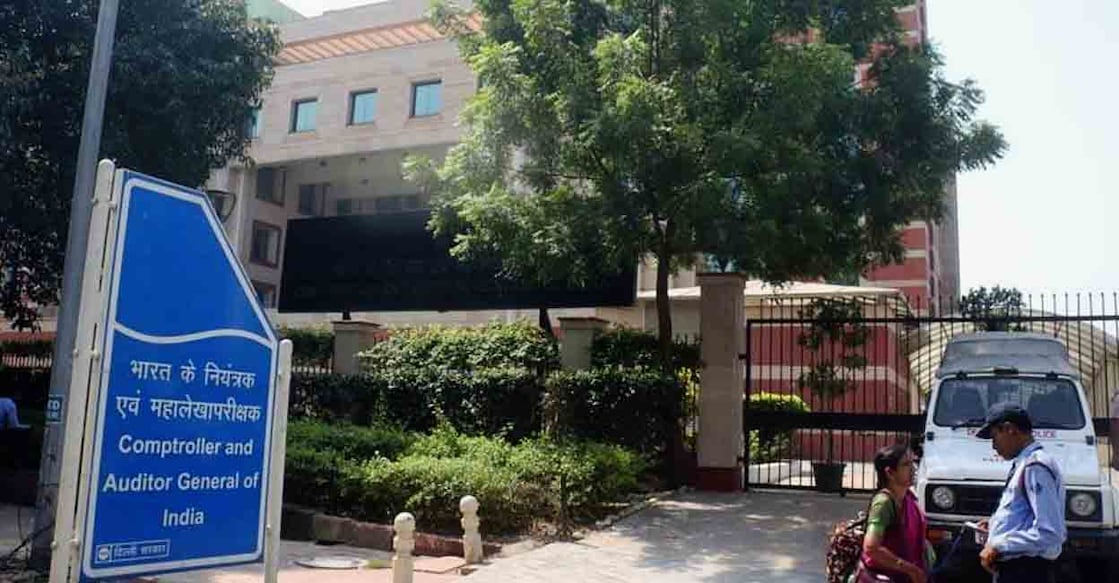
The Comptroller and Auditor General Report on State Finances 2024-25 paints a far more dreary picture of Kerala's fiscal health than the one unveiled in Chief Minister V D Satheesan's 'white paper'.
If the 'white paper' estimated that Kerala's committed expenditure (salaries, pensions and interest payments) sucked up 77.6 per cent of Kerala's revenue receipts, the CAG report said it was 79 per cent. The CAG said this was consistently higher than all other states in the country in the last decade.
The CAG says that this inflexibility of committed expenditure would significantly compress fiscal space and limit the State’s ability to allocate resources towards capital investment and developmental priorities. "This structural imbalance increases the risk of persistent revenue and primary deficits, constrains long-term fiscal sustainability, and reduces the government’s capacity to respond to emergent socio-economic challenges," it adds.
The 'white paper' had sketched Kerala's liabilities in doomsday colours. The CAG report says that internal debt that constituted the fleshiest part of Kerala's outstanding liabilities had swelled 189 per cent in the 10 years between 2015-16 and 2024-25, from ₹1,02,496 crore to ₹2,96,717.59 crore. (Internal debt included market loans, ways and means advances from RBI, special securities issued to National Small Savings Fund and loans from financial institutions).
The CAG report goes a step further and demonstrates how immediate the threat of such a humongous debt is. It says that 40.74 per cent or ₹1.27 lakh crore of the total public debt (₹3.1 lakh crore) will mature in the next seven years. "This indicates potential debt bunching, increasing refinancing and liquidity pressure on the state," the CAG report says.
The 'white paper' was deeply concerned about the utilisation of this borrowed money. "More troubling than the quantum of borrowing is its purpose," it had said. It quoted the 2023-24 CAG report as saying that only 5.18 per cent of the borrowings were used for capital creation.
The latest 2024-25 CAG report says it is even lower: 5 per cent. The 'white paper' had only made a general comment that "the overwhelming majority financed current consumption, revenue deficits and repayment of existing liabilities". The latest CAG report is blunt and specific. It shows that 86 per cent of Kerala's borrowings went to repay earlier borrowings in 2024-25.
Like the 'white paper', the CAG also throws the spotlight on Kerala's poor capital expenditure. It says that the capital expenditure - the money utilised for the creation of fixed assets like roads, schools and hospitals and that would spur growth and expand the economy - had registered a 114 per cent growth in the last decade, from 2015-16 to 2024-25.
However, it has not kept pace with Kerala's growth in the last five years. "The ratio of capital expenditure to GSDP has continuously declined from 2020-21 to 2024-25," the report says. From 2 per cent in 2021-22 it dropped to 1.43 per cent in 2024-25. The 'white paper' had estimated that it would decline further to 1.3 per cent in 2025-26.
The CAG offers another indicator of poor capital expenditure: 'capital blocked in incomplete projects'. It shows that 236 projects with a combined estimated cost of ₹2043.10 crore have remained incomplete. Till 2024-25, ₹906.24 crore was spent on them. "This indicates that due to the non-completion of these 236 projects, capital expenditure of ₹906 crore remained blocked," the CAG report says.
The report reasons that the blocking of funds in incomplete projects would also impact the quality of expenditure and deprive the State of the intended benefits of the projects for prolonged periods. "Further, funds borrowed for the implementation of these projects during the respective years would lead to an extra burden, in terms of servicing of debt and interest liabilities," the report says.
The 'white paper' called the public sector units a "dead weight on the Budget". The CAG explains why.
On March 31, 2025, the State Government’s investment in companies, corporations and other bodies stood at ₹11,846.25 crore: Government Companies (₹5,849.80 crore), Cooperative Societies (₹1,779.96 crore), Statutory Corporations (₹1,855.77 crore) and Other Joint Stock Companies and Partnerships (₹2,360.72 crore).
The return on investments in these PSUs during 2024-25, the CAG says, was 1.07 per cent (₹126.35 crore) while the State Government paid an average interest of 6.88 per cent on its borrowings during the same period.
"The persistently lower returns far below the cost of government borrowings show inefficient use of public funds," the CAG report says.
This finding can perhaps embolden Satheesan to go full steam ahead with his PSU disinvestment agenda that was laid out in the 'white paper'.
