

With prices hitting ₹4000 per kg, is macadamia farming the next gold rush for Indian farmers?
Mail This Article


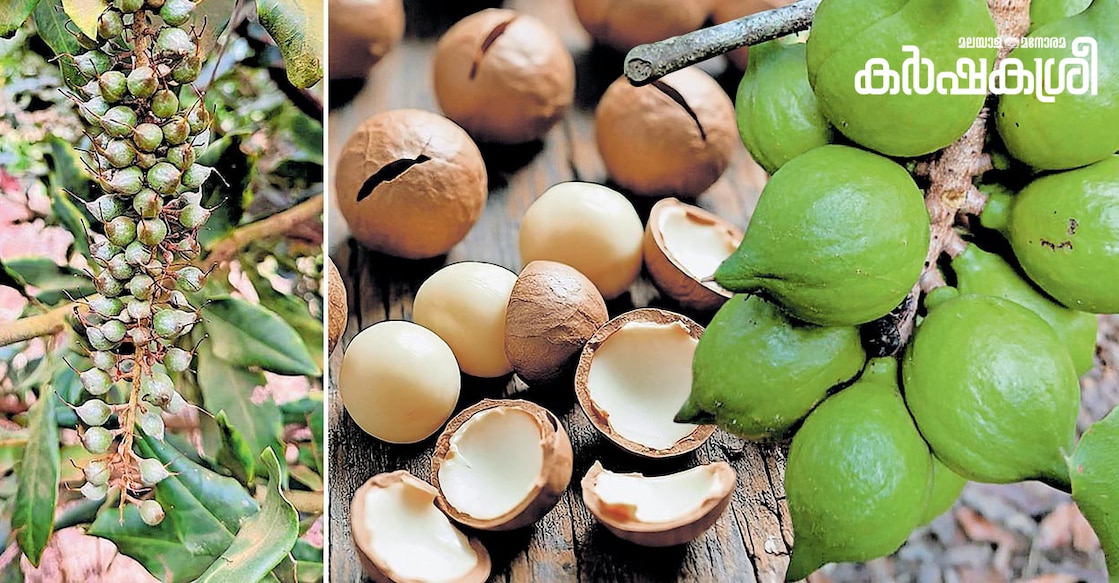
Often referred to as the "Queen of Nuts", the macadamia is slowly turning heads in the South Indian agricultural landscape. While traditionally associated with Australia, which dominates global production alongside South Africa, Kenya, and China, this premium nut is making its way into experimental orchards across Karnataka, Tamil Nadu, Odisha, and parts of Northeast India. Historically introduced to Kerala by non-resident Keralites living in Australia, macadamia is now being eyed as a highly profitable commercial crop, with retail prices on e-commerce platforms often scaling past ₹4000 per kilogram.
A buttery crop with massive potential
The appeal of macadamia lies in its rich, buttery flavour, high nutritional profile, and premium positioning. While global production lags far behind traditional favourites like almonds and cashews, the demand for health-centric, premium dry fruits is rising. Interestingly, the tropical and subtropical microclimates of Karnataka, Andhra Pradesh, and Tamil Nadu have proven highly suitable for macadamia cultivation—a climate profile that Kerala shares. However, harvesting is only half the battle; extracting the kernel from its rock-hard shell requires specialised nutcrackers, meaning the crop is sold in both shelled and unshelled forms at varying price points.

The pioneer showing the way in Karnataka
While Kerala farmers are still testing the waters, commercial trials are already thriving in neighbouring Karnataka. Manjunath, a nursery entrepreneur based in Tiptur near Tumkur, has scaled up his macadamia cultivation to over 50 acres. Planting 300 saplings per acre with a spacing of 12x12 feet, Manjunath utilises drip irrigation and organic manure. His efforts have started yielding promising results, with his unshelled produce fetching between ₹600 and ₹1200 per kilogram in the Bengaluru market, depending on the grade. Currently, around 200 hectares are under macadamia cultivation in the Tiptur region, attracting numerous new growers due to the crop's minimal maintenance requirements and high market value.
Yield timeline and crop management
According to Manjunath, growers must understand the cultivation timeline before investing. While wild seedlings can take up to 15 years to bear fruit, they have an incredibly long lifespan. On the other hand, grafted plants fruit in four to five years, and air-layered trees can start yielding by the third year. An air-layered tree produces around 5 kg of nuts in its third year, which climbs to 15 to 20 kg by the fifth year, with yields increasing as the tree matures. Manjunath cultivates 'Macadamia 849', a self-pollinating Australian variety that thrives in Indian conditions. The harvest season typically runs from April to June, and so far, the crop has shown high resistance to local pests and diseases.
Navigating the challenges and future outlook
Despite the glittering price tags, experts urge caution for prospective farmers. In states like Kerala, a structured domestic market for macadamia is yet to be established. Entering this space requires careful market study, especially given that global prices experienced a downturn in the 2023–24 fiscal year. However, the macro outlook remains highly positive. Under the Australia-India Economic Cooperation and Trade Agreement (AI-ECTA) signed in 2022, import duties on macadamia nuts—previously at 30%—will drop to zero by 2028. While this will increase imports, it is also expected to significantly boost local consumer awareness and expand the domestic market. With additional demand from the premium cosmetics industry, macadamia presents a compelling low-labour alternative for the future of Indian agro-forestry.
 Add as a preferred source on Google