

Fifty years of Agnisakshi: How Lalithambika Antharjanam's masterpiece redefined Malayalam literature
Mail This Article


Vaikom Muhammad Basheer desperately wanted Lalithambika Antharjanam to write a novel. He believed her short stories and poetry, while beautiful, were not enough to capture the burning struggles of women in an era of profound social upheaval. He wrote to her repeatedly, urging her to put pen to paper. Yet, for years, the mother of Malayalam short fiction kept only vague outlines tucked away in her notebooks.
It was a chance encounter on the banks of the Ganges during a pilgrimage to Uttar Pradesh that finally awakened the novelist within her. Even so, she hesitated for years. When the ink finally dried and the manuscript met the press, the resulting work took the Malayalam literary world by storm. It was Agnisakshi (Witness by Fire)—Lalithambika Antharjanam’s sole, career-defining novel.
The novel follows Thethi, a progressive young woman from a conservative Brahmin household (illam) who escapes a suffocating marriage. Her life undergoes a series of radical transformations: she becomes Devaki Manampally, a fierce social activist; then Devi Behn, a dedicated disciple of Mahatma Gandhi; and finally, she renounces the material world altogether to live as Sumitrananda Yogini in a hermitage by the Ganges. The narrative was deeply rooted in the historical reality of Namboodiri women who dared to step beyond the high walls of orthodoxy to embrace social reform and, in some cases, spiritual asceticism.
From a short story to a literary masterpiece
The roots of Agnisakshi can be traced back to a short story titled 'Prasadam', which Antharjanm wrote in the 1940s. However, it was her accidental meeting with a familiar social activist turned sanyasini on the banks of the Ganges in 1962 that breathed new life into the narrative. Antharjanam vividly recounted this profound encounter in the appendix of her novel.
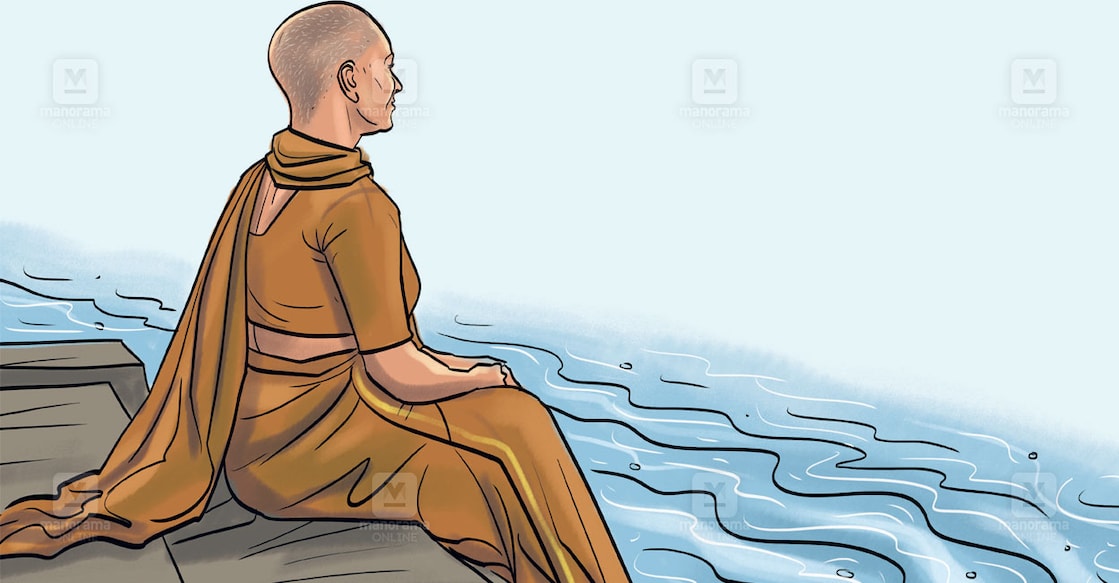
"There, by a stroke of fate, I met a sanyasini," the author wrote. "She was a Malayali, dressed in saffron khadi, her head completely shaved. We spoke about the local ashrams, the sages, and the ascetic lifestyle. I asked her if she knew a former social worker, an old friend of mine, who was said to have taken up sanyas in the region. Suddenly, her face drained of colour. Recognising her features, my heart skipped a beat. She was indeed the very person I had been looking for."

"The changes wrought by over twenty years were stark," she continued. "After recognising each other, she did not say a word. She quickly picked up her water pot and retreated down towards the Ganges. I stood frozen, watching her luminous figure and her long afternoon shadow. A deep sadness washed over me as I recalled the stories of other women who had forsaken family life for social service, only to eventually seek ultimate solace in asceticism."
The publication journey
In 1970, when Antharjanm agreed to write a serialised story for Akashavani (All India Radio), 'Prasadam' returned to her like a divine blessing. Following its broadcast, she attempted to reshape it into a full-length novel. Unsure of its quality, she kept the manuscript hidden away for six years. It was only due to the gentle yet persistent encouragement of MT Vasudevan Nair that she finally agreed to publish it. Serialised between August 22, 1976 and December 26, 1976, the novel was published in book form that December, thanks to the active initiative of legendary poet ONV Kurup.
The real-life 'Devi Behn'
The real-life inspiration behind the protagonist Devi Behn was Neeli Behn, whom playwright and author Omchery NN Pillai had encountered in Haridwar. Born Nangeli Antharjanm of the Kurumoor Illam in Edappally, Kochi, she worked closely with Gandhi as Neeli Behn and was later known as Subhadrananda Yogini. Omchery first met her at the Mahila Seva Sadan in Kottayam, where she taught spinning and weaving. When he later read Agnisakshi, he immediately recognised her story—a connection that Antharjanm herself later confirmed to him.
"Is EMS doing well?"
Years later, while working in Delhi, Omchery met Neeli Behn again during a visit to the Ayyappa Temple in Haridwar. Recognising his childhood nickname, Nanappan, she welcomed him warmly. She mentioned that she spent most of her time in the deeper reaches of the Himalayas but would visit the temple occasionally. After asking about his life and marriage, she quietly enquired: "Is EMS doing well?" referring to the legendary communist leader EMS Namboodiripad. Shortly after, she slipped away into the mountains.
Following the path of activist Devaki Narikkattiri, Nangeli had travelled to Wardha to join the freedom struggle as a close disciple of Gandhi. According to her 93-year-old nephew, Vidyasagar Bhattathiripad, she decided to renounce worldly ties after returning to Palakkad. She received her spiritual initiation from Guru Purushothamananda at the Vashishta Guha in the Himalayas, later establishing an ashram in Kapurthala, Punjab, where she eventually attained samadhi. Five decades on, Agnisakshi remains a burning testament to these incredible women who chose the path of fire to forge their own destiny.
