

Roads to Thrissur Govt Medical College constructed in 1982 all set for major revamp
Mail This Article


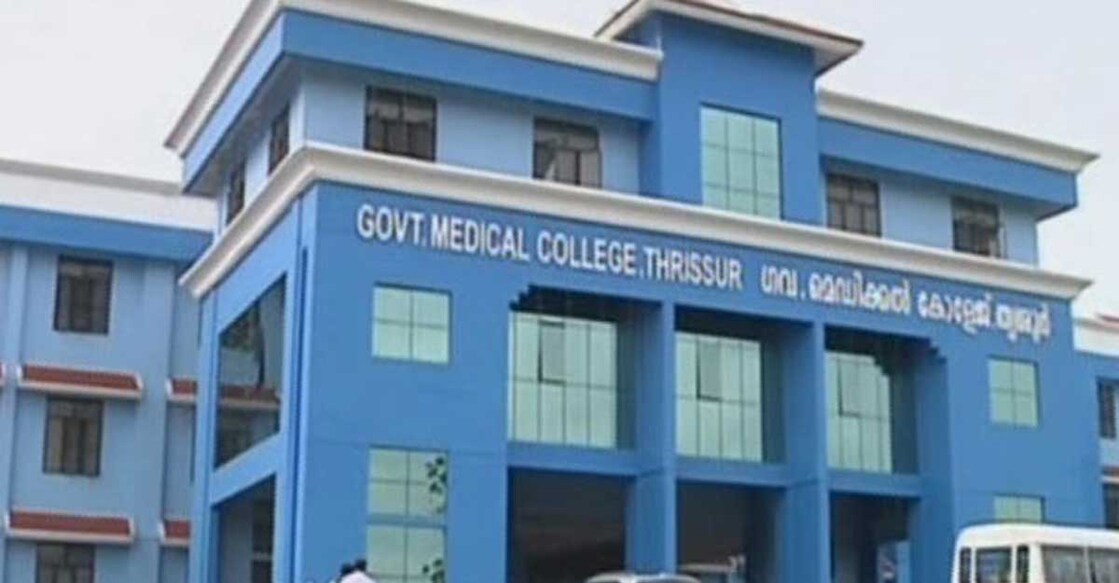
Thrissur Government Medical College, a vital healthcare lifeline for the people of Ernakulam, Thrissur, Malappuram, and Palakkad districts, is on the verge of a massive development boom. As home to the headquarters of the Kerala University of Health Sciences (KUHS), the campus is fast evolving into the state’s premier medical education hub. However, this growth is severely hindered by winding, narrow single-lane approach roads that tarnish the prestigious institution's reputation and compromise patient care.
Despite the medical college's rapid physical expansion, the crucial roads leading to it remain dangerously narrow and congested. Stretching between 800 metres and 1.5 kilometres, these arterial routes have seen no significant widening or maintenance for 44 years. Road upgrades have consistently been omitted from successive development plans, and repeated promises to elevate these stretches to national highway standards have yielded no results.
Archaic infrastructure unchanged since 1982
The approach roads remain in the exact same state as they were when the foundation stone for the Thrissur Government Medical College was laid on 30 April 1982 by the then Governor Jyothi Venkatachalam. Over the past four decades, the campus has grown to house not just the medical college and its two associated hospitals, but also several major institutions including the Nursing College, Dental College, Government Drug Testing Laboratory, a sub-treasury, a police station, an electrical substation, and a Public Works Department division.
With an estimated daily footfall of over 10,000 visitors, the campus is constantly teeming with activity. This congestion is set to double in early January when the newly constructed super-speciality block, the emergency critical care unit, and the mother-and-child block-built at an estimated cost of ₹600 crore-are commissioned.
The bottleneck at the overbridges
To bypass railway level crossings and ensure emergency patients reach the hospital without delay, the Athani and Mulankunnathukavu railway overbridges were constructed. While these bridges successfully eased transit over the railway tracks, severe bottlenecks immediately follow them. For instance, the 800-metre OP road starting from Velappaya, right after the Mulankunnathukavu overbridge, is a narrow single-lane road where two vehicles cannot safely pass each other. Similarly, the 500-metre approach road connecting the Athani overbridge to the old Medical College road is less than six feet wide in several spots, severely delaying emergency ambulances.
Security and academic disruptions
Adding to the chaos, public transit vehicles have been routing directly through the campus grounds for years. This unrestricted public access has created major security challenges for the administration. Furthermore, medical students have frequently complained that the constant movement of heavy traffic and public vehicles through the academic zone disrupts their studies and campus life.
A call for a masterplan
The campus was originally established in 1982 across a sprawling 350 acres, which was acquired from the Cochin State TB Sanatorium. Experts suggest that the current traffic issues could be resolved by widening and developing the existing ring roads that encircle the property, which would allow public transit to bypass the core academic and clinical zones entirely.
On average, the outpatient departments of the two main hospitals cater to around 3,350 patients daily, with another 1,000 arriving at the casualty and emergency departments. Additionally, the daycare unit treats about 100 patients daily, while the wards house 1,641 inpatients, and another 148 require intensive care. Managing over 6,000 patients and their bystanders daily requires a highly efficient infrastructure that the current road network simply cannot support.
The local community and health advocates are now raising a strong, unified voice demanding a comprehensive transport masterplan based on scientific studies. This plan must address road widening, ring road development, dedicated parking facilities, and structured traffic re-routing to protect the lives of patients and the academic integrity of the institution.
