

CMRL-Exalogic case: Kerala HC to decide if govt can order preliminary probe instead of FIR
Mail This Article


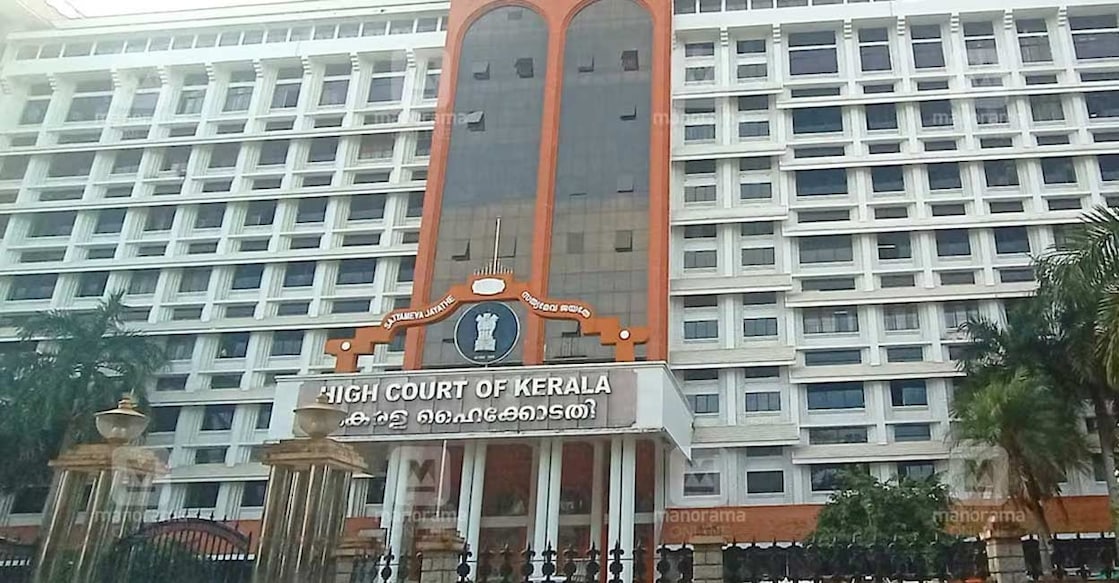
Kochi: The Kerala High Court will decide whether the state police can conduct a preliminary enquiry instead of registering an FIR after receiving information from the Enforcement Directorate (ED) about alleged offences under the Prevention of Corruption Act in the CMRL-Exalogic case.
Justice A Badharudeen was hearing a petition seeking registration of an FIR against Opposition Leader Pinarayi Vijayan, his daughter Veena Vijayan and son-in-law P A Mohammed Riyas based on the ED's findings.
The court observed that a legal question arises as to whether information forwarded by the ED under Section 66(2) of the Prevention of Money Laundering Act (PMLA) requires the receiving agency to register an FIR or whether it can first conduct a preliminary enquiry.
The court also directed the ED to produce in a sealed cover the communication sent to the Kerala Police Chief. The case will be heard next week.
What is the legal issue?
During the hearing, the court asked whether the state police had any option other than registering an FIR after receiving information from the ED regarding alleged predicate offences. The court also asked whether, in such circumstances, the police could conduct a preliminary enquiry before deciding whether to register a crime.
The ED's counsel submitted that there was no such discretion and that an FIR should be registered. The counsel said the ED had come across material indicating offences under the Prevention of Corruption Act during its investigation into the CMRL case. The information was subsequently forwarded to the Kerala Police under Section 66(2) of the PMLA.
Section 66(2) provides for the ED to share information with the appropriate agency when it believes that the provisions of another law have been contravened. A June 2026 Kerala High Court judgment had also discussed the operation of this provision and observed that information forwarded under Section 66(2) is to be acted upon by the jurisdictional agency.
Government defends preliminary enquiry
Advocate General K Jaju Babu challenged the maintainability of the petition, arguing that it was in the nature of a public interest litigation but had been filed with vested interests.
He also argued that if the ED was aggrieved by the government's decision to order a preliminary enquiry, it could have approached the court itself.
The state government had earlier decided to examine the ED's findings through a preliminary enquiry after obtaining legal advice. The government cited, among other things, the Supreme Court's judgment in Lalita Kumari v Government of Uttar Pradesh in support of the procedure adopted.
The Kerala Police subsequently constituted a nine-member Crime Branch Special Investigation Team to conduct the preliminary enquiry. The team was given 30 days to complete the exercise and examine the material provided by the ED.
The ED had earlier forwarded its findings to the State Police Chief under Section 66(2) of the PMLA, seeking registration of a case under the Prevention of Corruption Act and other provisions against Pinarayi Vijayan, Veena Vijayan and Mohammed Riyas. The agency's communication followed its investigation into alleged financial transactions involving Cochin Minerals and Rutile Ltd (CMRL) and Exalogic Solutions Pvt Ltd, the company associated with Veena Vijayan. The ED has alleged that payments made by CMRL to Exalogic were not backed by corresponding services and formed part of a larger alleged bribery arrangement. These are allegations under investigation and have not been established by a court.
The investigation originated from proceedings concerning CMRL and later expanded into a PMLA investigation by the ED. In June, a Division Bench of the Kerala High Court dealt with challenges raised by CMRL officials against the ED proceedings. The judgment discussed the relationship between a scheduled offence and proceedings under the PMLA, as well as the role of Section 66(2).
The latest dispute before the High Court, however, concerns a separate question: whether the Kerala Police can conduct a preliminary enquiry before registering an FIR after receiving the ED's Section 66(2) communication regarding alleged Prevention of Corruption Act offences.
The High Court has reserved the question for detailed consideration and asked the ED to submit its communication to the State Police Chief in a sealed cover.
(With LiveLaw inputs.)
