

ED letter on CMRL scam: Kerala HC directs govt to register FIR against Pinarayi Vijayan, Veena & Riyas
Mail This Article


Kochi: The Kerala High Court, on Friday, directed the state government to register an FIR in the CMRL-Exalogic case based on the report filed by the Enforcement Directorate (ED). Justice A Badharudeen passed the order after allowing a petition filed by K M Shahjahan.
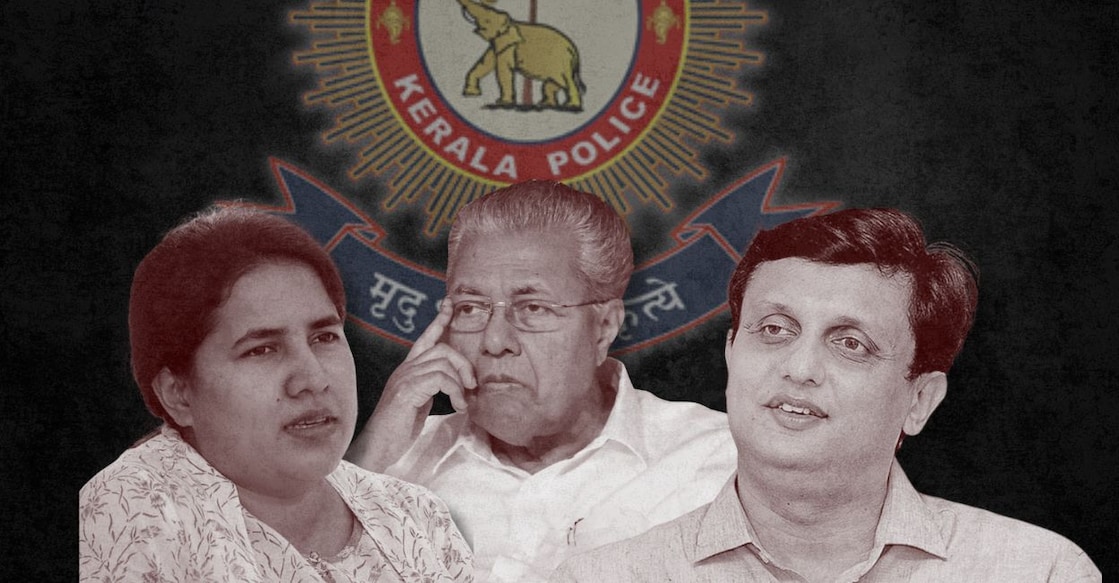
The plea was to incorporate provisions of the Prevention of Corruption act and register an FIR against Pinarayi Vijayan, his daughter Veena Vijayan and son-in-law P A Mohammed Riyas based on findings shared by the Enforcement Directorate (ED).
The High Court directive is a major setback for the state government's legal stand. The government's decision to go for a preliminary inquiry before registering an FIR was backed by the SC order in the Lalita Kumari vs Government of UP case. The SC had held that registration of an FIR is mandatory under Section 154 of CrPC, if the information discloses the commission of a cognisable offence, and no preliminary inquiry is permissible in such a situation. If the information received does not disclose a cognisable offence but indicates the necessity for an inquiry, a preliminary probe may be conducted. Also, the government cited that a preliminary inquiry is needed in matrimonial disputes, commercial offences, medical negligence cases, corruption cases and cases where there is an abnormal delay in initiating criminal prosecution.
The Kerala Police subsequently formed a nine-member Crime Branch Special Investigation Team to conduct the preliminary inquiry. The team was given 30 days to examine the material provided by the ED. The decision to hand over the inquiry to Crime Branch instead of Vigilance and Anti-Corruption Bureau had also raised questions.
The court examined whether the state police could conduct a preliminary enquiry instead of registering an FIR after receiving information from the ED about alleged offences under the Prevention of Corruption Act.
The court had directed the ED to submit, in a sealed cover, the communication it had sent to the Kerala Police Chief.
The central legal question was whether information forwarded by the ED under Section 66(2) of the Prevention of Money Laundering Act (PMLA) requires the receiving agency to register an FIR or allows it to conduct a preliminary enquiry first.
During the hearing, the court asked whether the state police had the discretion to initiate a preliminary enquiry after receiving information about alleged offences from the ED.
The ED's counsel argued that the police had no such discretion and were required to register an FIR. The agency said its investigation into the CMRL case had uncovered material indicating possible offences under the Prevention of Corruption Act, which was subsequently shared with the state police under Section 66(2) of the PMLA.
The provision allows the ED to share information with the appropriate agency when it believes that provisions of another law may have been violated.
The state government had defended its decision to order a preliminary enquiry into the ED's findings after obtaining legal advice. Advocate General K Jaju Babu challenged the maintainability of Shahjahan's petition, arguing that it was in the nature of a public interest litigation filed with vested interests.
He also contended that the ED could have approached the court if it was aggrieved by the government's decision to order a preliminary inquiry.
What is the CMRL-Exalogic case?
The ED had forwarded its findings to the State Police Chief under Section 66(2) of the PMLA, seeking registration of a case under the Prevention of Corruption Act and other provisions against Pinarayi Vijayan, Veena Vijayan and Mohammed Riyas.
The communication followed the agency's investigation into alleged financial transactions involving Cochin Minerals and Rutile Ltd (CMRL) and Exalogic Solutions Pvt Ltd, a company associated with Veena Vijayan.
The ED has alleged that payments made by CMRL to Exalogic were not backed by corresponding services and formed part of a larger alleged bribery arrangement. These allegations have not been established by a court.
The latest proceedings concern whether the state police can conduct a preliminary enquiry before registering an FIR after receiving the ED's communication about alleged offences under the Prevention of Corruption Act.
The case follows earlier proceedings relating to the ED's investigation into CMRL and its subsequent probe under the PMLA. In June, a Division Bench of the Kerala High Court considered challenges by CMRL officials to the ED proceedings and discussed the relationship between scheduled offences and investigations under the PMLA, including the operation of Section 66(2).
