

Leadwort aka 'Koduveli' has proven record of therapeutic, commercial value, say experts
Mail This Article


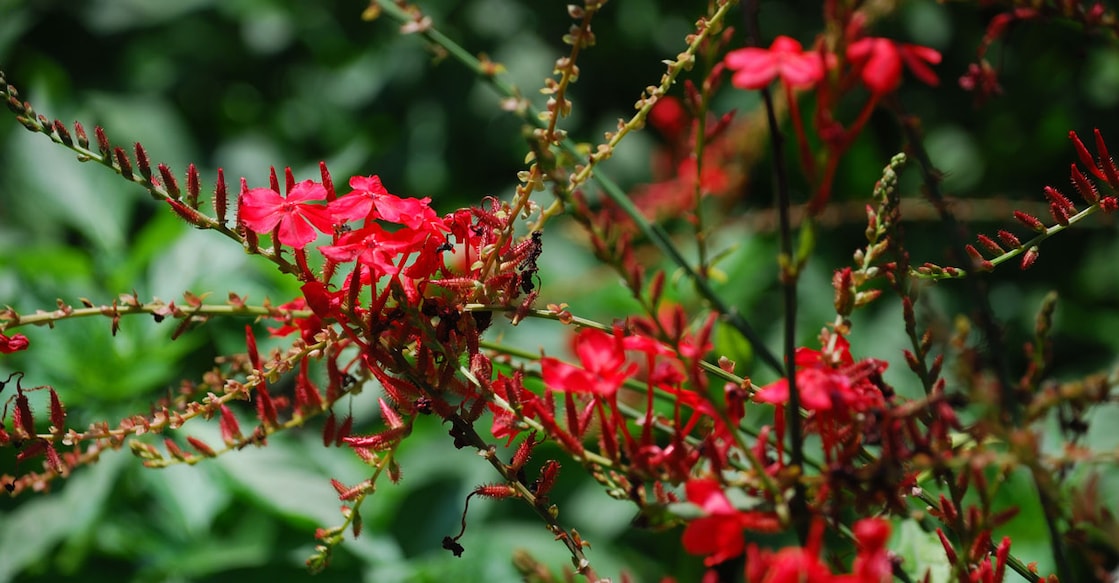
While blue leadwort often catches the eye, it is the red and white variants of the leadwort shrub, known locally as Koduveli, that hold immense therapeutic and commercial value. Belonging to the Plumbaginaceae family, these perennial shrubs feature four distinct floral colours: red, white, yellow, and blue.
However, traditional systems of medicine primarily utilise white leadwort (Plumbago zeylanica) and red leadwort (Plumbago rosea or Plumbago indica), locally referred to as Chethikkoduveli.
The primary medicinal value lies in the thick, tuberous roots and their outer bark. Packed with bioactive phytochemicals such as Plumbagin, 3-Chloroplumbagin, Plumbagic Acid, Elliptinoine, Maritone, Isizelinone, Dihydrosterone, and Beta-sitosterol, the plant exhibits remarkable healing properties.
A versatile shrub with potent biochemistry
Among its chemical constituents, Plumbagin is exceptionally strong and caustic, capable of irritating or burning raw skin upon direct contact. As a result, red leadwort roots must undergo a rigorous purification process (Shodhana) to reduce their intensity before being incorporated into internal remedies. White leadwort, containing lower concentrations of these caustic elements, generally requires less intensive processing.
In classical Ayurveda, leadwort possesses a pungent taste (Katu rasa), light and dry qualities (Laghu-Ruksha-Tikshna guna), hot potency (Ushna veerya), and a pungent post-digestive effect (Katu vipaka). It is extensively used to treat haemorrhoids (piles), malabsorption syndrome, abdominal disorders, chronic cough, intestinal worms, severe abdominal pain, anaemia, skin ailments, anorexia, and rheumatoid arthritis.
Scientifically proven and traditional health benefits
Modern scientific investigations confirm many of the traditional claims associated with leadwort. Research demonstrates that the extracts possess potent antimicrobial and anti-cancer properties. Furthermore, studies reveal its ability to lower harmful LDL cholesterol levels and reduce atheromatous plaques, calcium and fatty deposits that build up inside blood vessels.
Traditional practitioners employ purified red leadwort root in several therapeutic preparations. For instance, a traditional remedy for haemorrhoids involves coating the inner surface of an earthen pot with a paste of purified red leadwort root, letting it dry, and storing curd inside it; consuming small quantities of this curd offers relief. Similarly, powders combining purified leadwort root with spices like ginger, black pepper, asafoetida, and elephant foot yam are prescribed for chronic piles.
For lymphatic filariasis (elephantiasis), topical applications combining purified leadwort root paste with Devadaru wood, or oils infused with five essential salts (Pancha Lavana) and leadwort, help reduce swelling. Decoctions of white leadwort blended with dried ginger applied externally also provide relief for external haemorrhoidal masses.
Safety warnings and precise dosage recommendations
Despite its extensive medical applications, leadwort must be used strictly under expert Ayurvedic medical supervision due to its highly potent nature. The maximum recommended dosage for internal consumption of the purified root bark powder is restricted to 1 to 2 grams per dose.
External applications must also be handled with extreme caution. Prolonged exposure to leadwort paste or oil can cause localized skin burns, redness, and blistering. Medicated oils containing leadwort should never remain on the skin for more than 15 minutes before being washed off. Furthermore, leadwort preparations are strictly contraindicated for pregnant women due to their intense heating and uterine-stimulating effects.
Leadwort serves as a vital component in major classical Ayurvedic formulations, including Vajraka Thailam, Mahavajraka Thailam, Danthyarishtam, Nimbamritarishtam, Ashwagandharishtam, Malathyadi Thailam, Shadpala Ghritam, Shadtharana Churnam, Hingwadi Gulika, Bhuktanjari Gulika, Indukantham Ghritam, and Pulileham.
Commercial potential and farming advice
While white leadwort is mostly harvested from wild sources, red leadwort (Chethikkoduveli) is increasingly cultivated on a commercial scale to meet the steady demand from pharmaceutical manufacturers. Depending on market availability and demand, high-quality dried leadwort root fetches between ₹250 and ₹550 per kg.
Agricultural experts recommend that prospective growers secure formal buyback agreements with established Ayurvedic drug manufacturing companies prior to commencing large-scale cultivation. This ensures a guaranteed market and stable pricing for farmers venturing into high-value medicinal crop farming.
