

Dhanaraj murder: Kannur court calls RSS convicts 'quockerwodgers', says police driven by CPM leader’s statement

Mail This Article


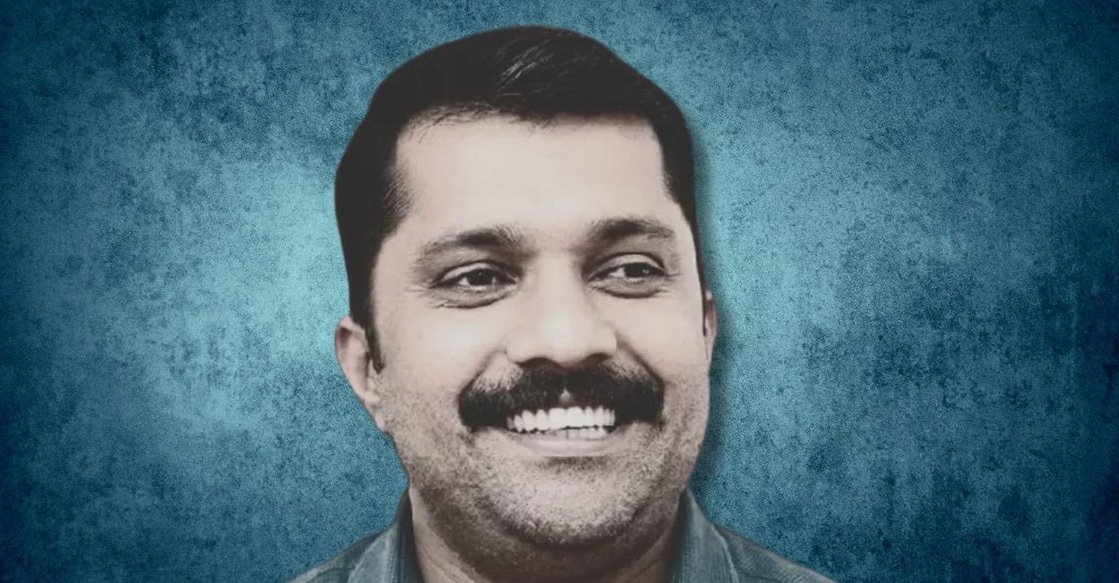
Kannur: The three RSS men convicted of murdering CPM branch secretary C V Dhanaraj (38) were, in the words of the trial judge, quockerwodgers, political puppets who are controlled by someone else and act on their instructions.
The word was recently popularised by Congress MP Shashi Tharoor, who in an X post, called it the ‘word of our era’, adding that the ruling BJP had spawned a few of these in the last dozen years.
But in the Dhanaraj murder case, who was pulling the strings?
Taliparamba Additional District and Sessions Judge, Prasanth K N, found that Dhanaraj's killing in 2016, which pushed Payyannur to the brink, was a "preplanned political murder". But he said the police were driven by the statement of CPM branch secretary P P Prajeesh and that their failure to resist Prajeesh's ‘obstinacy’ in trying to implicate certain persons led to the acquittal of some accused. Prajeesh was the prosecution’s first witness, and the judge devoted 17 paragraphs to explaining why his testimony could not be relied upon.
Even the special public prosecutor, Adv C K Sreedharan was frustrated with Prajeesh. He is a CPM branch secretary and a childhood friend of Dhanaraj. Dhanaraj was hacked 37 times in his compound around 9.45 pm, and he died around 11 pm at Pariyaram medical college. The witness left the hospital around 1 am, and his statement was recorded by Payyannur police around 2 am.
But he told the court that in the four hours, he did not inform any party leaders about the attack on his comrade.
"For the court, given that he was a party office-bearer, it was difficult to believe that he had not informed anyone about the incident before approaching the police,” Adv Sreedharan told Onmanorama.
The additional sessions court acquitted 16 of the 19 accused. Defence counsel P Premarajan said the police, under the newly formed LDF government, indiscriminately named RSS workers and mid-level leaders as accused in the case.
Consecutive sentences
The first three accused, T P Biju (34), Vipin M (34) and his younger brother Vaishakh M (31), were sentenced to life imprisonment for murdering Dhanaraj in front of his mother and wife at Karanthad in Ramanthali on July 11, 2016. They were also convicted under other IPC sections for trespass, causing hurt, wrongful restraint and criminal intimidation, for which they were sentenced to five years and four months.
“The conspiracy theory was discarded in the absence of credible evidence, no doubt in mind that it is a case of preplanned political murder, and the accused were used as the quockerwodgers,” the judge wrote.
Though the judge considered their young age (in their early 20s) to decide against the death penalty, he declined to show leniency in the sentences, ordering them to serve five years and four months of fixed-term imprisonment before their life terms begin.
Each convict was also fined ₹5 lakh. The total amount of ₹15 lakh, if realised, will be paid to Dhanaraj’s mother, C V Madhavi, and wife, N V Sajina, the judge ruled. If they fail to pay the fine, each will have to undergo an additional five years of rigorous imprisonment.
The judge, however, observed that the convicts could not be expected to pay the fine given their poor financial background and directed the District Legal Services Authority (DLSA), Thalassery, to consider awarding compensation to the family under Section 357A(3) of the CrPC.
Why the court accepted the identification
The defence is planning to challenge the conviction of the three BJP-RSS workers, arguing that Dhanaraj’s mother and wife were shown photographs of the accused before the test identification parade (TIP). But the Taliparamba Sessions Court addressed this objection in its judgment.
The judge acknowledged that Dhanaraj’s wife Sajini had told a magistrate that she had seen photographs of the accused on a mobile phone shown by her sister-in-law. However, the court held that this alone did not invalidate her identification. It found no evidence that the police or anyone else had deliberately manipulated the identification process.
Adv Sreedharan told Onmanorama that photographs of accused persons often appear in the media in sensational criminal cases, and that the Supreme Court has held that such prior exposure does not automatically invalidate eyewitness identification.
The judgment relied primarily on Sajini’s identification of all three assailants. Dhanaraj’s mother, Madhavi, identified Biju at trial but failed to identify Vipin and Vaishakh. The court also relied on forensic evidence showing that the clothes of the accused contained human blood of B group, matching Dhanaraj’s blood group. Blood of the same group was also found on the weapons recovered from them.
Adv Sreedharan said he did not believe the issue would undermine the convictions, pointing out that Sajini and Madhavi had witnessed the attack inside their residential compound.
17 paragraphs on one witness
The prosecution’s first witness, CPM branch secretary Prajeesh, became a liability. The judgment devoted paragraphs 63 to 80 to examining his credibility. He was a CPM branch secretary for years, a close childhood friend and neighbour of Dhanaraj, and a party worker. He was also an accused in the murder of Choorakkatt Biju, the 12th accused in the Dhanaraj case. Biju was killed, allegedly in retaliation for Dhanaraj’s murder, in 2017.
Prajeesh claimed he attended an election review meeting at the CPM local committee office till 9 pm and reached near Dhanaraj's house along with Vinod 'Master ', a party leader. The court found that the police had neither produced records to prove the meeting took place nor examined Vinod.
The court did not conclusively find that Prajeesh was absent from the scene but said his claim would require scrutiny. The judge also questioned Prajeesh's conduct after the attack. He travelled about 25 km within four hours, with his mobile phone, but had not informed anyone over the phone about the brutal murder of his comrade, the judgment noted.
The court did not reject everything Prajeesh said. It accepted that he had reached the scene after the attack, helped take Dhanaraj to hospital and lodged the complaint. But it found his account unreliable on the alleged presence and roles of other accused.
Madhusoodhanan theory dismissed
The judgment also rejected a defence suggestion that former Payyannur MLA T I Madhusoodhanan’s alleged "quotation team" was behind the murder, purportedly owing to factionalism within the CPM. The judge said the suggestion appeared politically motivated in the absence of evidence. The court held that the prosecution had established political rivalry between Dhanaraj and the BJP-RSS workers.
Dhanaraj's murder and the subsequent conduct of the CPM had become a major issue in Keralam in the run-up to the Assembly election. CPM whistleblower V Kunhikrishnan had accused Madhusoodanan of misappropriating funds collected for Dhanaraj’s family. The party had raised around ₹1 crore in the name of the slain activist’s family. He further alleged that around ₹40 lakh was diverted to build the party office.
The CPM and its leaders denied the allegations of financial irregularities. But the controversy became a major political liability for the party. The CPM lost Payyannur for the first time, with Kunhikrishnan defeating Madhusoodanan.
The human cost
Within hours of Dhanaraj’s murder, C K Ramachandran, an auto driver and RSS activist, was murdered at Annoor in Payyannur. Several houses belonging to RSS-BJP workers were also attacked, and both the CPM and the BJP-RSS called hartals amid fears of further retaliatory violence.
The judge described those involved in Dhanaraj’s murder as puppets. He opened his judgment with verses widely attributed to Palestinian poet Mahmoud Darwish, bringing the human cost of political violence into focus: “Wars will end; leaders will shake hands. The old woman will wait for her son, the young woman for her husband, the children for their father.”
