

Kerala’s local body elections – a politics of proximity?
Mail This Article


Kerala is once again gripped by the heat of local polls.
Though the state will vote for all the local bodies – three-tier panchayats, municipalities and municipal corporations – the wider public largely refers to the entire exercise as ‘panchayat elections’.
Malayalis experienced their first full-fledged panchayat elections only in 1995, after the 73rd and 74th Constitutional Amendments opened the door. However, despite being late entrants to Kerala’s periodic electoral landscape, local body polls quickly carved out a category of their own.
What sets local polls apart? Is it really as simple as the old cliché that in panchayat elections, voters ‘choose the candidate, not the party’?
The truth is far more complex, and also far more intriguing.
Claims of closeness
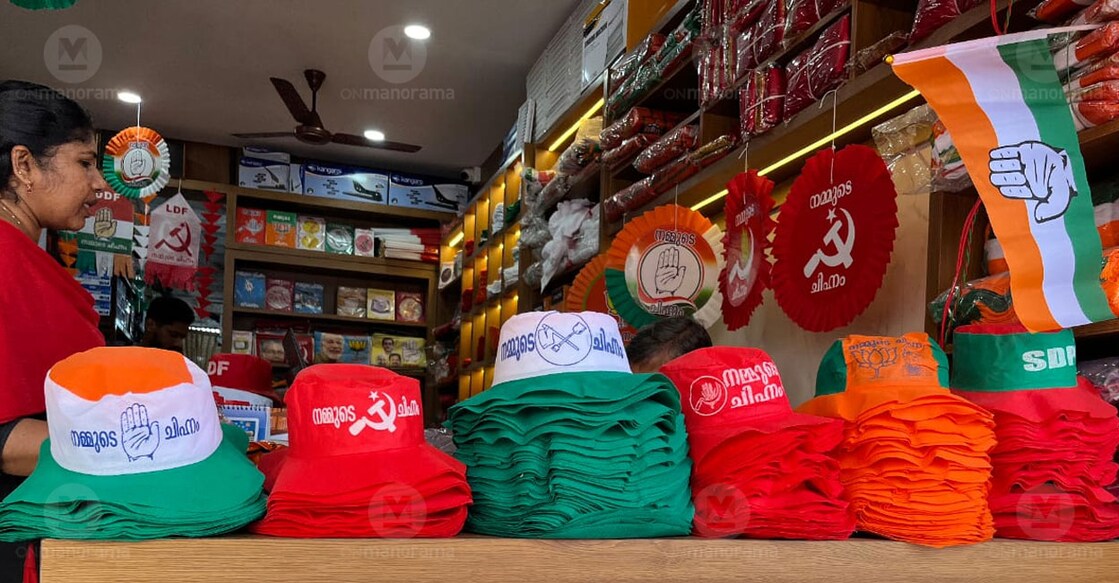
Come election season – Lok Sabha or Assembly – ‘development’ suddenly becomes the magic word. Posters appear with candidates casting themselves as ‘heroes of development,’ each promising a fresh ‘development spring’ for the constituency.
However, when one looks at the hoardings and posters put up in every nook and corner of Kerala for the 2025 panchayat elections, a very different picture emerges.
Here’s some research: A close examination of candidate hoardings and posters across seven districts in south and central Kerala during a recent trip yields some interesting findings.
At least two-thirds of the posters present the candidates in a folksy and intimate manner.
Most candidates present themselves as ‘unpretentious natives’ who know the locality and its people, positioning themselves as friends or even as siblings to the community, always just a call away. Such messages spotlight candidates as deeply in tune with the neighbourhood’s pulse – people who truly grasp the minds they seek to represent.
In the 2025 panchayat elections, a so-called intimacy with the community is the prime selling point – especially for the expanded cohort of young candidates. Across the state, posters boast of how well these energetic newcomers know their locality.
Interestingly, the word ‘development’ appears in only a very small number of hoardings.
Are these claims of closeness just scattered messages on posters, or indicators of a quieter churn in grassroots politics?
Member, next door
Panchayat elections are no longer an ‘elite’ democratic exercise dominated by prominent local figures seeking a popular mandate, as they largely were in the mid-1990s and early 2000s.
The popular imagination of a panchayat member as a grassroots political leader or a region’s charismatic personality has undergone a significant shift in the first quarter of this century.
Last year, a byelection was held in a central Kerala panchayat ward following the death of the incumbent member. The main contest was between a retired schoolteacher from a locally influential family and a young autorickshaw driver.
Up to a decade ago, the ward was represented by prominent local figures drawn from powerful socio-economic backgrounds. Much like the rest of central Kerala, this panchayat has seen substantial youth migration, leaving voters aged 35 and above as the most decisive bloc.
The same voters, who once elected the ‘big shots’ of the locality, unequivocally backed the autorickshaw driver in the panchayat byelection, making him the clear winner.
Before becoming a panchayat member, his exposure to public affairs was limited.
He earned loyalty among households by ‘somehow’ managing to arrange cooking gas cylinders immediately during sudden shortages. In this cattle-rearing belt, he also ferried milk containers for families without charging a rupee.
“Sarath (name changed) is our boy. If he becomes a member, he’ll stand by us whenever we need him,” an elderly man explained, offering his rationale for voting.
Sarath’s win is no longer a David-and-Goliath tale; Kerala now offers numerous comparable stories, including many involving women candidates.
Despite being fought on party lines, the increasing presence of women candidates has taken panchayat elections out of the elite's hands.
Women rising
What took effect in Kerala’s local bodies was not a token women’s reservation.
While there is a statutory mandate reserving 50 per cent of all local body seats for women, female participation has steadily risen beyond the required quota over the years.
According to data from the Kerala State Election Commission, the 2025 local body elections have 1341 more female candidates than the 2015 elections.
Where most of these candidates come from is more important.
A major hallmark of this election is that women-centric grassroots groups like Kudumbashree, ASHA workers, and the Haritha Karma Sena – all with strong connections to households and local communities – have become key ‘candidate suppliers’ for all major political parties.
According to news reports, 16589 members from Kudumbashree are contesting the 2025 local polls.
No wonder election campaigning has become so informal that it is now common to see female candidates walking straight into voters’ kitchens.
A natural culmination is that panchayat elections have become an intensely local affair, where familiarity, neighbourhood interactions, and household-level networks matter more than any grand development narrative.
Promising, but….
It is heartening to see that panchayat elections have now opened to all, making Kerala’s grassroots politics truly accessible to ordinary people.
Major coalitions have fielded transgender candidates on their official panel, something that may take many more years to be seen in Assembly or Lok Sabha elections.
But all this comes with a flipside. The inclusivity we see in panchayat polls evaporates higher up the electoral ladder, and nothing illustrates this problem more powerfully than the drop in women’s representation.
The present Kerala Legislative Assembly has only 12 women members out of 140 seats – fewer than the total number of districts in the state. During the 2001-2021 period, the situation was even worse: the figure fluctuated between seven and nine.
Kerala had no women MPs in the 18th Lok Sabha until Priyanka Gandhi won the Wayanad byelection.
The core issue is not that very few women are getting elected, but that the major political parties are not fielding enough women candidates.
Kerala’s patriarchal politics still quietly agree that women should stay confined to the bottom of the electoral ladder.
In the last three decades, Malayalis have shaped a distinctive brand of popular politics associated with the three-tier panchayat elections. This has changed the ‘who’ and ‘how’ of political work at the bottom level, bringing in a politics of proximity.
However, the fact that such progressive politics remains confined to the grassroots and does not in any way affect the conservative core of state-level politics continues to be a disturbing challenge.
(Social anthropologist and novelist Thomas Sajan and US-trained neurologist Titto Idicula, based in Norway, write on politics, culture, economy, and medicine)
 Add as a preferred source on Google