

Qatar calls Israel strikes on gas fields ‘irresponsible’, NATO push to reopen Hormuz
Mail This Article


Qatar condemned Israeli attacks on key Gulf energy infrastructure while NATO allies stepped up discussions to reopen the Strait of Hormuz, as Iran confirmed the “cowardly assassination” of its intelligence chief amid the escalating conflict in the region.
NATO Secretary General Mark Rutte said member states were in talks on the “best way” to restore navigation through the Strait of Hormuz, the crucial oil corridor that has seen major disruptions after Iran choked off much of global supply.
Tensions deepened after Iran’s President Masoud Pezeshkian confirmed that Intelligence Minister Esmail Khatib was killed, describing it as a “cowardly assassination”. Earlier, Israel’s defence minister had announced that Khatib was eliminated in a strike. Meanwhile, Moscow denounced the killing of Iranian security chief Ali Larijani, warning against targeting the leadership of a sovereign state, as Tehran vowed retaliation.
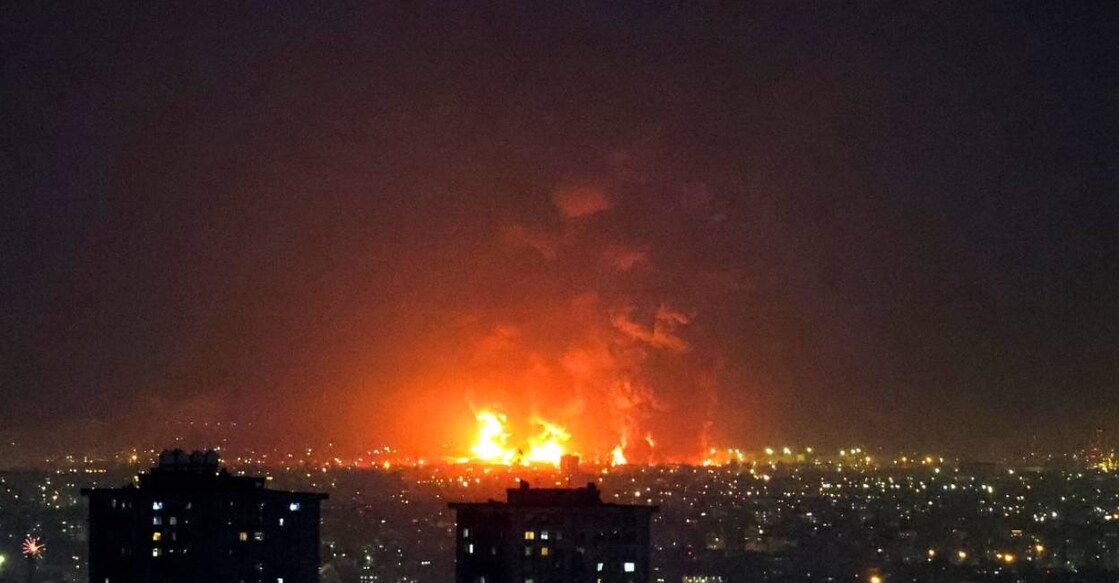
Qatar strongly criticised Israeli strikes on facilities linked to Iran’s South Pars gas field, which extends into Qatar’s North Field, calling the attacks “dangerous and irresponsible”. Tehran warned it would retaliate by targeting energy infrastructure across the Gulf. The fallout was immediate, with Iraq halting gas imports from Iran, raising concerns over power supply disruptions in the country. Iraq also resumed limited oil exports through Turkey’s Ceyhan port, bypassing the Gulf after disruptions in the Strait of Hormuz.
Oil markets reacted sharply, with Brent crude surging over five per cent to $108.60 per barrel, while US benchmark West Texas Intermediate rose to $98.01.
Meanwhile, Germany struck a cautious note, with Chancellor Friedrich Merz saying Berlin “would have advised against” launching a war with Iran if consulted by the US or Israel. While holding Tehran partly responsible for the crisis, he said there were still “many questions” about the conflict and no clear plan for success.
The conflict also raised concerns over nuclear safety after the UN’s atomic watchdog said Iran had reported a strike near its only operational nuclear power plant, though no damage was recorded. Russia, which has personnel at the facility, condemned the attack as “completely unacceptable”.
On the ground, Israeli strikes hit central Beirut again, killing at least 12 people, according to Lebanon’s health ministry, as fighting with Iran-backed Hezbollah intensified.
Across the region, tensions spilled over with missile and drone interceptions reported in Saudi Arabia, Kuwait, Qatar and the UAE. An Iranian projectile also struck near Australia’s regional military headquarters in the UAE, officials said.
Iranian missile barrages on Israel killed two people near Tel Aviv, taking the total death toll from recent attacks to 14. Iran’s Foreign Minister Abbas Araghchi warned that the consequences of the war would be global. “The wave of repercussions has only begun and will hit all,” he said.
(With AFP inputs.)
 Add as a preferred source on Google