
US military confirms retaliatory strikes against Iran, cites 'unprovoked hostilities' by Tehran
Mail This Article


The US military said it carried out retaliatory strikes on Iran on Thursday, targeting sites it said were responsible for attacking US forces in what it called unprovoked hostilities by Tehran.
Earlier, Iran's top joint military command said the US had violated a ceasefire by targeting an Iranian oil tanker and another ship entering the Strait of Hormuz, and by striking civilian areas.
“US Central Command (CENTCOM) eliminated inbound threats and targeted Iranian military facilities responsible for attacking US forces, including missile and drone launch sites; command and control locations; and intelligence, surveillance and reconnaissance nodes,” the military said in a statement.
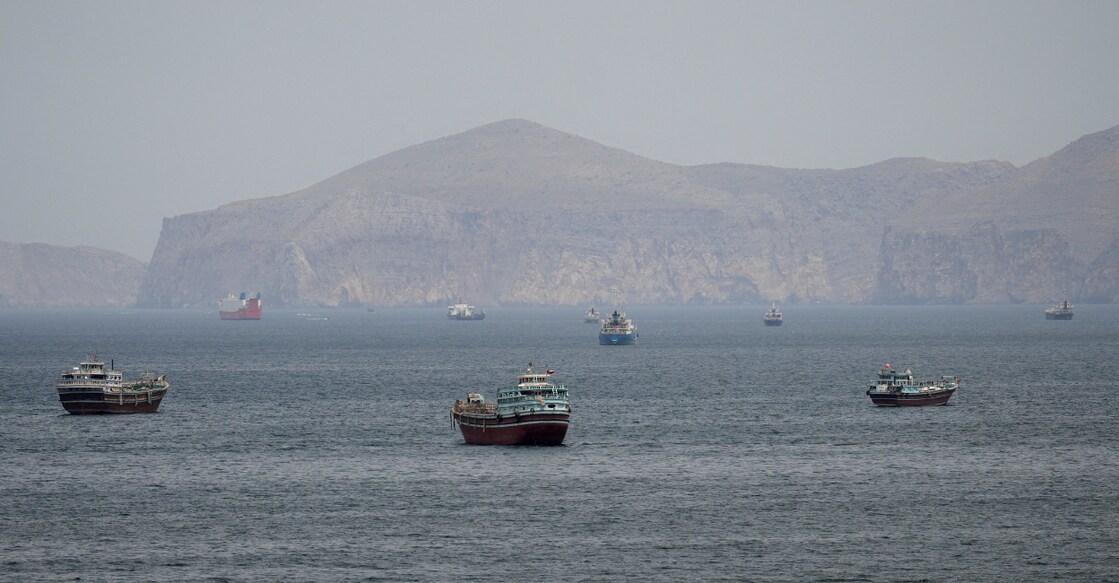
It added Iran had launched multiple missiles, drones and small boats as three US Navy destroyers, the Truxtun, Peralta and Mason, transited the Strait of Hormuz to the Gulf of Oman.
No US military assets were hit by the Iranians, the US military said. “CENTCOM does not seek escalation but remains positioned and ready to protect American forces,” the statement added.
It was not immediately clear what impact this would have on a ceasefire reached last month, but US Central Command described the strikes as being carried out in self-defence.
This is not the first time the two sides have exchanged fire since the ceasefire started.
On Monday, the US military said it destroyed six Iranian small boats and intercepted Iranian cruise missiles and drones as Tehran sought to thwart a US naval effort to open shipping through the Strait of Hormuz.
Washington was still awaiting Iran's response to a US proposal that would stop the fighting but leave the most contentious issues, such as Iran's nuclear program, unresolved for now.
The proposal would formally end the conflict in which full-scale warfare was paused by a ceasefire announced on April 7. But it does not address key US demands that Iran suspend its nuclear work and reopen the vital Strait of Hormuz, which before the war handled one-fifth of the world's oil and gas supply.

 Add as a preferred source on Google