

Messi errs, waits, and stands alone as World Cup's all-time leading scorer
Mail This Article


"Messi! Messi! Messi!" The chants reverberated around the Dallas stadium as Lionel Messi finally etched his name atop the FIFA World Cup scoring charts.
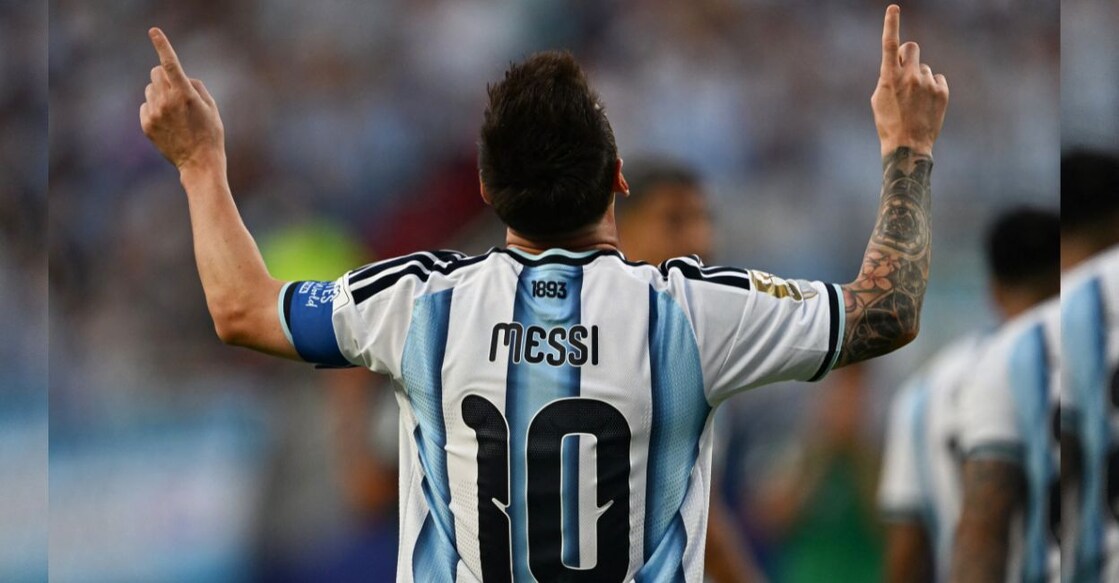
The Argentina captain scored two goals in the game to bring his World Cup goal tally to 18 and move past Germany legend Miroslav Klose and become the tournament's outright leading scorer.
Messi had entered the match level with Klose on 16 goals after his hat-trick against Algeria in Argentina's opening Group J fixture. All he needed was one more goal to stand alone at the summit.
For a moment, though, it appeared that history would have to wait.
Argentina were awarded a penalty in the ninth minute after Lautaro Martinez was brought down inside the box by Austrian defenders. Following a VAR review, the referee pointed to the spot and Messi stepped forward with a chance to claim the record.
But the script took an unexpected twist.
Messi sent his effort wide of the post as goalkeeper Alexander Schlager dived the right way. The stadium fell silent. Argentine players stood stunned. The opportunity had slipped away.
History was made to wait. Yet great players rarely need a second invitation.

As the match wore on, Messi continued to probe the Austrian defence before finally finding his historic breakthrough in the 38th minute. The move began in midfield before Argentina worked the ball out to the left flank, where Facundo Medina delivered a teasing cross into the box. Timing his run to perfection, Messi arrived unmarked and guided the ball into the net.
Goal. The stadium erupted. Teammates rushed to embrace their captain while the Argentine bench spilled onto the touchline.
After years of dazzling performances on football's biggest stage, Messi had finally become the World Cup's all-time leading scorer.
The milestone arrived just two days before his 39th birthday on June 24, adding another remarkable chapter to a career already filled with records.
And he was reluctant to keep his record there. Deep into second-half injury time, Messi had another moment of magic.
The move began down the left flank, with Messi involved in the build-up before releasing the ball into the final third. The Austrian defence initially held firm, blocking one effort and throwing bodies in the way of another. But the danger lingered.
The loose ball dropped to Messi inside the box. The Argentine captain skipped past a defender with typical composure and fired at goal, only to see his effort blocked. The rebound, however, fell kindly back into his path.
This time, there was no escape for Austria. Messi unleashed a fierce left-footed strike through a crowd of defenders and into the back of the net.
Goal. It was World Cup goal No 18. It was his fifth goal of the tournament.
Messi's World Cup journey began in Germany in 2006, where he scored on his tournament debut. He went goalless in the 2010 edition as Argentina were eliminated by Germany in the quarter-finals, a match in which Klose scored twice.
He returned with four goals in 2014 as Argentina reached the final, added one in 2018, and then produced a memorable seven-goal campaign in 2022, leading his country to a third World Cup title and their first since Diego Maradona inspired glory in 1986.
Now, with goal No 17, Messi stands alone.
