
Five young stars who lit up the World Cup in 2026

Mail This Article


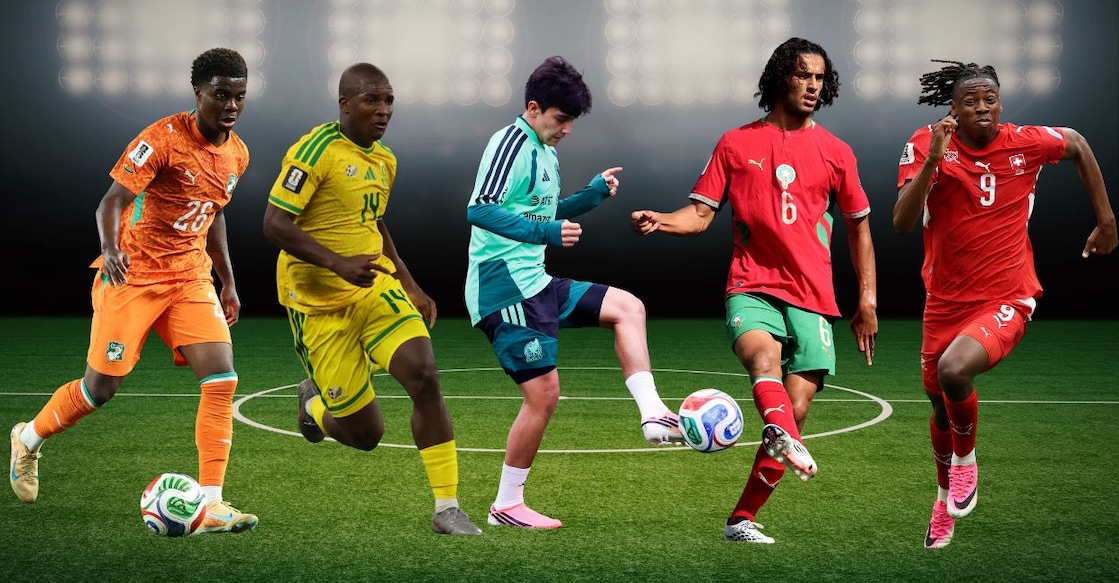
Every FIFA World Cup has its breakout stars. Some are previously unknown players who make a big splash with an outstanding campaign, such as Salvatore Schillaci in Italia ’90 or Vozinha at the 2026 edition. But the most exciting breakout stars are the young players experiencing their first big moment in the spotlight with a hunger to prove themselves. Many of the greats followed this path, including Franz Beckenbauer in 1966 and Kylian Mbappé in 2018 (though that comparison is a tad unfair, as he had already enjoyed a stellar season at Monaco). The most obvious example is Pele, who, as a teenager, led Brazil to its first World Cup title in 1958. Not everyone can be the next Pele, but the World Cup often provides a glimpse into the future of the footballing world, and the 2026 edition was no different. Here are five of the best young talents from this tournament.
5. Christ Inao Oulai
In a tournament where the biggest teams and stars were stealing the attention, Ivory Coast might have slipped under the radar. Admittedly, it did not make it far, crashing out to a late Haaland goal in the Round of 32. However, those who watched the Elephants’ run would agree that they were a breath of fresh air. They played exciting, fast-paced football, with a good mix of veterans and young players, and lost both matches by a single late goal. While most fans would naturally gravitate towards Yan Diomande, the flashy young winger linked with PSG and other big clubs, it would be remiss not to mention Christ Inao Oulai. Diomande might have produced the eye-catching runs down the wing, but Oulai was the lynchpin of Ivory Coast’s midfield, performing a role that often goes overlooked. At 20, Oulai looked like a veteran, dictating the tempo fearlessly throughout the tournament. While he is defensively solid, his main strengths emerge when the ball is at his feet, as he seems to have a knack for creating opportunities out of thin air. Oulai’s work rate and ball-carrying ability have drawn early comparisons to Andrés Iniesta. While he is still a long way from the Spanish maestro, his future looks bright, with reports suggesting he is close to securing a move to Italian side Fiorentina following his campaign.

4. Mbekezeli Mbokazi
Mbokazi was a bright spot in an otherwise unimpressive South Africa team that managed to eke out a historic place in the Round of 16. Much of that success can be attributed to Mbokazi’s defensive solidity. After losing its World Cup opener against Mexico in embarrassing fashion, Bafana Bafana bounced back with stellar defensive displays against Czechia and South Korea, while offering little going forward. The 20-year-old defender, who currently plays for MLS side Chicago Fire, was a standout, particularly against South Korea, whose attack was among the tournament favourites. His physically imposing style is reminiscent of old-school centre-backs. He also fits the much sought-after archetype of a left-footed left-sided centre-back, making him well suited to conventional defensive systems. Mbokazi is not, however, much of a ball-playing centre-back, preferring to stay within his defensive zone, where he proved nearly impenetrable. Ironically, his best performance came in South Africa’s Round of 32 defeat to Canada. Mbokazi was a rock at the back, recording five clearances, winning six ground duels, making three recoveries, and finishing with 91% pass accuracy. Unfortunately, there was nothing even he could do against Eustaquio’s screamer in the dying minutes.
3. Gilberto Mora
Perhaps the most talked-about young star of the World Cup, Gilberto Mora became the youngest player to start a World Cup knockout game since Pelé in 1958. At just 17, Mora took the field against Ecuador and England in Mexico’s two knockout matches and has already become a beacon of hope for the country’s supporters. If his performances are anything to go by, the young midfielder seems to feel no pressure despite the expectations placed upon him. Mora never tries to force a move or hold on to the ball, as many younger players have a tendency to do. Instead, he navigates tight spaces in midfield with ease and knows when to relieve defensive pressure. His elite dribbling and eye for passes into the box could become even more dangerous with experience. However, despite playing most of the tournament at a level well beyond his years, there were moments when his inexperience showed, especially in the Round of 16 against England. After Mexico fell behind, Mora lost possession to Elliot Anderson and Anthony Gordon in his own half, leading to England’s second goal. That, however, was a blip in an otherwise impressive debut campaign from the teenager, whose future at Liga MX side Tijuana may well end sooner than expected as Europe’s biggest clubs circle. Mora, who will still be only 21 at the next World Cup, appears destined to become a mainstay for Mexico if he continues on this trajectory.
2. Ayyoub Bouaddi
In a game featuring stars such as Vinícius Jr., Achraf Hakimi and Raphinha, few could have expected that the most talked-about player after Brazil versus Morocco would be the 20-year-old midfielder Ayyoub Bouaddi. The young star has been a mainstay for Ligue 1 side Lille in recent seasons, and his performances at the World Cup brought his talent to a wider audience. Going up against seasoned veterans, Bouaddi played with a level of confidence that can be a double-edged sword for young players unable to back it up. He, however, had no such problem. In the opener against Brazil, he registered the most touches and completed the most accurate passes among Morocco’s players. His uniqueness lies in his two-way style of play, much like Spain’s Rodri or his predecessor in the role, Sergio Busquets. Bouaddi primarily plays at the base of Morocco’s midfield, but he also has the ability to press when required and play passes behind defenders to create space. His hold-up play under pressure near his own back line is excellent, as he uses his 6ft 1in frame to his advantage while also employing a range of feints to move the ball to safety. While his current contract at Lille runs until 2029, reports linking him with clubs such as Manchester City suggest he could be in line for a major move this summer.
1. Johan Manzambi
Without a doubt, the most impactful young star of this World Cup, Johan Manzambi proved himself to be the heart and soul of Switzerland’s campaign. In four games, Manzambi registered three goals and two assists, helping Switzerland top Group B. Playing as an attacking midfielder behind striker Breel Embolo, Manzambi was the focal point of the Swiss attack. He both created chances and finished them. He adapts seamlessly to different situations in the final third, providing an attacking flexibility that many teams lacked throughout the World Cup. Beyond his attacking threat, Manzambi is primarily a box-to-box midfielder who can drop deep into his own half, relieve defensive pressure and then move possession forward. Perhaps the biggest indicator of his importance was how quickly the goals dried up in his absence. After suffering an injury, Manzambi was ruled out of Switzerland’s Round of 16 and quarter-final, and the Swiss managed just one goal from open play in those two matches, compared to nine in their previous four games. It was evident that, without the young midfielder, the Swiss were short of ideas in the final third. While nothing has been confirmed, Manzambi is expected to secure a record-setting transfer to Aston Villa this summer. With Amadou Onana injured and Youri Tielemans expected to depart, Villa could provide the perfect platform for him to build on his World Cup campaign.
 Add as a preferred source on Google