

To IPL stars: Sharpen your technique in first-class cricket, don’t end up as 'flat track bullies'
Mail This Article


“Flat track bully”
This is the term Imran Khan used to describe Saleem Malik, a former Pakistan captain and middle-order batsman of the 1980’s and 90’s. Malik used to terrorise bowlers of all types- pace and spin- on the placid wickets in Pakistan and other parts of the Indian sub-continent, while he struggled on pitches that offered help to bowlers outside this territory. As a bowler and a captain, Imran could not hide his contempt for such batsmen, which is clearly evident from the phrase he used to describe Malik.
In the pre-T20 era of cricket, a batsman was considered to be good if he was able to tackle bowlers and score runs on all types of wickets against different types of bowling. Sunil Gavaskar was the archetype of this breed of batsmen. As an opening batsman, he showed his mettle while tackling bowlers of express pace as well as swing bowling in conditions that favoured them. At the same time, he was an amazing player of spin bowling, arguably the best in the country during his time, as evidenced by the knock of 96 he played on a minefield at Bengaluru on his final appearance in Test cricket. Before he retired from the game, he even managed to hit a century in One-Day cricket, thus silencing the critics who had harped at his inability to adjust to this format.
Besides Gavaskar, all the other great batsmen that India produced, upto Virat Kohli, possessed the ability to adjust their game to the demands created by pitches of varying types and bowlers of different nature. No one ever heard of Sachin Tendulkar, VVS Laxman, Rahul Dravid, Saurav Ganguly, Virender Sehwag, etc., complain about pitches and conditions. They could make the necessary adjustments in their game to adjust to the requirements of not only various conditions of pitch and bowling but also to the different versions of the game.
Fast forward to 2026, and we are left wondering how many of the batsmen of the present generation can claim to possess this prowess? When India won the International Cricket Council (ICC) T20 World Cup at Ahmedabad in March 2026, the only player who was part of the playing eleven and had also turned out for the country in the last Test played till now (against South Africa in November 2025) was fast bowler Jasprit Bumrah.
In contrast, the side that won the previous edition of the T20 World Cup had five players- Rohit Sharma, Virat Kohli, Rishabh Pant, Ravindra Jadeja and Bumrah- in their ranks who were regular Test-match players. This shows that a new breed of batsmen who are considered to be T20 specialists now fill all places in the national side.

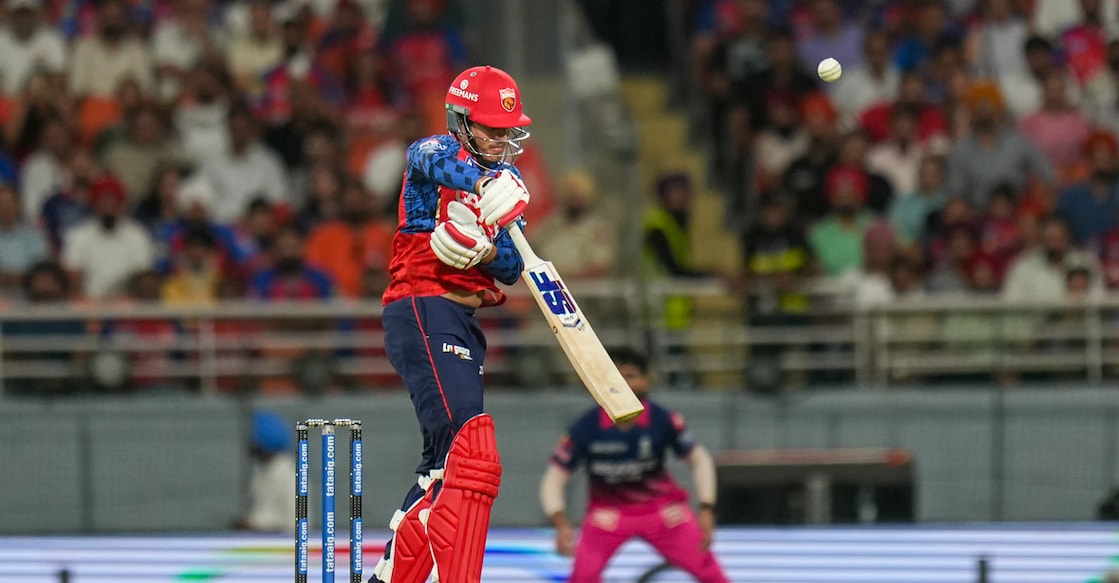
All this was stated in the context of Delhi Capitals (DC) being unable to defend an all-time high total of 264 runs in their IPL match against Punjab Kings (PBKS) and getting shot out for 75 in their next game, against Royal Challengers Bengaluru (RCB), after being five wickets down for 7 runs at one stage. This phenomenon of top-order collapsing in a heap had also happened to the Rajasthan Royals (RR) in their match against the Sunrisers Hyderabad (SRH). Incidentally, RR is blessed with an excellent top order in their batting line-up, which helped them to win many games, including a successful chase in excess of 200 against the Gujarat Titans.
This development of sudden batting collapses in the initial overs when powerplay is in progress has been unique to this edition of IPL. This has prompted the simple question as to whether the present-day batsmen are so deficient in their technique that they cannot last even six overs of good-quality swing bowling. It is even more surprising that DC and RR had in their line-up KL Rahul and Yashasvi Jaiswal respectively, two batsmen who had equipped themselves very well in Test matches during the tour to England in 2025.
The factors required for being successful as a batsman in T20 cricket are an excellent eye (ability to spot the line and length of the ball early), ability for clean-hitting, prowess to innovate and a good technique. To be successful in Test cricket, a batsman requires perfect technique, temperament, immense patience and mental stamina and strokes all around the wicket. The common factor in both is technique. While one needs a good technique to be successful in limited overs’ version, a perfect technique is sine qua non for doing well in Test matches.
A common strand through the careers of successful batsmen in Test cricket is that after their initial success, they go through a period of lull before coming back more strongly. This is on account of excellent technique, giving them a head start, after which bowlers around the globe focus on minor deficiencies to gain an upper hand. Batsmen have to put in lots of effort and endless hours of sessions in the nets to iron out these small glitches and regain their confidence. Once this phase is over, batsmen usually go from strength to strength to scale great heights.
Since the advent of big money into the world of limited overs’ cricket, there has been an increasing tendency amongst talented batsmen to shy away from putting in the hard work required for perfecting their technique. The first example that comes to mind is Vinod Kambli, followed by Yuvraj Singh. Kambli made a spectacular start to his career but West Indian fast bowlers found that he was weak against the short rising ball. Kambli did not work hard enough to perfect his technique against bouncers; as a result, he had a chequered career. Yuvraj also gained initial success, but fast bowlers exposed his weakness against the moving ball and his discomfort on fast bouncy tracks. He also did not work hard on rectifying these flaws, with the result that while he remained an exceptional white ball player, success eluded him in the red ball variety, which was a great shame given the talent he was blessed with. The same fate would have befallen Rohit Sharma, but he worked hard in the last phase of his career to emerge as a reasonably successful batsman in Test cricket.

Amongst the present generation of Test-match batsmen, only Shubman Gill has shown the hunger required to put in long hours to attain perfection in technique. This helped Gill to find success in all formats of the game till failures in one series caused selectors to ease him out of the national team. It is worth recalling that Gill was the fourth-highest scorer in IPL last year and is presently No. 5 in the race for the Orange Cap during the current season. And incidentally, one place above him in 2025 and the ongoing edition is Virat Kohli, an ideal example of a batsman who found success in all versions on the strength of his technique. For the record, Gill was the winner of the Orange Cap in 2023, while Kohli won it in 2024.
India is on a high in the T20 segment of the game, having won the last two editions of the World Cup championships convincingly. But this should not give way to complacency as the next World Cup in this version will be held in Australia and New Zealand, where the pitches and conditions will be vastly different from those in the Indian sub-continent. History tells us that to succeed with the bat in white-ball cricket in these countries, a high degree of technical skills is required, and mere slam-bang tactics alone will not work.
Yashasvi Jaiswal, Abhishek Sharma, Tilak Varma, Vaibhav Sooryavanshi and Priyansh Arya are young players with a long career ahead of them in this game. There is no doubting the talent they are blessed with. They have achieved success and fame early in their life thanks to T20 and IPL. But they will not be doing justice to their God-given skills if they choose to focus only on white-ball cricket and IPL. Amongst this lot, only Jaiswal has scored runs consistently in first-class cricket with close to 5,000 runs to his credit. The tally of runs scored by Abhishek Sharma (1071), Tilak Varma (1562), Sooryavanshi (207) and Arya (132) stands testimony to the fact that they have very little exposure to first-class cricket. More exposure to the rigours of domestic cricket will help to sharpen their technique and temperament and also vest them with the fortitude and resilience required for taking on the greater challenges in the international arena.
The two collapses suffered by the top order of RR and DC point to the fact that behind the elegant facade of Indian T20 cricket, there exists a small fragile patch, which, if left ignored, carries the potential to cause grave damage to prospects of the national side when playing outside the country. It is up to the Board of Control for Cricket in India (BCCI) to take the necessary corrective measures and create the framework for talented cricketers to grow to their full potential. As has been recommended by many experts in the past, restoring the Ranji Trophy championship to its prime position in domestic cricket and ensuring that all players in the reckoning for a place in the national squad take part in this tournament will be a good place to start this process.
 Add as a preferred source on Google