

Quit while ahead: The captaincy lesson from Gavaskar to SKY
Mail This Article


It was the late Vijay Merchant who famously said “you should do it when they ask why and not when they ask why not” when questioned about the reasons behind his retirement. Incidentally Merchant announced his retirement after scoring an impeccable century (154) against England in the first test of the home series at Delhi in 1951. These words have since remained the gold standard as to when a sportsperson should call it quits. However, a look at the retirement of top cricketers in India shows that this is rarely the case and acts more as an exception rather than the rule.
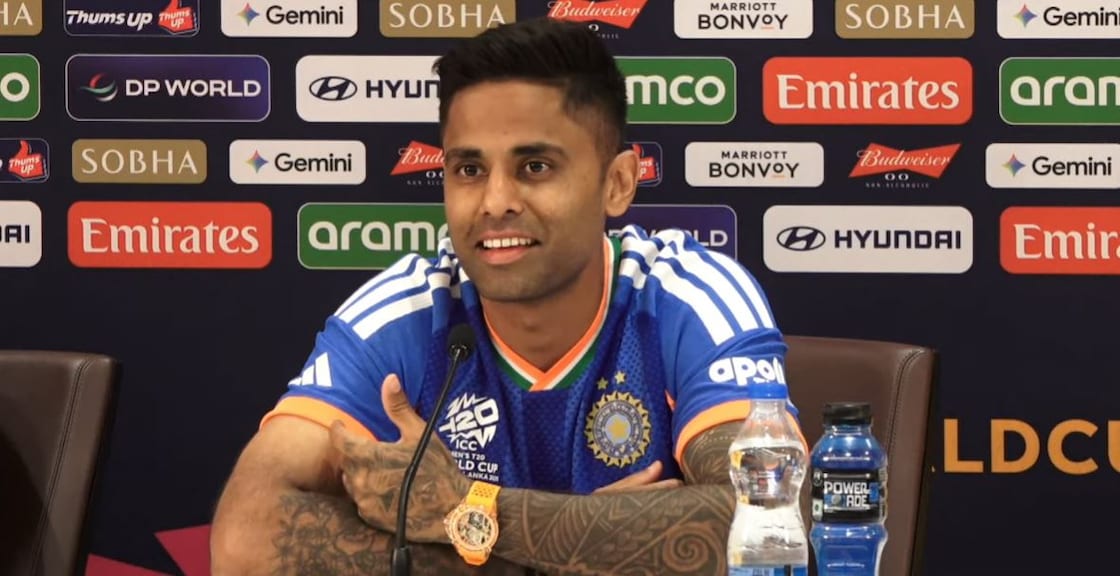
Merchant’s words came to mind when the news about Suryakumar Yadav’s (SKY) removal from the captaincy of the national T20 side was announced by the selectors during the week that went by. This created some amount of surprise as SKY had led the side to a title triumph in the recently concluded International Cricket Council (ICC) T20 World Cup held India. SKY had led the side with cool composure during the high pressure World Cup campaign and won rich praise for his leadership skills. Given this background, Ajit Agarkar, the chief selector, took the correct step and informed the media about the reason behind the sacking of SKY, which was primarily on account of continuing poor form with the bat. If a player is not good enough to command a place in the side, how can he be considered for captaincy? Since the grounds given by Agarkar were sound and valid, the matter was laid to rest.
This turn of events makes one wonder whether the fault lay on SKY’s doorstep for overstaying his welcome. Though he was initially appointed as the captain of national T20 team in November 2023, it was Rohit Sharma who led the side in the 2024 ICC World Cup. It was after Rohit’s retirement post the World Cup win that SKY became the full-fledged leader of the national T20 side. In the period that he led the team, India won the Asia Cup, besides the 2026 World Cup. Under his leadership, the side also enjoyed a victorious streak in bilateral T20 series’ winning close to 90% of the matches it played.
But through all this success, SKY’s returns with the bat started dwindling. His form had slumped in the period since January 2025 and at one point of time, he played 22 innings without scoring a fifty. He could get back amongst the runs in the series against New Zealand played immediately prior to the World Cup. He also anchored the side with an unbeaten 84 in the game against USA in the World Cup, which helped the side to overcome some middle overs’ crisis and win the match. But, he could not come up with any big score after that. The poor run of scores in IPL, his erstwhile favourite hunting ground, was the final nail in the coffin that prompted the selectors to wield the axe.
Here one remembers the example set by the great Sunil Gavaskar, who knew when it was time to step down and move on. Gavaskar retired from international cricket when he was still at the peak of his powers as a batsman. But what stands out is the manner in which he relinquished captaincy of the national side in 1985. Like in many other matters related to the game, Gavaskar brought to the fore all his wisdom and acumen in choosing the time for stepping down as skipper, the circumstances of which are worth recounting.
Despite his prowess as a batsman and a sharp observer of the game, Gavaskar’s record as captain was rather average. After being sacked as skipper following the defeat at the hands of Pakistan during the series in 1982-83, he was brought back to lead the side at the start of the 1984-85 season. But India performed poorly against the visiting England side and lost the home series, which came as a huge disappointment to the fans in the country. But even more shocking was his loss of form with the bat, as a result of which he was able to produce only one score above 50 in the five test series.
This series also saw Gavaskar’s popularity with the public and press plummet to its nadir. This was on account of the public spat he had with Kapil Dev that led to the all rounder getting dropped for one test. His decision to delay the declaration in the Kolkata test led to repeated heckling by the crowd at Eden Gardens. A popular magazine of the time even went to the extent of publishing a cover story on him with the title “Out: is he India’s worst captain ever?”
Hence there were howls of protests from the media when he was appointed as captain for the World Championship of Cricket (WCC) tournament held in Australia. Even his most ardent fans thought that the side stood no chance of winning with Gavaskar at the helm. It was at the point when the criticism was at its peak that Gavaskar stunned everyone by announcing that he would step down from captaincy at the end of the WCC championship.
It would be an understatement to state that this announcement took everyone by surprise. Critics stepped back, happy that they had met the objective of making the great man quit captaincy. This decision won Gavaskar considerable sympathy as well, given the fact that Indian public looks fondly at persons voluntarily stepping down from positions of power and authority. But the biggest and most pleasant surprise was the impact that this decision had on the team. The side which had played as a disjointed lot during the series against England underwent an amazing transformation. Bowlers bowled with purpose, batsmen put their heads down and focused on their task while the fielders threw themselves at everything with zest and zeal. Team started off on a winning note defeating Pakistan and the winning streak extended till the finals, where they were crowned as the champions.
Probably due to this experience, Gavaskar made a suggestion on similar lines, to Mohamed Azharuddin that he step down as captain after the ICC 1996 World Cup, where India was one of the hosts. In his weekly column in a leading sports magazine, Gavaskar wrote that Azharuddin should relinquish captaincy at the end of the World Cup so that Sachin Tendulkar could take over the reins after that. He added that such a decision would motivate the side to higher performance levels, leading to winning the World Cup, so that the skipper could step down on a victorious note. However, not only did Azharuddin not heed this advice, he even went to the extent of rebuking Gavaskar for offering it. He probably felt that this was a ploy by the “Mumbai” lobby to pitchfork Tendulkar to captaincy. Gavaskar wisely refrained from offering such advice after this experience!
It can be seen that no Indian captain followed the footsteps of Gavaskar by announcing in advance about stepping down after an international championship. Cricketing greats such as Tendulkar and Rahul Dravid quit captaincy unable to handle the pressure while even successful skippers like Saurav Ganguly and Virat Kohli were eased out from this position. Azharuddin himself was sacked twice from this post. Only Mahendra Singh Dhoni can claim to have stepped down while still at his peak, though it was not on a winning note. Rohit Sharma quit T20 captaincy after winning the 2024 World Cup, but he was shown the door in the 50 over version of the game, post the triumph in the Champions Trophy championship in 2025.
With the benefit of hindsight, it can be stated that SKY would have benefitted had he followed the example of Gavaskar and decided to relinquish captaincy after the T20 World Cup. He knew that runs were drying up on account of his inability to sustain the magic with willow that made him a dangerous 360 degree player in the shortest version of the game. Further, age too was not on his side. He should have foreseen that selectors would start looking for a leader who could carry the mantle till the next World Cup in Australia and New Zealand in 2028.
The importance attached to the captain of the national side and immense sense of self belief that top cricketers are blessed with together make it difficult for them to decide for themselves when to move on or step down. Gavaskar was unique in that he could read the tea leaves accurately, a trait that lesser mortals are not blessed with. In such instances, it will do well for the selectors to have a quiet word with the captain so that he can be given the option of stepping down gracefully rather than face the ignominy of being sacked from the side. One hopes that Shubman Gill and Shreyas Iyer, present incumbents of the hot seat in Indian cricket, are able to buck this trend and leave this post with their heads held high and in a blaze of glory.

 Add as a preferred source on Google