

The Great Indian Escape: Lessons in law for an almost beautiful game at Sano

Mail This Article


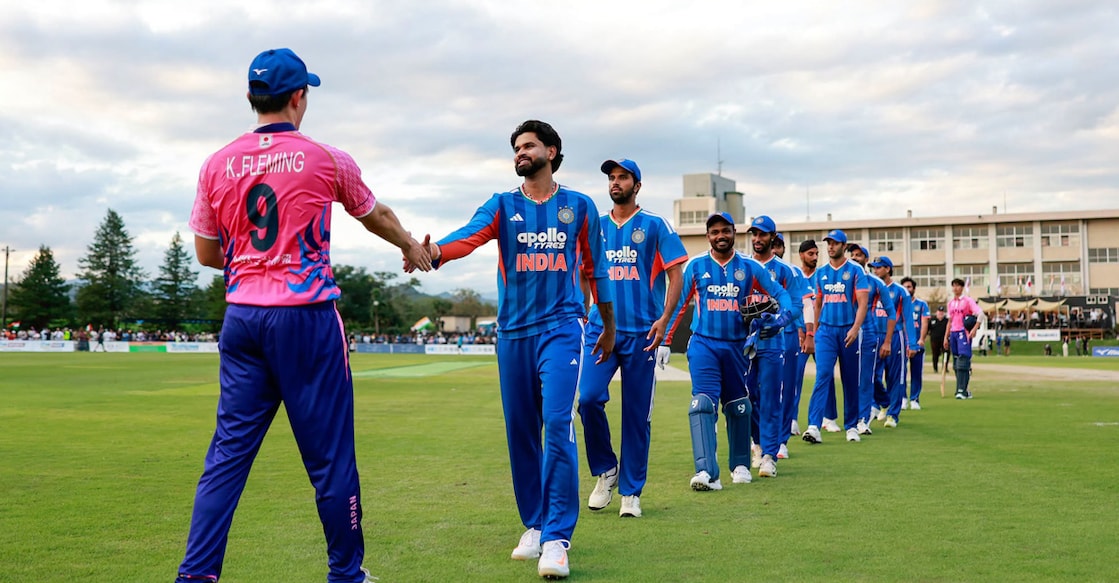
The T20 International played between India and Japan would not have made any news but for two unlikely events that took place during this game. The first was the extremely narrow margin by which the must fancied Indian side sneaked past the Japanese team. The second was a curious decision by an on-field umpire to rescind his “wide ball” call in the final over of the game. Critics have pointed out that this decision by the umpire proved to be crucial as it denied Japan not only an extra run but also an additional ball, had the original call of “wide ball” not been revoked.
In the normal course the result of a T20 International between India and Japan should never have been in doubt, given the fact that the former is ranked no:1 in International Cricket Council (ICC) rankings for this version of the game, while the latter is placed at a lowly 41. But it so happened that this game was reduced by rain to a 5 over a side match, which narrowed the gap between the two sides. This is on account of the fact that shorter games lead to more unpredictability as a couple of good or bad overs can have an overwhelming impact on the final result. Further, this match was played on a rain affected wicket, which did not help stroke play at all as the ball gripped the surface and started turning square from the very first over. Moreover, India also decided to bat first after winning the toss, presumably to avoid batting last, when it might have got dark and hampered visibility.
One cannot blame the Indian team management for failing to read the pitch as the game was played on a new surface. But, the absence of state of the art covers and wet weather equipment should have rung warning bells about the pitch getting affected by rain, with consequent difficulties for the batsmen. Old timers, who had exposure to the game before covering of wickets became the norm, would vouch for the fact that asking the side that lost the toss to bat first was the unwritten rule while playing on a drying surface. Even the great Don Bradman, who was a votary for batting first on winning the toss, used to think twice before following this dictum if the match was played on a rain affected pitch. Thus, must be admitted that the Indian think tank erred gravely in choosing to bat first in this game.
Geoff Boycott had laid down the cardinal principles to be followed while batting on a drying wicket, which involved “waiting for the ball to come to you, playing the ball late and staying on the back foot to the extent possible”. The present crop of Indian T20 batsmen led by Sanju Samson, Abhishek Sharma and Ishan Kishan have been brought up on placid even paced pitches where the ball comes on to the bat and they are used to playing their shots from the word go. It must have been a new and even frightening experience for them to be confronted with a surface which gripped the ball, slowed down its pace and offered turn right at the start of the match. This was evident from the manner in which they perished in quick succession trying to put the bowling to the sword. Only Shreyas Iyer displayed the temperament and technique required to survive in these conditions and it was his knock that saved India the blushes.
Indian bowlers deserve a big round of applause for defending a total as low as 32 runs. This was not an easy task as one poor over or even a couple of bad deliveries would have tilted the scales in favour of Japan. But they stuck to the basics and ensured that the Japanese batsmen did not get any easy runs. Axar Patel, in particular, was outstanding conceding only 7 runs off his two overs. Incidentally Axar bowled the last over of the game, when Japan needed only 8 runs to score an upset win.
After the first two balls of the last over where he conceded only one run, Axar bowled a full length ball to left handed Alexander Shirai- Patmore. The ball pitched in line with the off stump but turned a mile. Meanwhile Shirai- Patmore attempted a reverse hit, but failed to connect and the ball passed outside his leg stump. Umpire Chris Thurgate standing at the bowler’s end called “wide ball”. This brought down the target to 6 runs from four balls.
The next ball from Axar was a similar one and the batman went for another reverse hit, which also he failed to connect and the ball turned and passed outside the leg stump. This time also the umpire called a “wide”. Indian players, who were surprised with the earlier call, were visibly annoyed and remonstrated with the umpires. This resulted in Umpire Chris Brown from square leg going across to his colleague Thurgate for a discussion, following which the latter rescinded his call. With this the asking rate came down to 6 off 3 balls and Japan could manage only a single each of the last three deliveries, leaving India winners by 2 runs.
There were howls of protests from the critics that the Indian players berated the umpires to change the original call of “wide”. Had the second “wide” also stood, then the equation would have been 5 runs off 4 balls, a situation that favoured Japan considerably. There is no doubt that the decision was re-looked at and rescinded only due to the demand in this regard from the Indian players. Were they right in doing so? What does the laws of cricket and the rules say in this regard?
Though the laws of cricket state that a delivery shall be judged as a “wide ball” if it passes too far from the batsman as to deny him the opportunity to play a proper cricketing shot, there are detailed clauses relating to this in the playing conditions brought out by ICC. In particular, the said conditions stipulate that when the batsman attempts a reverse hit or a switch hit, both sides of the wicket shall be considered as off side for the purpose of determining a wide ball. Thus, the regular rule that a delivery that passes outside the leg stump of the batsman shall be be judged as a “wide” in white ball cricket will not apply if the batsman attempts a reverse hit. In such instances, a delivery can be called a “wide” only if it passes more than 75 centimetres beyond the line of the stumps.
In the instant case, the pertinent questions are as follows (i) did Umpire Thurgate call “wide ball” without considering the fact that batsman attempted a reverse hit? (ii) did the ball pass within 75 centimetres from the stumps? It does appear that the umpire forgot about the clause in the playing conditions relating to reverse hit when he made the call. If this was an error of judgment that happened due to the tension on the ground, that is understandable and umpire is well within his rights to reverse his decision if the ball did not pass more than 75 centimetres from the line of the stumps. The Laws of cricket make a provision for an umpire to change his decision provided it is done promptly. So the decision of Umpire Thurgate to rescind the call of “wide ball” is within the ambit of the laws of the game and cannot be faulted with.
However, there also arises the question whether it was proper on the part of Indian players to question the call and seek its reversal. The excuse given in some publications state that since there was no TV replay umpire, India did not have any option other than protesting before the umpire. This does not appear to be correct as even when a TV replay umpire is present, only decisions regarding dismissals can be challenged through Decision Review System (DRS). There does not exist any provision for challenging calls regarding no balls, wides etc made by the on-field umpires by either team. Hence the action of the Indian side in protesting against the decision of the umpire and pressurising him to review it was not fair and proper.
What you should read next

With the benefit of hindsight, it can be said that the Indian side should count themselves lucky to have got off without a penalty from the match referee for this infraction. It is possible that the action of Umpire Chris Brown, who moved from his position at square leg to confer with Umpire Thurgate, may have influenced the match referee to conclude that the reversal of decision was based solely on the discussions between the two. In the final analysis, India’s good fortune and greater experience than their Japanese compatriots helped them to survive the tense moments and script the cricketing equivalent of the “great escape” at Sano on 22 September.
