

If you’re planning to go to Cuba, please hurry
Mail This Article


There’s a famous song from the sixties by Scott Mckenzie:
‘If you’re going to San Francisco
be sure to wear some
flowers in your hair.’
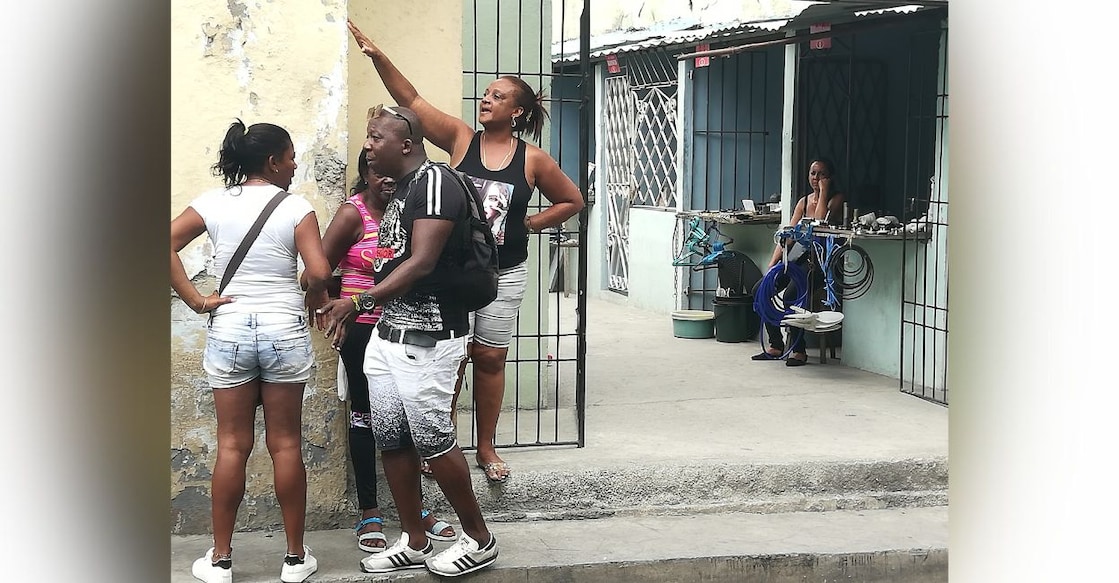
In a similar manner I would say if you’ve any plans to go to Cuba, please hurry before something happens to it. If a takeover like what is being discussed happens, Cuba is going to change. Nor will I blame Cubans for wanting to change, given that they live precarious lives. But what is amazing about them is that amid the eternal scarcity of everything, they are never short of humanity. They simply remain kind, considerate, cheerful and calm – and full of song and dance. They drown their sorrows in both. And for me, it’s the nicest place I’ve ever visited outside India.
If I knew Spanish, I would’ve given you a more accurate picture. Cuban Spanish is eloquent and beautiful to hear, and it makes their faces and bodies dance when they speak. How I regretted not knowing the language! The beautiful lady taxi driver who drove us one day kept telling me, knowing well that I didn’t understand a word of Spanish, all the news of her life with so much gusto and passion that I really felt I understood every word. To let her know that I gave her a happy hug when I paid her. She threw a smile and a kiss at me as she started the ancient Russian Lada in the tenth attempt and drove off.

If you are a traveller looking for ostentation and excitement, please do not choose Cuba. Cuba only offers simplicity, comfort, cleanliness, safety and friendliness. And cheerfulness. It has no glittering avenues, no vast shopping malls, no grand restaurants, no skyscrapers. There aren’t awe-inspiring natural wonders. What it has is great music, easy-going restaurants, vibrant dance bars, mouthwatering food, friendly people and a nice, warm climate. It’s the finest place for an unexcited, relaxed, calm holiday.
What is especially good about Cuba is that it has no junky ‘tourist-attractions’, the soulless stuff that routinely mark tourism spots. This is so perhaps because tourism hadn’t been encouraged by the Revolution and there was no money anyway to put these ‘attractions’ in place. The result is that you don’t feel hemmed in, pressured and forced; nor do you get exploited. (This doesn’t mean there are no conmen in Cuba. As a traveller – especially if you don’t know the language – it’s your business to keep your eyes open and watch where you’re going.)
Havana is Cuba’s showpiece city where most visitors land up. Unfortunately, many end their trip there too. The real Cuba is a beautiful world out there, extending 1,200 kilometres east to west, full of joys that suit every pocket. Havana is a city that one needs to chew on, take in little by little. It’s not a city in a hurry. It’ll remind you of the old-world sections of Indian cities like Mumbai and Kolkata; perhaps more of Goa. It is the famous haven of vintage cars, all in running condition, and they’re one of the main props of the tourism industry. Cubans have been repairing and running the cars the Americans left behind when they evacuated at the time of the Revolution in 1953. Even Russian cars from the Soviet times, not known for their glamour, have become priceless vintage.
Cuba is a special place, but often for unexpected reasons. For example, Cuba perhaps has the slowest trains in the world. A train could take 24 to 72 hours to cover the distance of 869 kilometers from Havana to Santiago de Cuba. That is, if it runs at all. It simply may not run for several days. It’s not that Cubans do not know how to run trains. It’s just that they don’t have the resources to run them – engines, coaches, electricity. Cubans are used to this way of living not only in the matter of trains but nearly everything. They say, ‘no cojas lucha,’ which roughly means, ‘Don’t fight it.’ They’ve learnt to work their lives around what isn’t possible. I feel that’s what makes them calm.
Conditions in Cuba can make those who believe in progress with a capital P angry and disappointed. The 1962 US embargo against Cuba has had a disastrous impact on the country. Nor could the Revolution deliver the progress it promised. It just managed to keep people on rations. And that came to be described as socialism. So, when you walk into Cuba please remember that you’re walking into a country that was frozen where it was in 1953. But it’s astonishing how the spirit of the people has not been frozen. They’ve learnt to be happy and human, in their own simple ways.
I am tempted to quote from an article which succinctly sums up the situation in Cuba. It is by Ricardo Torres, a Cuban economist, published in Time magazine: ‘While the state resisted political reforms that could threaten its power, it struggled to maintain its side of the bargain. In the early and mid-1990s, social guarantees diminished, basic needs became difficult to meet, and social services declined. What persisted was a system focused on control, yet increasingly incapable of offering security or hope.’
He adds: ‘Political paralysis has produced a mediocre government, increasingly distant from ordinary life…The Trump administration’s interest in precipitating change in Cuba collides with an inconvenient truth: Cuba needs to change not because a foreign power demands it, but because its citizens deserve better.’
Basing ourselves in Havana, we travelled east up to Santiago de Cuba, about 860 kilometres away, breaking our journey in between in cities like Santa Clara. We went west up to Vinales Valley, some 190 kilometres away, past the city of Pinar del Rio. We travelled up to Cien Fuego by the Viazul bus service, which is demarcated for tourists and for which payment is to be made in dollars. It has crumbling Chinese buses.

Cien Fuego gave us our first encounter with inland Cuba. The vintage cars of Havana were gone. People’s transport mainly consisted of horse-drawn carts, cycle rikshaws and motorcycle rikshaws. Trucks had been modified into buses. People gave us foreigners a friendly smile or patiently stopped to answer a question we had posed via Google Translate on the phone.
A bus ride through interior Cuba is an experience perhaps unmatched anywhere in the world. But you need to be patient. You can’t be staring at your watch, cursing the driver. You must sit back and let Cuba take over. The traffic courtesies our driver extended could infuriate the most patient passenger on earth. Often, the bus would come up behind a lonely cyclist or horse-cart making its slow way along the narrow road. But the driver would never honk or try to overtake. He would stay behind, naturally at a slower speed than the cyclist and the horse-cart, till by a stroke of luck, they on their own realized there was a bus behind and made way. I doubt if the driver was complying with a traffic regulation. It seemed to go beyond that – it was humanity at work. Simple respect accorded to less-privileged travellers.
Such unique moments filled our bus journeys. The driver would suddenly swerve the bus off the highway along an earth road and stop a short distance away in front of a house. He would honk to let them know he had arrived. The house-people are waiting with jack fruits, coconuts, pumpkins, watermelons, pineapples, bags of rice and whatnot. As those things are being loaded on the bus-top, the two drivers (there always are two drivers) would sit down for a small repast - a drink and some snacks offered by the house-people. Not a passenger showed restlessness. It was clearly understood that the bus service was a package deal. On another occasion, the driver took the bus along some rough paths and came to a halt at a small house. It was his own. Children ran out to greet him. He handed goodies to them, took the washed clothes his wife brought, gave her a peck on the cheek and took the bus out. Passengers looked pleased and happy.
This is the Cuba I cherish. It is not my intention to paint the tragic destiny of an innocent people as something heroic and admirable. What I cherish is the quiet strength with which they confront their destiny. May their destiny change – and may it bring them only happiness.
