
New World Screwworm outbreak in America

Mail This Article


• The International Atomic Energy Agency (IAEA) and Food and Agriculture Organisation of the United Nations (FAO) stepped up efforts to contain and suppress the re-emergence of New World Screwworm (NWS) in Central America, Mexico and the United States of America through the application of a nuclear technique.
• After decades of successful eradication, the pest has re-emerged in Central America and Mexico and was confirmed in the US in early June — the first occurrence there in more than 40 years.
• The parasite’s recent resurgence poses a serious threat to livestock, animal welfare, wildlife and public health, with potentially severe socioeconomic consequences.
• On June 3, the US confirmed its first animal case of NWS in more than 40 years, following the pest’s progressive re-emergence in Central America and Mexico.
• Changing weather patterns, globalisation and unlawful transboundary animal movements have contributed to the pest’s spread, creating new challenges for countries working to contain it.
• Infestations can kill animals, damage hides, and reduce milk and meat production.
• The previous eradication was estimated to have generated annual benefits of $1.3 billion for livestock producers in the US, Mexico and Central America.
Sterile insect technique
• The Coordination Research Project (CRP) will help countries use the sterile insect technique capacity to halt the NWS’s re-invasion.
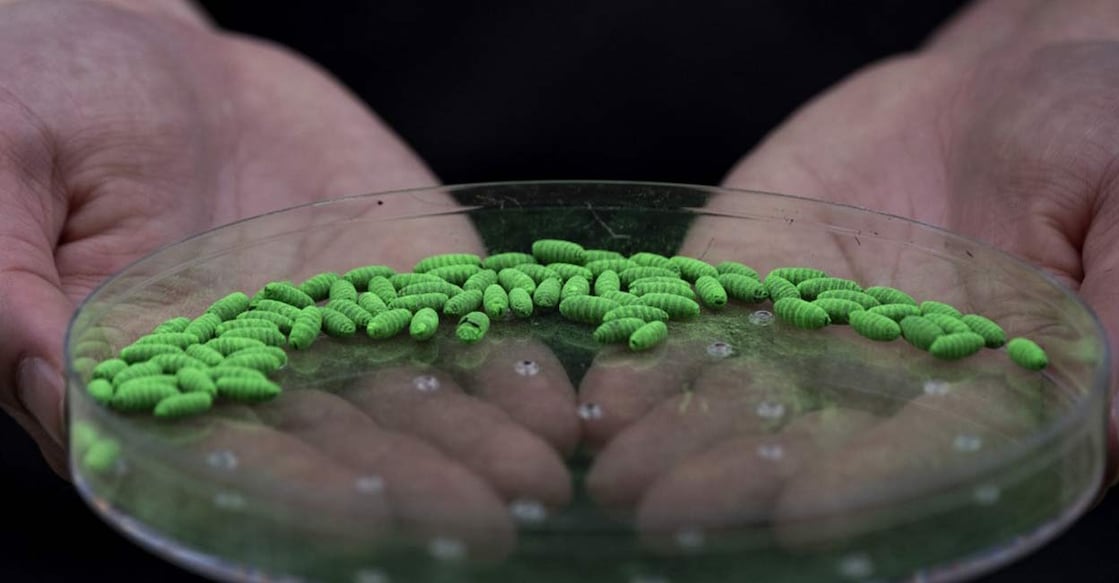
• Sterile insect technique uses radiation to sterilise insects, which are then released to mate with wild populations and produce no offspring, helping suppress pest populations over time.

• The sterile insect technique was central to the eradication of NWS from the United States, Mexico and Central America, when a 45-year campaign eradicated the pest from the US in 1982 down to Panama in 2006, with sterile flies used to maintain a barrier in the Darien Gap in Southern Panama.
• The barrier was effective until 2022, when the fly began spreading northward from Panama.
• The new CRP will bring together leading experts from more than 20 affected countries — including some in South America where NWS is endemic — to strengthen fly surveillance and control methods, improve mass-rearing and sterilisation, study mating compatibility and competitiveness, and support the release of sterile flies.
• The five-year project, with a planned budget of $1 million, will include improving tools and methods for mass-rearing, sterilisation and release of flies.
New World Screwworm
• New World Screwworm (Cochliomyia hominivorax) a parasitic fly whose larvae feed on the living flesh of warm-blooded animals, including livestock, pets, wildlife, and in rare cases, people.
• NWS does not spread directly from animals to people or from person to person.
• Unlike other flies that feed on dead tissue, screwworm larvae can only develop in living flesh, making infestations rapidly destructive.
• Female flies lay their eggs in existing wounds or mucous membranes — around the eyes, mouth, or udder — and the hatching larvae cause a condition called myiasis, which leads to serious injury, infection, and death if left untreated.
• The name screwworm refers to the feeding behavior of the larvae as they burrow (screw) into healthy tissue. NWS larvae cause extensive damage by tearing into the host’s tissue with sharp mouth hooks.
• Secondary bacterial infections attract additional egg-laying females, creating a self-reinforcing cycle that rapidly worsens the damage.
• The economic consequences of screwworm infestations are severe.
• Farmers face costly and labour-intensive treatment regimens, ongoing prevention measures, and disruptions to routine animal management practices.
• Smallholder farmers are especially vulnerable, as even minor outbreaks can threaten household income and food security.
• At a larger scale, outbreaks can cause devastating livestock losses and trigger trade restrictions and quarantines that compound the economic damage across entire regions.
 Add as a preferred source on Google