

With ‘The Mummy’, Lee Cronin rejects nostalgia to deliver a darker, more claustrophobic vision

Mail This Article


There is a particular image that comes to mind when you hear the words The Mummy. For many who grew up in the late 1990s and early 2000s, it is not fear that defines the franchise, but a sense of adventure. Vast deserts, hidden tombs, ancient curses, and a roguish hero at the centre of it all. Films like The Mummy, directed by Stephen Sommers and led by Brendan Fraser, were never designed to terrify. They entertained, blending mythology with humour and spectacle.
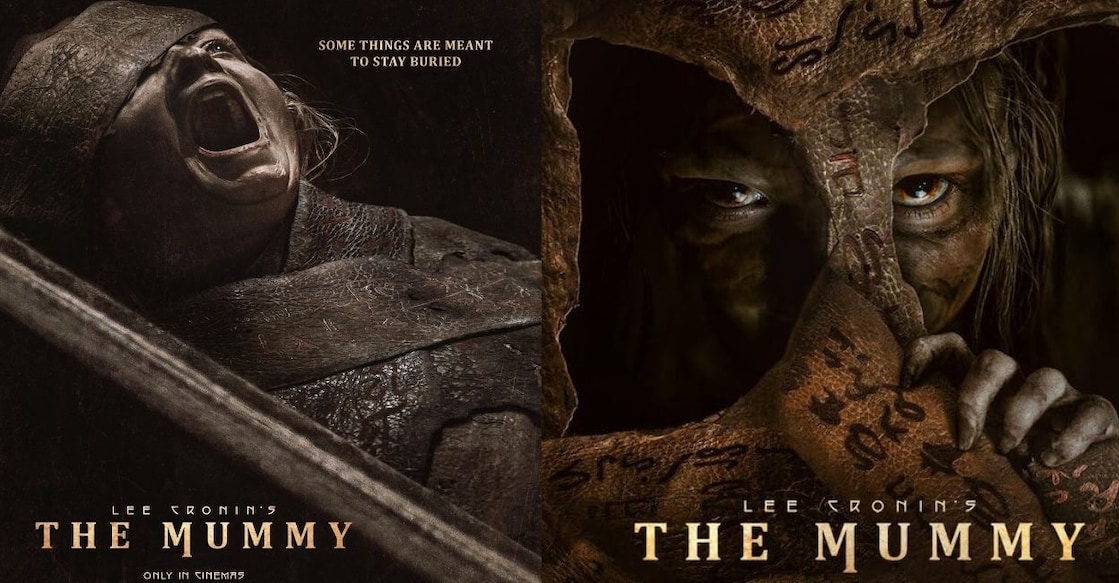
That is precisely why The Mummy, directed by Lee Cronin, feels like such a sharp departure. Instead of leaning into nostalgia, it rejects it almost entirely. This is not a return to sand-swept escapism. It is a deliberate pivot into something far more claustrophobic, unsettling, and physically uncomfortable to watch. The question, then, is not just whether this new film works, but whether The Mummy as a concept can survive such a radical reinvention.
A franchise built on adventure, not fear
To understand the shift, it helps to revisit what made the earlier films so enduring. While the 1932 original with Boris Karloff introduced the character as a tragic horror figure, the modern cultural memory of The Mummy is shaped largely by the 1999 reboot and its sequels. Those films were closer in spirit to Indiana Jones than traditional horror.
They were driven by character, particularly Fraser’s Rick O’Connell, whose charm and irreverence anchored the narrative. The supernatural elements existed, but they were secondary to the thrill of discovery. Even when the films ventured into darker territory, they never lost their sense of fun.

Attempts to modernise the franchise have not always worked. The 2017 reboot starring Tom Cruise tried to reposition The Mummy within a larger cinematic universe, but it struggled to find a coherent tone. It was neither frightening enough to be horror nor engaging enough to be adventure. The result was a film that felt unsure of its own identity.
Cronin’s version avoids that mistake by making a clear choice. It commits fully to horror.
A horror-first reimagining
Cronin arrives at this film after Evil Dead Rise, a project that established his ability to push boundaries in terms of visual intensity. That film was not subtle in its approach. It leaned heavily into gore, discomfort, and emotional distress, often blurring the line between fear and revulsion.
With The Mummy, he brings that same sensibility.
The story follows journalist Charlie Cannon and his family. What begins in Cairo with the mysterious disappearance of his daughter Katie evolves into a more intimate, domestic horror years later in Albuquerque. When Katie is eventually found and returned in a fragile state, the film moves away from its archaeological roots and into psychological and physical terror.
On paper, this is an intriguing premise. It takes the idea of an ancient curse and places it within a modern family setting. On screen, it becomes something far more relentless. Cronin is less interested in unravelling a mystery and more focused on sustaining a sense of dread.
A different kind of fear
One of the most striking aspects of this film is what it chooses to abandon. There are no sprawling desert expeditions or elaborate tomb raids. The narrative is tightly contained, often unfolding within confined spaces. This creates a suffocating atmosphere, one that echoes Cronin’s earlier work.
The horror here is not built on suspense in the traditional sense. Instead, it relies on shock, intensity, and physical discomfort. The audience is rarely given a moment to breathe. Scenes are designed to unsettle rather than intrigue, often pushing visual boundaries to an extreme.
This approach has its strengths. Cronin demonstrates a clear understanding of family dynamics, using relationships as a foundation for emotional tension. Much like in Evil Dead Rise, the interactions within the family unit feel grounded, which makes the horror more immediate.
At the same time, the film’s reliance on gore raises questions about balance. The tension that should build gradually is often undercut by early reveals. The narrative leaves little room for ambiguity, making the trajectory of the story relatively predictable. The sense of anticipation, which is crucial to effective horror, does not always sustain itself.
Breaking away from legacy
Where Cronin succeeds is in giving The Mummy a distinct identity. Unlike the 2017 reboot, which struggled to differentiate itself, this film makes no attempt to echo what came before. It does not rely on star power or nostalgia. Instead, it builds its world from the ground up.
Performances play a key role in this. Natalie Grace, as Katie, delivers one of the film’s most unsettling turns. Her portrayal carries much of the film’s emotional weight, often anchoring its most disturbing moments. Supporting performances from actors like May Calamawy and Veronica Falcon add depth.
This absence of a charismatic, larger-than-life lead marks another departure. There is no equivalent to Fraser’s O’Connell here. The narrative does not revolve around heroism or adventure. It is more interested in vulnerability and breakdown.
Cronin’s The Mummy arrives at a time when horror itself is undergoing a shift. Recent films have leaned increasingly towards visceral impact, often prioritising shock over subtlety. This trend has been commercially successful, but it has also led to a certain uniformity in tone.
At the same time, Hollywood continues to revisit established properties, attempting to reshape them for new audiences. This creates an inherent tension. How much can a franchise change before it loses its identity? And how much must it change to remain relevant?
In this case, the transformation is significant. By removing the adventure element, the film risks alienating those who associate The Mummy with a specific kind of cinematic experience. Yet, by embracing horror fully, it also opens the door to a different audience.
What is at stake
The success of this film will likely depend on how viewers respond to that shift. For those expecting a return to the tone of the 1999 film, this version may feel almost unrecognisable. It does not offer escapism. It does not prioritise fun. Instead, it confronts the audience with something harsher and more immediate.
For horror enthusiasts, however, this may be exactly what sets it apart. Cronin does not attempt to dilute his vision. He commits to it, even when it becomes uncomfortable. In doing so, he avoids the indecision that has plagued previous attempts to revive the franchise.
A new identity, for better or worse
Ultimately, The Mummy under Lee Cronin is less a continuation and more a reinvention. It strips the franchise down to a single idea and rebuilds it through the lens of modern horror. Whether that works depends largely on what one expects from the name.
What is clear is that this is not a film interested in nostalgia. It does not revisit the past so much as reject it. In an industry that often relies on familiarity, that choice is both risky and, in its own way, refreshing.
The real question is whether audiences are ready to accept The Mummy not as an adventure, but as something far more unsettling.
 Add as a preferred source on Google